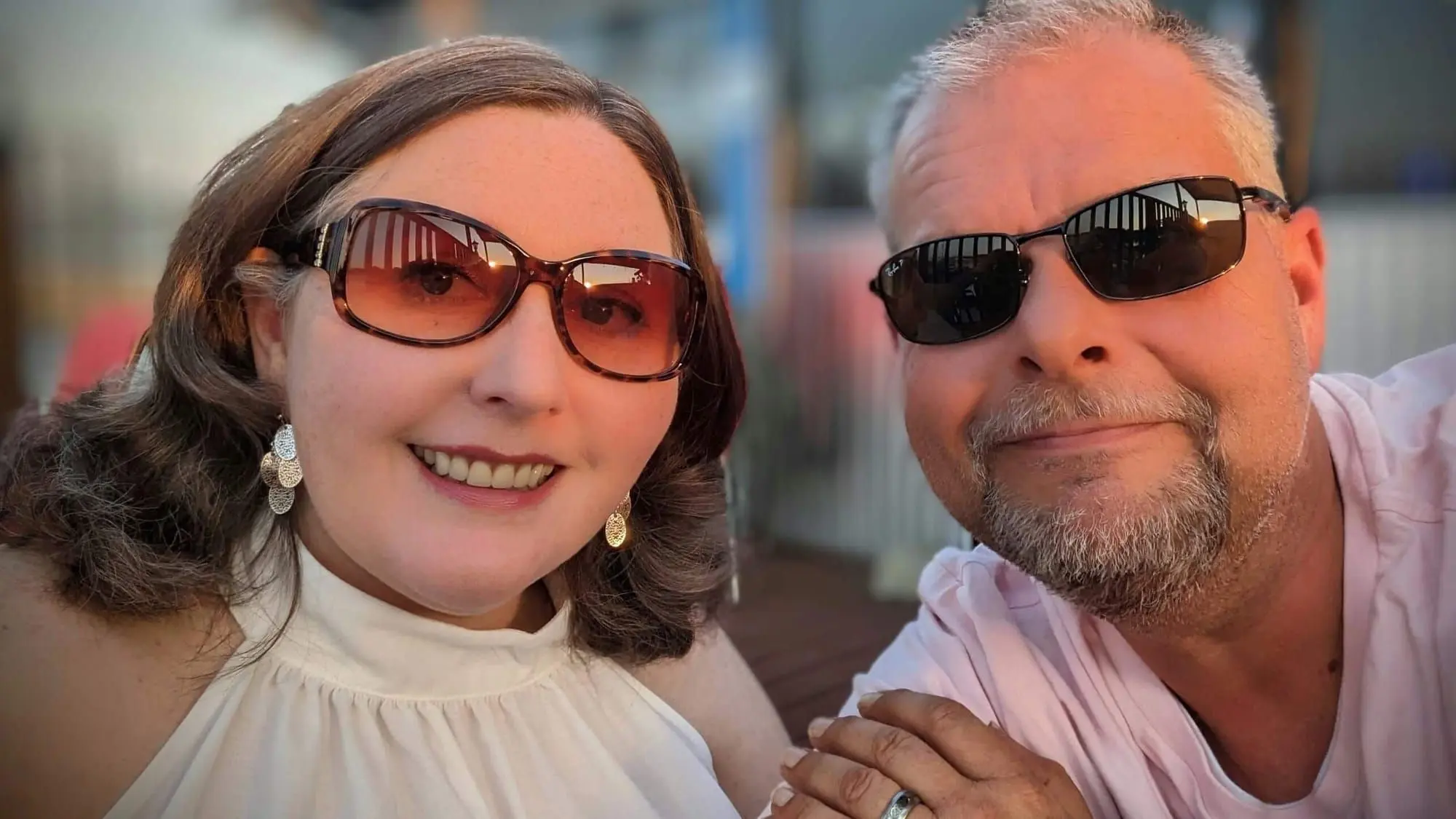

From big band arranging and music education to expressive AI-assisted mockups with New South Music.
A Life in Music, Built One Challenge at a Time
For Shane Porter, music has always moved forward through curiosity, courage, and a willingness to figure things out after saying yes.
His arranging journey began in 1990, when someone asked if he could arrange for horns. Shane said yes before he fully knew how, then went looking for the books, tools, and knowledge that would help him make good on the promise.
“In 1990 (or the late nineteen hundreds, as my kids would say) I jumped into arranging, not because I could but because someone asked if I could arrange for horns and I said yes! Then I had to go figure out how to actually do it. That was at a time I had to find and use real arranging books… BOOKS!?! The horror!”
That moment became a pattern. Shane had already started young as a trumpet player, performing with groups such as The Temptations, The Four Tops, and others. He had the sound in his ear before he had every arranging technique under his fingers.
“I started young as a trumpet player, performing with the Temptations, Four Tops and others so I did have a good sonic concept. Fortunately, Finale notation software had just hit the market, so using pen and paper didn’t last long. Finale was a game changer for me. Running Finale from a floppy disk, using a MIDI interface for sound, and operating on a massive 1 megabyte of RAM was peak music production at the time.”
For Shane, that early mix of musicianship and technology helped define the rest of his creative life.
“This initial experience outlined the remainder of my life in music: being a 100% tech geek and never turning down a job because I didn’t know how to do something, but accepting the gig and then going to figure it out!”
That mindset carried him through publishing, educational clinics, arranging work, and the founding of the New South Jazz Orchestra. In 2005, he produced the orchestra’s first commercial release, a project that was creatively rewarding but financially difficult in the way many large-ensemble productions can be.
“Shortly before the turn of the century, there was some college thrown in, but after that turn, I had my first arrangements published and became an educational clinician for Finale and SmartMusic. This was the beginning spark of the New South Jazz Orchestra, the big band I founded and produced our first commercial release in 2005. I realized then that traditional studio production is entirely cost-prohibitive for normal ‘sidemen’. Thus began my quest to create an excellent musical product in a much more financially viable way, leading me to virtual instruments and ultimately the discovery of the ACE Studio platform.”
That search for a more sustainable way to create high-quality musical products eventually led him to ACE Studio.
Discovering ACE Studio
Shane did not discover ACE Studio because he was looking for a vocal synthesis platform.
As an instrumentalist, arranger, and composer focused mostly on instrumental groups, vocals were not usually at the center of his work. He had tried earlier vocal engines, but they felt tedious and confusing. Then an ACE Studio ad appeared on YouTube.
At first, he simply saved it.
“Discovering ACE Studio was an accident—well, it certainly wasn’t intentional. Being an instrumentalist who arranges and composes for instrumental groups, I didn’t really have much use for a vocal synthesis platform since I rarely dealt with vocals. But seeing the ad scroll across YouTube, being a total tech geek it gave me a momentary pause. ‘Hmm, what’s this? That’s extremely slick, let’s file this away just in case.’ I threw it into my saved videos and didn’t think much else about it. I had attempted to use some of the earlier VST vocal engines, but those were tedious and confusing.”
That “just in case” moment became important later.
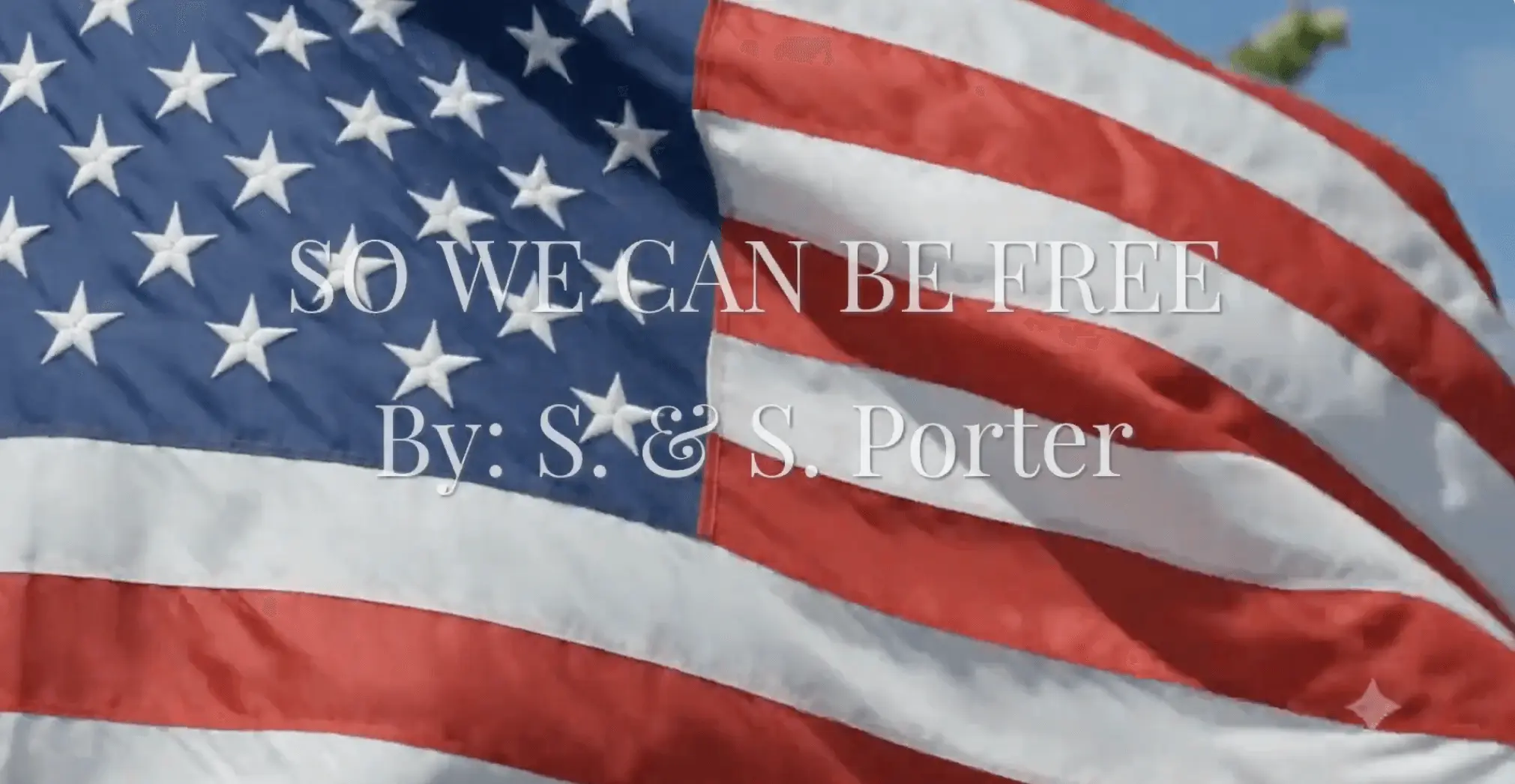
Shane’s wife, Stephanie, an elementary music educator, vocalist, lyricist, and New South Music partner, had co-written a song with him titled “So We Can Be Free.”
“My wife, Stephanie, is an elementary music education warrior (and New South Music partner) and a wonderful vocalist/lyricist. Together, we co-composed a song titled ‘So We Can Be Free,’ dedicated to our Armed Services veterans for her elementary students’ Veterans Day concert. It’s an incredibly moving piece written from the perspective of a child. I created a full orchestral backing track using EastWest VSTs, and the live concert presentation was fantastic.”
The next step was even more ambitious: giving the students a real studio experience. The third and fourth graders took a field trip to Muscle Shoals, Alabama, to record at Nutthouse Recording Studio.
The experience was unforgettable. The final tracks, however, still sounded like what they were: young students in a real recording environment. Shane tried Auto-Tune, but it did not solve the problem. The project sat for a while.
Then another ACE Studio ad appeared.
“I got the final tracks back to mix and... well, let’s just say we still recorded 3rd and 4th graders! After messing around with Auto-Tune and completely failing, I let the project sit for a while. About a week went by and another YouTube ad scrolled across my screen: ‘Oh yeah, let’s see what this platform is all about.’ Knowing absolutely zero about how to use the platform, I did what 90% of Gen X-ers do—I started clicking buttons to see what would happen. I could hardly believe how simple and intuitive it was.”
Within that first session, Shane began rebuilding the choir part inside ACE Studio in a way that followed the shape of the original recording. He imported the instrumental track, set the tempo, entered the lyrics, blended the parts, and pressed play.
The result stopped both him and Stephanie in their tracks.
“Before long, I had six tracks up, using the children’s vocal boxes panned three left and three right to match our original live recording group layout. I dropped the instrumental track in, set the tempo, entered the lyrics, did a little bit of blending, and hit play. We had no idea what to expect. Once the render finished and we listened completely through, I looked at my wife in absolute awe. She had teary-eyes. Hearing those virtual children’s voices, their phrasing, and their enunciation mixed in with her real-world students... it was a completely surreal experience.”
The virtual children’s voices did not erase the meaning of the original student performance. They supported it. They helped the song carry the emotional weight Shane and Stephanie had imagined from the beginning.
“I never let a meaningful musical experience drift away; I file it for future use. In that exact moment, I was 100% sold on use, but wasn’t 100% sold on the lifetime license just yet. But, that single short session began to completely shape how we use ACE Studio today with New South Music.”
From Vocal Tool to Full Creative Palette
At first, Shane treated ACE Studio as a vocal engine.
That alone made it useful, but because his work was still mostly instrumental, ACE went back onto what he calls the “virtual tool shelf.” Then another YouTube ad caught his attention, this time featuring an alto sax solo.
That changed everything.
“When we first used the ACE platform, it was strictly a vocal engine. I knew I had a viable vocal tool, but as a predominantly instrumental composer and arranger, ACE went back up on the virtual tool shelf. Then… another YouTube ad. Those damn YouTube ads! But wait…there’s more?? A pop-music sounding alto sax solo??? No, it can’t sound like that—that’s gotta be AI! Well, yeah… that’s exactly what it is!”
Shane opened ACE Studio again and started exploring its expanded instrument palette. The experience immediately felt different. He found himself working inside the solo box, manually adjusting note lengths, shaping articulations, and experimenting with bends and glissandos.
“That ad got me out of bed, late. My brain runs about 20 hours a day anyway, but the body doesn’t always agree so getting me out of bed is usually reserved for house fires and tornadoes! I booted up the Creation Station, pulled ACE back off the virtual tool shelf, and began exploring the new palette of instruments. I could not believe what I was hearing, and the workflow (after just clicking on things to see what happens) was so simple! Opening the actual solo box, manually tweaking note length to achieve a certain articulation or bends and glissandos, that 20-hour brain was now running at maximum capacity. I knew I was never getting back to sleep that night.”
The process felt intuitive enough to invite exploration, but powerful enough to keep his musical brain racing.
It also raised serious questions.
Finding an Ethical Way to Use AI in Music
As a working performer, composer, arranger, and educator with deep relationships in the live music world, Shane did not want to treat AI casually. He had spent decades around real players, including Grammy-winning instrumentalists. He understood the value of musicianship, rehearsal, human interpretation, and professional respect.
So he stepped away from the computer.
“After spending several hours just seeing what would happen next, I finally got some rest. Waking up the next day, though, I was honestly conflicted. As a working performer, composer, and arranger for literal decades—with deep, lifelong friendships with Grammy Award-winning instrumentalists—this conflict was massive. I truly had to reconcile the AI/live music disruption to ensure I could still stand proud as a steward of live musicians, real musicianship, and music education.”
For a few days, Shane stopped creating and thought carefully about what it would mean to use an AI platform responsibly. He weighed the issue with the seriousness it deserved, speaking with industry friends and considering how AI could fit into New South Music’s mission without undermining live musicians.
“I needed to establish a personally ethical, sound practice for using an AI platform. I literally turned off the computer and stepped away from music creation for a few days. Reconciling this turmoil was primal. It deserved real time, gathering wisdom from industry friends, and weighing the pros and cons to make the right decision—one that supports my personal philosophy and our corporate mission while respecting live professionals and nurturing young musicians and composers.”
The answer came through boundaries.
A Practical Role for ACE Studio
For Shane and New South Music, ACE Studio is not a replacement for human composition or live musicianship. It is a way to create stronger mockups, better references, and more financially sustainable productions while keeping the music itself human-led.
That distinction matters.
New South Music is drawing a clear line between machine-written compositions and human-created music brought to life through modern tools. The company’s goal is not to outsource creativity to AI. It is to use technology for interpretation, expression, and production support, especially when full studio recording is not yet financially realistic.
“Decision one was purely financial, weighed against the massive expense of my very first live studio production and ridiculously miniscule (and offensive) returns from current streaming platforms. Between the progress of modern VSTs and the power of the ACE Studio platform, New South Music can create beautifully authentic-sounding audio mockups for our catalog while strategically reserving cash to hire selected professionals to record and pay them what they deserve. This respects live musicians so I’m not constantly calling in favors, while also respecting our own financial runway as a company. Most importantly, it still provides top-tier audio reference examples for school directors and young students.”
This approach helps Shane solve one of the oldest problems in educational and large-ensemble music: the gap between the written score and the inspiring audio reference.
A school director, student ensemble, young composer, or publisher often needs to hear what a piece can become. But hiring a full ensemble for every mockup can be far beyond reach. With modern virtual instruments and ACE Studio, New South Music can create polished, expressive references while reserving budget for selected live professionals when the project calls for it.
Shane also sees the current AI moment through a longer historical lens.
“Decision part two was an act of remembering. When the Yamaha DX7 synth came out back in the ’80s (remember, I am that old) and the absolute earthquake it caused in the music community. Everyone panicked that the DX7 was going to destroy live and studio careers. But the DX7 didn’t destroy careers—it defined and elevated the next couple of generations of music production!”
For Shane, the lesson is not to ignore change, but to decide how to use it responsibly.
“At New South Music, by combining hindsight and foresight, we are choosing to view AI and ACE Studio in that exact same light. AI is not going anywhere. Pandora’s Box has been opened, but let’s not lock hope inside by slamming the lid shut. By drawing a hard-line boundary at New South Music between generative, machine-written compositions and using AI strictly for the ‘human’ interpretation and expressive inflection, we maintain 100% human-created composition. We can be financially responsible as a business while remaining completely respectful to the musicians we ultimately hire for our catalog. I know that ACE has allowed me to expand my own music production immensely!”
Building the Future of New South Music
New South Music is now growing with a clear mission: to publish and support composers who care deeply about the quality, playability, and presentation of their work.
The company is looking for writers from different generations. That includes younger, unpublished composers who are growing up with AI as part of the creative landscape, as well as veteran composers and arrangers who may not use AI themselves but understand its value as an extension of modern production tools.
“As we get New South Music off the ground, our immediate ‘what’s next’ isn’t just about my own writing—it’s about curating a catalog from composers who actually align with our vision. We are actively looking for submissions from three distinct camps who get what we’re trying to do. First, the younger, unpublished composers who are growing up right in the middle of this AI revolution and naturally see its value as a tool to build elite musical mock-ups. Second, the veteran guys/gals from the older generations who may or may not use AI, but view AI not as a threat, but a seriously powerful extension of their existing VST libraries.”
The focus is educational music first, from elementary school choirs to collegiate vocal and instrumental ensembles. But the vision does not stop there. New South Music is also opening the door to professional choral music, big band writing, regional orchestra works, national orchestra submissions, and other high-quality literature from composers who need a stronger path to publication.
“We’re searching for composers who have an excellent functional (or better) knowledge of the different ensembles, and the realistic playability of students at varying levels. Composers who respect their own music enough to put in the extra hours to make it look great and sound as close to flawless as possible, even if they don’t have the financial runway to book a professional studio and hire live players.”
The common thread is care.
Shane is looking for composers who understand ensembles, know what is realistic for students at different levels, and respect their own music enough to make it look and sound as strong as possible. ACE Studio can help support that mission by giving composers a way to present their ideas with more polish, more clarity, and more emotional impact, even before a live ensemble ever plays the score.
“Our primary target is original compositions for educational music—everything from elementary school choirs up to the collegiate level vocal/instrumental ensembles—because those directors and students deserve reference tracks that actually inspire them. When I was doing the ‘So We Can Be Free’ background music, I asked my wife for her opinion on French Horns and she said ‘They’re elementary students, we don’t need the New York Phil…’ my response was, ‘Why do they deserve less?’”
That belief sits at the center of New South Music’s mission: young students, school directors, emerging composers, and professional groups all deserve music that is presented with care.
“We also know professional groups search for fresh, high-quality literature. So while we’re building the educational foundation, we’re absolutely opening the doors for professional choral, big band, regional, and national orchestra submissions. We want to use our platform to provide an outlet to writers who have the talent, have the work ethic, but just haven’t had the path.”
Bringing Personal Projects Back to Life
For decades, Shane has often been the person behind the scenes.
He has arranged for regional pops orchestras, major symphony projects, brass groups, jazz ensembles, marching bands, and other live settings across the country. That work has been meaningful, but it also meant his own compositions often had to wait.
Now, that is changing.
“What’s next for me? Since the original New South Jazz Orchestra release in 2005 and the financial pain that went along with it (although it was indeed glorious financial pain), I’ve spent decades as a behind-the-scenes arranger. I’ve written for regional pops orchestras like the Sarasota Pops, major symphonies like the Nashville Symphony/Jamey Johnson project, various brass groups, jazz ensembles, and marching bands across the country. But doing that always meant putting my own compositions on hold... Until now.”
Shane is preparing the next New South Jazz Orchestra project, “Tell Me A Story,” an estimated 13-track release planned for the end of the summer. The project brings together 100% human composition, live musicians, and the ACE Studio platform.
“For me personally, I’m finally able to release the next New South Jazz Orchestra project, ‘Tell Me A Story.’ It’s an estimated 13-track release due out at the end of this summer that incorporates 100% human composition, live musicians and the ACE Studio platform.”
For him, ACE Studio is helping make large creative ideas feel possible again.
Beyond “Tell Me A Story,” Shane is also planning a multi-year narrative release inspired by one of his other favorite worlds: comic books. In 2027, the New South Jazz Orchestra is set to release “The Proscenium,” introducing JazZilla and the Sonic Sentry, Agent of Groove, whose alter ego is Dorian Dirac.
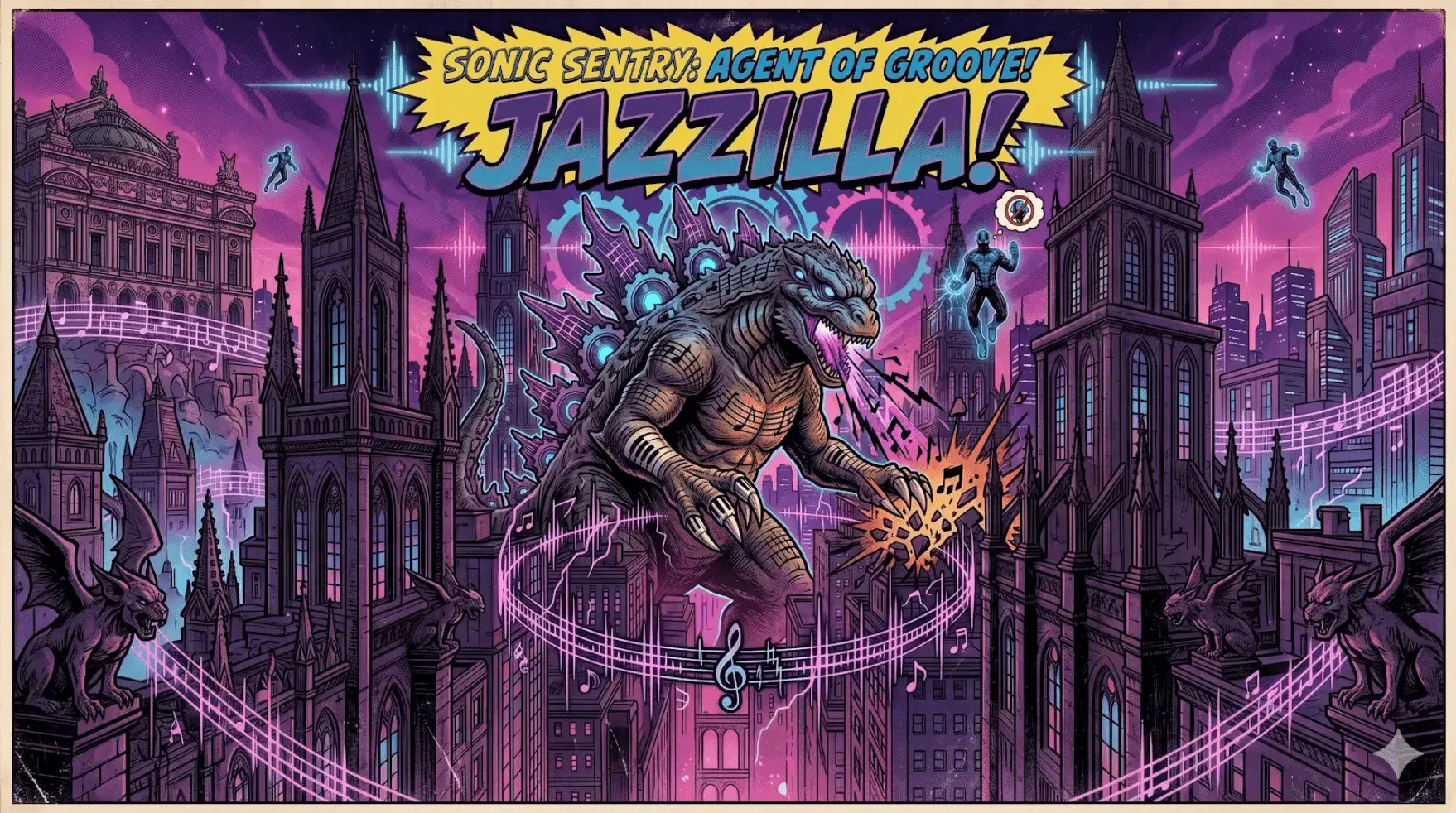
Future releases will expand the universe with characters like Calliope Castellanos, a pianist mysteriously impervious to attacks on the groove, and Dr. Krushgruv, an ancient aleatoric, atonal villain who hates groove and fun.
“Beyond that, the following two releases are going to take my music straight into one of my other favorite hobbies: comic books, launching a multi-year narrative release centered around a completely original musical universe: 2027: The NSJO EP release of ‘The Proscenium,’ introducing JazZilla and the Sonic Sentry—Agent of Groove (alter ego Dorian Dirac). A follow-up EP introducing other characters, like Dorian’s secret crush, Calliope Castellanos—a pianist with an unknown ability of being entirely impervious to attacks on the groove! And, of course, the evil villain Dr. Krushgruv, an ancient aleatoric, atonal composer who absolutely hates groove and fun! 2028-2029: A full-length conceptual album release, ‘Sonic Sentry and the Collapse of the Groove.’”
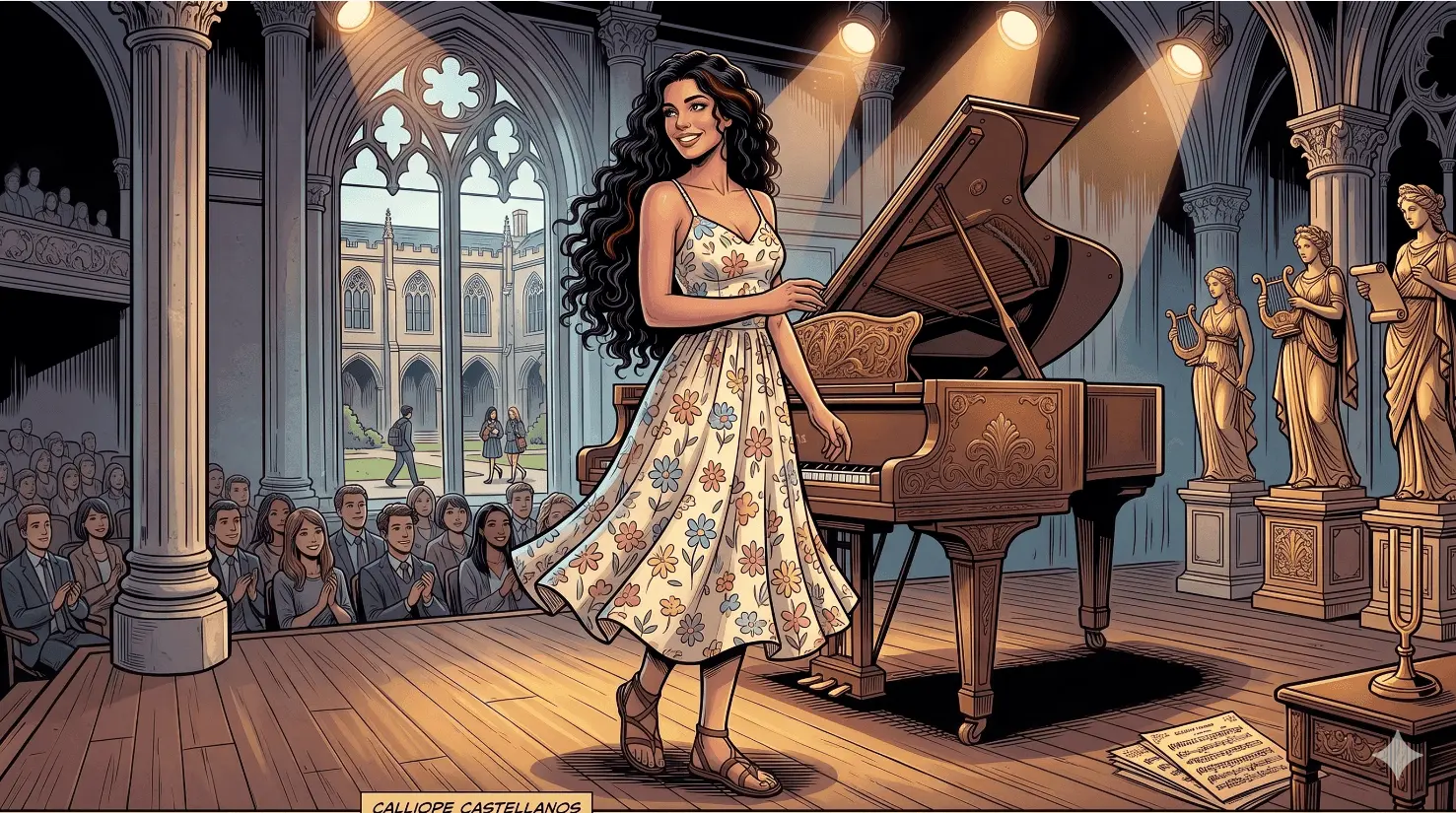
It is playful, ambitious, and deeply musical. It is also exactly the kind of project that benefits from a tool that can help a composer hear the full shape of an idea before every live part is recorded.
“With the current ‘Tell Me A Story’ project and the ACE Studio platform hitting at the exact same time, it does more than just make massive, creative projects like this financially viable, it really makes the complete vision fall into place!”
ACE Studio as a Classroom and Mentorship Tool
Because the New South Music team is built around educators, Shane also sees a future for ACE Studio in the classroom.
Young composers are not always aware of the vast world of virtual instruments, production tools, and realistic mockup techniques. Many have strong musical ideas but limited budgets, limited access to performers, and limited knowledge of how to present their work professionally.
That is where Shane hopes to mentor.
ACE Studio can become part of a larger teaching process, helping young writers hear their music more clearly, understand phrasing, test musical decisions, and bring their compositions to life without needing a professional studio on day one.
For educational music, that matters. A strong mockup does more than sell a score. It teaches, inspires, and helps students imagine what they are capable of sounding like.
Reflections and Insights
Shane has only been using ACE Studio since late March, but it has already become part of how he thinks about production, publishing, education, and the future of composition.
His perspective is both optimistic and grounded. He does not see AI as something the music world can simply ignore. He sees it as a tool that must be guided by human purpose, human taste, and human responsibility.
His wishlist for the platform is refreshingly small: slightly thicker horizontal and vertical scroll bars, plus an expand option in the upper-right corner of the Solo box.
“What would I like to see coming up? I don’t know just yet, the platform is constantly improving! However… and this may just be because I’m old, or maybe it’s just how the layout renders on my specific screen setup, but I would really really love slightly thicker horizontal and vertical scroll bars and the ‘expand’ option in the upper right corner of the Solo box!”
When those are the biggest requests for a platform doing this much work, Shane’s conclusion is simple.
“If a couple of minor UI scroll bars and an expansion box are the absolute only things on my wishlist for a platform doing this much heavy lifting—y’all are absolutely killing it.”
And he signs off with a reminder that fits both his humor and his philosophy:
“Keep Making Music because if we don’t… AI will!”
Discover More About Shane Porter
Shane Porter’s work with New South Music brings together the many sides of his creative life: composer, arranger, performer, educator, publisher, and lifelong music technology explorer. From big band writing and orchestral arranging to educational music and AI-assisted mockups, his focus remains the same: helping strong human-made music reach the people who can perform, teach, and be inspired by it.
To follow Shane’s latest work, hear New South Music projects, and explore upcoming releases, visit the New South Music website or subscribe to New South Music on YouTube. Composers, educators, directors, and listeners who connect with New South Music’s mission can use these channels to discover new catalog updates, featured works, and future projects from Shane and the New South Music team.
Start Creating with ACE Studio
Shane Porter’s journey shows how technology can serve tradition when it is guided by musicianship, ethics, and purpose. From big band writing and educational music to expressive mockups and ambitious story-driven releases, he is using ACE Studio not to replace the human side of music, but to protect it, extend it, and make more of it possible.
Like Shane and New South Music, you can use ACE Studio to turn written ideas into expressive performances, create stronger demos, and bring large musical visions closer to reality.
This ACE Studio Creator Spotlight is part of our ongoing series celebrating artists who redefine what’s possible with AI-powered creativity.