
Key Takeaways
- A remastered song improves the sound quality of an existing recording without changing the original performance, lyrics, instruments, or arrangement.
- Remastering uses techniques like EQ, compression, limiting, stereo imaging, noise reduction, loudness normalization, and dithering to make older tracks sound clearer and more balanced.
- Mastering prepares a new track for release, while remastering updates a song that has already been released so it works better on modern speakers, headphones, and streaming platforms.
- AI and stem separation are making remastering more flexible, especially when original multitrack files are missing or damaged, but human judgment is still essential.
- Tools like ACE Studio can support the creative preparation around remastering by helping producers separate stems, rebuild musical ideas, create AI vocals or instruments, and explore prompt-based layers before the final master.
Why old songs are remastered for today’s listeners
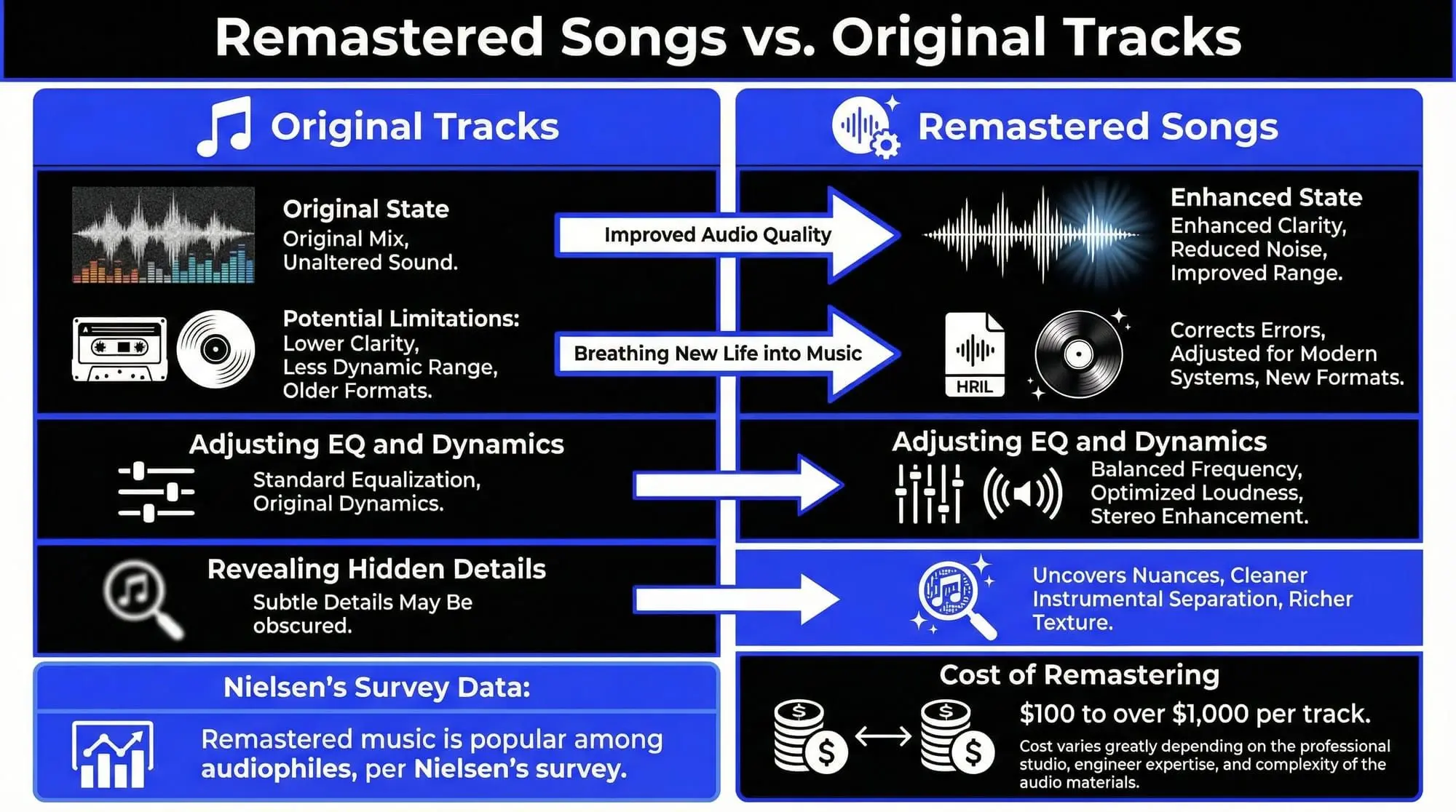
Remastering is the process of enhancing an existing recording using modern audio tools. Producers and engineers revisit the original track and improve its overall sound by adjusting elements like EQ, dynamics, and stereo width. These changes help reveal details that may have been lost or less noticeable in the original version.
Think of an old track you love—now imagine it sounding clearer, fuller, and more refined. That’s what a remastered song aims to achieve.The goal isn’t to change the music itself, but to elevate how it sounds. Whether the track comes from the vinyl era or early digital releases, remastering brings it closer to today’s audio standards—resulting in a more polished and immersive listening experience.
Remastering also takes into account how people listen to music today. Producers may adjust elements like bass response or overall loudness to better suit streaming platforms and modern headphones, ensuring the track translates well across different devices.
Audio remastering techniques
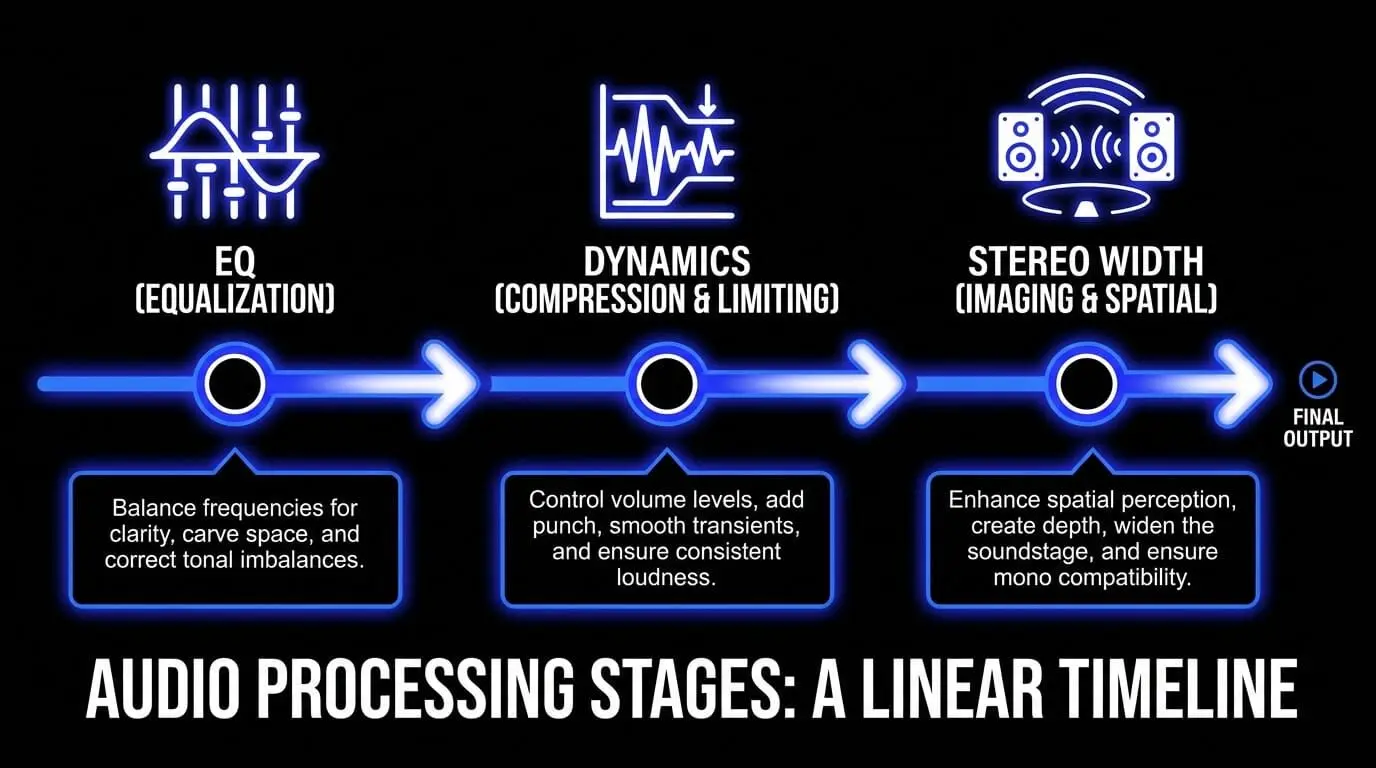
To really understand remastering, it helps to look at the techniques behind it. Engineers start with equalization (EQ), one of the most important tools in remastering. EQ shapes the frequency spectrum—cutting unwanted low-end rumble, reducing harsh highs, or boosting presence—so the track feels balanced and defined.
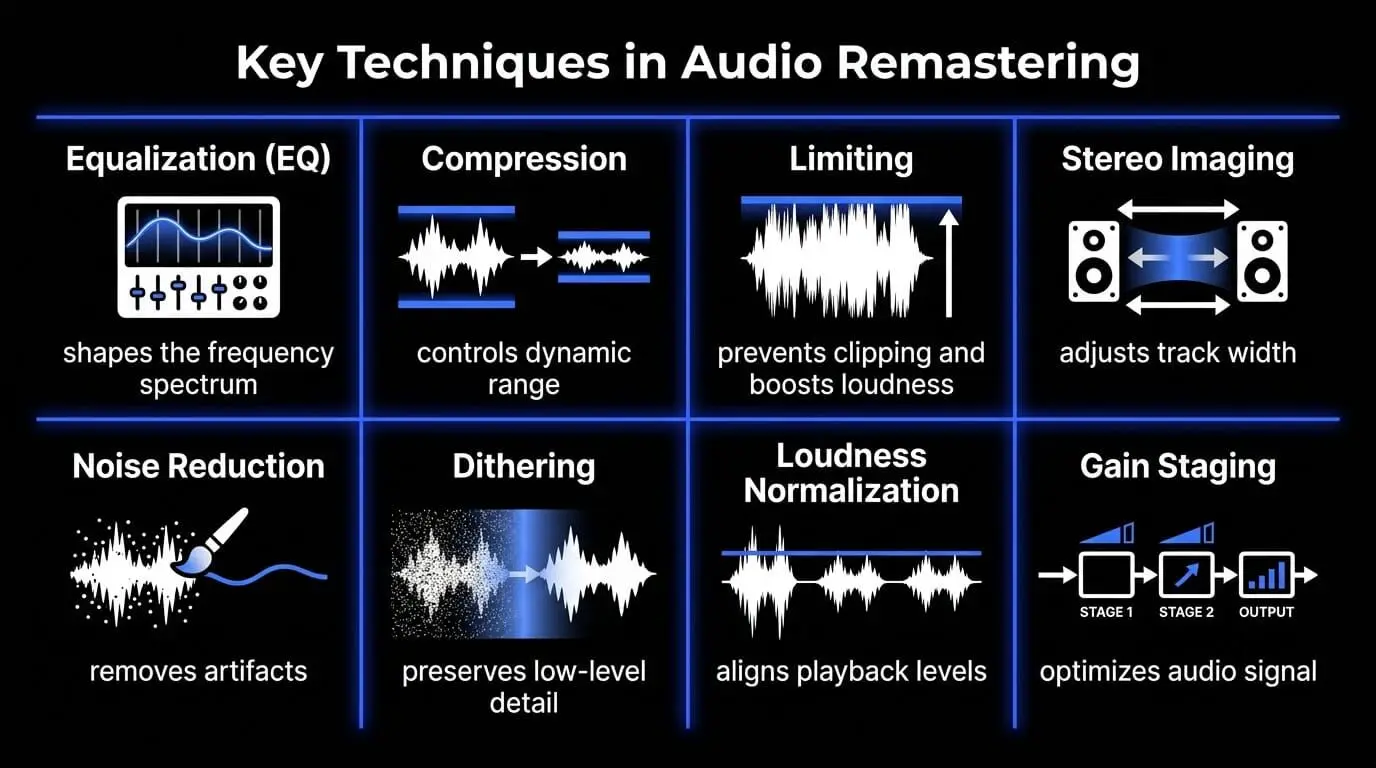
Next comes compression, which controls the dynamic range by reducing the gap between the loudest and quietest parts. This helps tracks feel more cohesive and allows them to reach higher loudness without distortion. More advanced approaches like multiband compression target specific frequency ranges, giving engineers precise control without affecting the entire mix.
Another key technique is limiting, typically applied at the end of the chain. It prevents clipping while pushing the overall loudness to commercial levels, making the track competitive with modern releases.
From a spatial perspective, engineers use stereo imaging to adjust how wide or focused a track feels. Techniques like mid-side processing allow them to separately control the center (vocals, bass) and the sides (ambience, instruments), creating a more immersive and controlled soundstage.
Remastering also often includes noise reduction and restoration, removing clicks, hiss, or other artifacts from older recordings to improve clarity.
Finally, there are more subtle but crucial steps like loudness normalization, gain staging, and dithering. Dithering, for example, is applied when reducing bit depth to preserve low-level detail and avoid distortion in the final output.
Mastering vs. remastering
Mastering is the final step in music production. It prepares a track for release by improving clarity, balance, and loudness so it sounds consistent across all playback systems—from headphones to streaming platforms.
Remastering, on the other hand, revisits music that’s already been released. Engineers go back to the original recordings and use modern tools to improve sound quality, often revealing details that were less noticeable in earlier versions.
In simple terms, mastering focuses on finishing a new track, while remastering updates an existing one.
Remastering is commonly used for anniversary releases or digital reissues, where older recordings are adapted to meet today’s audio standards. For example, The Beatles' 2009 remasters saw their iconic catalog cleaned up to offer clearer vocals and punchier instrumentation, allowing fans to enjoy these timeless records with fresh clarity.
Reasons to remaster a song or album
Remastered music often brings forth details like richer bass and more defined highs, transforming the listener's experience. Moreover, remastering can correct past errors or adjust the mix for modern playback systems, making it an essential tool for maintaining a recording's relevance across generations.
For use in compilations
When tracks from different eras are combined into a single release, inconsistencies in sound quality can become obvious. Remastering helps align volume, tone, and overall balance, creating a more cohesive listening experience. Each track maintains its identity while fitting naturally within the collection.
For example, Pink Floyd’s The Dark Side of the Moon remaster is often preferred in compilations because of its improved balance and clarity.
Releasing in new formats
As music consumption evolves, older recordings don’t always translate well to modern formats. Remastering prepares tracks for streaming platforms, vinyl reissues, and high-resolution audio by optimizing loudness, frequency balance, and overall playback performance. This ensures the music sounds consistent across devices—from studio monitors to everyday headphones.
Enhancing sound quality
One of the main reasons to remaster is to improve clarity and balance. Older recordings can sound limited by the technology available at the time.
Modern tools allow engineers to tighten low-end frequencies, smooth out harsh highs, and reveal details that were previously less noticeable. The result is a cleaner, more defined sound that feels more aligned with current listening standards.
Challenges in the remastering process
Remastering isn’t just about improving sound—it often involves working around serious limitations in the original material.One of the biggest challenges is the quality of the source recording. Engineers can only enhance what already exists, and many older tracks come with issues like noise, distortion, or poor balance. As professionals often point out, even the best mastering tools can’t fully fix a problematic mix—they can only improve it within limits.
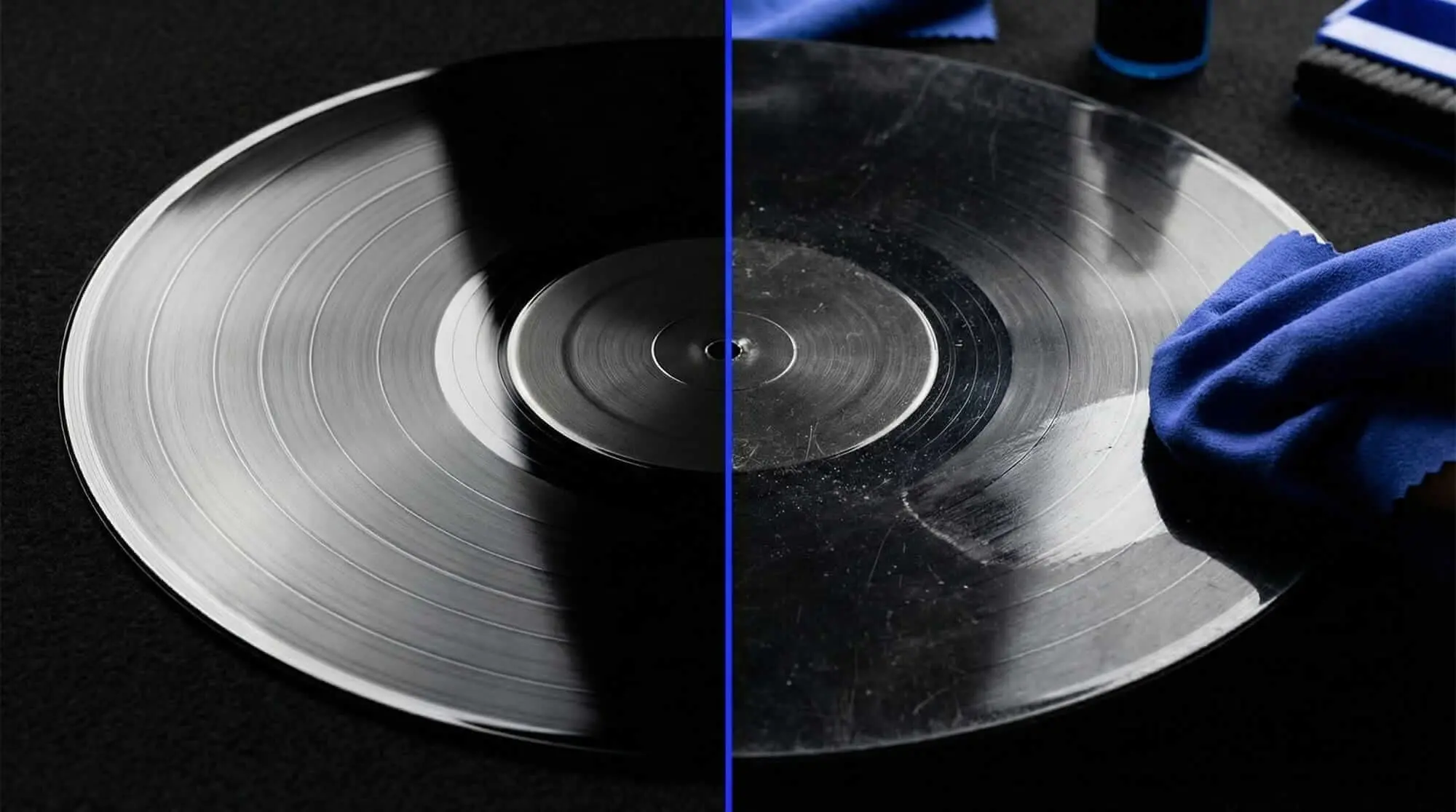
In some cases, the original recordings are physically degraded. Analog media like tape and vinyl can deteriorate over time, leading to hiss, dropouts, or even missing audio. Restoring these recordings requires careful processing and, sometimes, creative problem-solving just to make them usable.
Engineers also face the challenge of balancing loudness and dynamics. Modern listeners expect loud, punchy tracks, but pushing volume too far can destroy the natural dynamics of a song, making it feel flat or fatiguing. Finding that balance is one of the hardest parts of remastering.
Another major difficulty is staying true to the original while still improving it. This becomes especially important with iconic recordings, where fans may strongly prefer the original sound. Engineers often have to walk a fine line between clarity and authenticity, deciding how much to clean up without losing character.
Real-world remastering projects can be even more complex. Engineers working with archival material report issues like pitch instability, volume fluctuations, heavy tape hiss, and missing sections of audio—all within the same track. In some cases, they even have to rebuild parts of the sound or make unconventional decisions just to achieve a listenable result.
In short, remastering is as much about problem-solving as it is about sound enhancement. Every project presents a unique set of limitations that require both technical skill and creative judgment.
Future trends in remastering
Remastering is evolving quickly, driven by advances in technology—especially artificial intelligence.
One of the biggest developments is AI-assisted remastering. Modern tools can analyze tracks, identify issues, and apply corrections with a level of precision that used to require hours of manual work. These systems can isolate instruments, reduce noise, and even recreate missing details in ways that were previously impossible.
Research and emerging tools show that AI can now process multiple aspects of audio—like EQ, dynamics, and stereo image—within a single system, producing results that listeners often prefer over the original recordings.
Another trend is stem separation (demixing). This allows engineers to break a finished track into individual elements—like vocals, drums, and instruments—even if the original multitrack files are unavailable. This technology has already been used in high-profile remastering projects to clean up recordings and rebalance mixes that couldn’t previously be adjusted.
We’re also seeing a shift toward automation and accessibility. What used to require expensive studios and years of experience is becoming more available through software and AI-driven platforms. This lowers the barrier to entry, allowing independent artists to remaster their own music more effectively.
At the same time, human expertise is still essential. While AI can handle technical improvements, decisions around tone, balance, and artistic intent still rely on experienced ears.
Looking ahead, remastering will likely become a hybrid process—combining AI efficiency with human creativity to deliver faster, more precise, and more accessible results.

AI beyond remastering: How ACE Studio gives producers more control over old and new tracks
ACE Studio is not a traditional remastering tool in the sense of applying final EQ, compression, limiting, or loudness adjustments to a finished stereo master. Those decisions still belong in the mastering stage, where an engineer shapes the final presentation of the track.
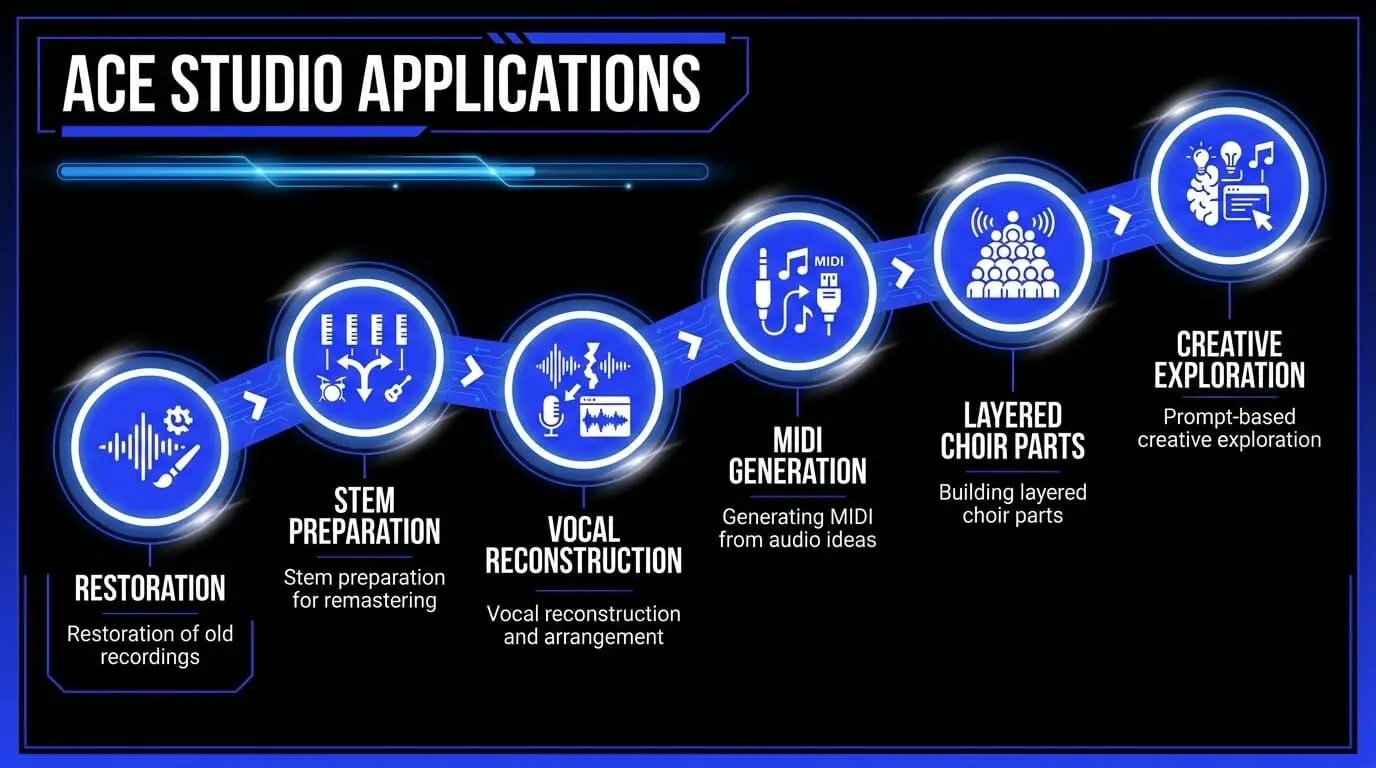
But ACE Studio can be useful earlier in the process, especially when a remastering project involves restoration, stem preparation, vocal reconstruction, arrangement checking, or rebuilding musical elements from limited source material.
This matters because many older recordings do not come with clean multitrack sessions. Sometimes the only available source is a stereo mix, a rough demo, or an old bounce with limited separation between vocals, drums, bass, and instruments.
ACE Studio includes tools like Stem Splitter and Audio to MIDI, which can help turn fixed audio into more workable material. For example, a producer could separate a vocal from an old mix, convert a melodic idea into MIDI, or isolate musical parts that need closer inspection before the final remastering stage.
ACE Studio 2.0 also goes beyond vocals. Its AI Instruments allow musicians to generate natural-sounding performances from MIDI while keeping control over the musical part. That can be helpful when a reissue, deluxe version, or restored project needs an additional instrumental layer, a rebuilt guide part, or a clearer version of an idea that was buried in the original recording. The goal is not to rewrite the song, but to give producers more control when the source material is incomplete or difficult to work with.
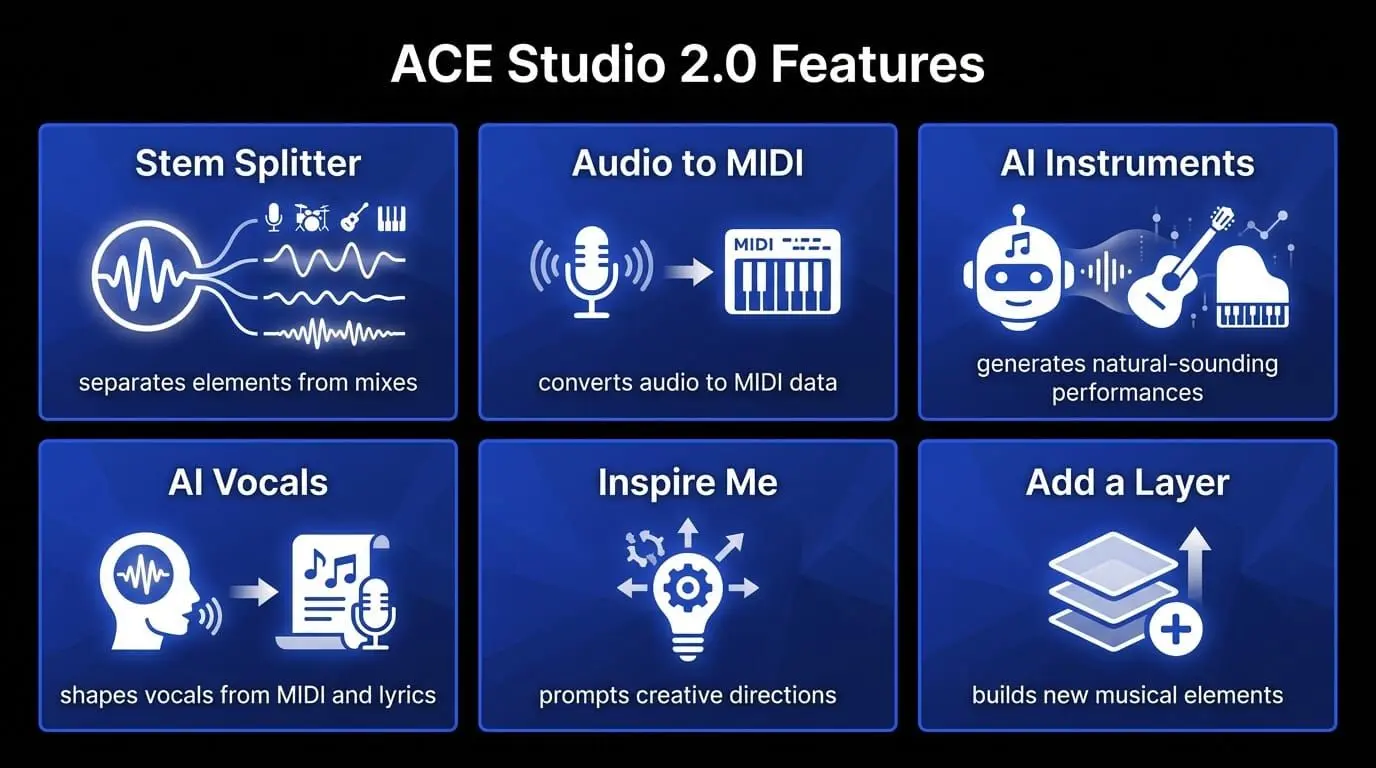
For vocal-focused projects, ACE Studio can also help shape AI vocals from MIDI and lyrics, adjust pitch, timing, breath, phrasing, and emotional delivery, or build layered choir parts when a project calls for new supporting material. In a strict remaster, the original vocal performance should remain unchanged. But in restoration, alternate versions, demos, or expanded releases, these tools can help musicians recreate, test, or refine vocal ideas while still making the final creative decisions themselves.
ACE Studio’s prompt-based options can also support the early creative stage. Features like Inspire Me, Add a Layer, and Music Enhancer allow producers to prompt the kind of musical direction they want and generate starting points, textures, or supporting layers. This is useful when exploring a new version of a track, creating bonus material, or developing a modern companion piece for a remastered release. The important thing is that the prompt is only the beginning. You still listen, edit, remove what does not serve the song, and shape the result with your own taste.
In that sense, ACE Studio fits best as a creative preparation tool around the remastering process. It helps artists recover ideas, separate material, rebuild musical parts, test new layers, and prepare cleaner elements before the final master is made. The remaster still depends on human judgment: what to preserve, what to improve, and how far to go without losing the character of the original recording.
Cost of remastering
The cost of remastering varies widely, depending on the complexity of the project and the level of expertise involved.
At the professional level, remastering typically ranges from $100 to $1,000+ per track. Higher-end engineers charge more because of their experience, specialized equipment, and ability to deliver consistent, high-quality results.
Several factors influence the price:
- Source quality – Poor recordings require more restoration work
- Track complexity – Dense mixes or damaged audio take longer to process
- Engineer reputation – Established engineers often charge premium rates
- Format requirements – Preparing music for multiple formats (streaming, vinyl, high-res) adds extra work
In some cases, remastering archival material can be significantly more expensive due to the time required for restoration and repair.
There are also more affordable options today. Automated and AI-based tools have made remastering accessible at a lower cost, allowing artists to improve their tracks without hiring a full-service studio. However, these tools may lack the nuanced decision-making of an experienced engineer.
For many artists, remastering is less of a cost and more of an investment—especially when re-releasing music or trying to meet modern audio standards.
Promoting your remastered music
Remastering improves how a track sounds—but promotion determines whether people actually hear it.
One of the biggest advantages of remastered music is that it gives you a reason to reintroduce existing content. Instead of releasing something entirely new, you can reposition a familiar track as an upgraded experience. This works especially well for artists with back catalogs, as it allows them to engage both long-time fans and new listeners.
Highlighting the improvements is key. Subtle differences in clarity, depth, and balance may not be obvious at first, so giving listeners context—such as before-and-after comparisons or short audio previews—can make the value of the remaster more tangible.
Remastered releases also benefit from timing and narrative. Anniversary editions, deluxe albums, or milestone re-releases create a natural story around the music, making it easier to capture attention and generate interest.
Leverage streaming platforms
Streaming platforms like Spotify and Apple Music are key channels for reaching new listeners. Optimizing your release for these platforms—through metadata, playlists, and consistent quality—can increase visibility. Sharing comparisons, behind-the-scenes insights, or the story behind a remaster can also drive engagement and build interest around your release.
Tell the story behind the remaster
People connect with stories, not just sound. Sharing why a track was remastered—whether it’s to fix limitations, adapt to new formats, or celebrate an important release—adds context and meaning. Behind-the-scenes insights, short clips of the process, or commentary on what changed can all increase engagement. This approach is especially effective for building a deeper connection with your audience.
Choosing the right remastering engineer
The quality of a remaster depends heavily on the engineer. An experienced engineer understands how to enhance a track without over-processing it. They know how to preserve the original feel while improving clarity, balance, and impact. Choosing someone with experience in your genre can make a significant difference. The right engineer doesn’t just improve sound—they help your music connect more effectively with modern listeners.
Frequently Asked Questions about remastered songs
Does a remastered song change the original performance?
No, a remastered song does not change the original performance itself. The vocals, instruments, and arrangement stay the same. The engineer works on the final stereo recording to improve clarity, balance, loudness, and overall listening quality without re-recording the music.
Why do some remastered songs sound louder than the original?
Many remastered songs sound louder because engineers often adjust compression and limiting to match modern listening standards. Since people now stream music on phones, earbuds, and digital platforms, louder masters can feel more competitive, although too much loudness can sometimes reduce dynamic range.
Can a remaster make an old song sound completely new?
A remaster can make an older song feel cleaner and more detailed, but it usually will not make it sound like a completely different recording. The goal is enhancement, not reinvention. Listeners may notice clearer vocals, stronger bass, or a wider stereo image while the original character remains intact.
What is the difference between remastered and remixed?
A remaster improves the final existing mix, while a remix changes the individual elements inside the song. In a remix, engineers may adjust vocal levels, move instruments, or even create a new version. In a remaster, the engineer works only with the finished stereo file to improve the overall sound.
Why do some listeners prefer the original version instead of the remaster?
Some listeners feel that older versions sound more natural or preserve the original emotion better. On music forums, many audiophiles mention that certain remasters can become too loud or overly processed, making the original release feel warmer or more authentic.
How can I tell if a song has been remastered?
Streaming platforms and digital stores often label tracks with terms like “Remastered,” “2020 Remaster,” or “Deluxe Edition.” You may also notice differences in volume, clarity, or stereo width when comparing the newer version to the original release.
Do remastered songs sound better on headphones?
Often yes. Modern remastering frequently takes headphones and streaming playback into account. Engineers may improve stereo detail and frequency balance so the music sounds clearer on earbuds, studio headphones, and portable speakers.
Can independent artists remaster their own music?
Yes, many independent artists now use software and AI-assisted tools to remaster their own songs. While professional engineers still offer better critical listening and experience, modern tools make basic remastering much more accessible for smaller artists.
Is remastering worth it for older music?
For many artists and labels, remastering can be worthwhile because it helps older recordings translate better on modern devices. It can also introduce classic songs to new listeners while preserving the original music for future generations.