


Key takeaways:
- Music production is the full process of turning an idea into a finished track, from composition and arrangement to recording, mixing, and mastering.
- A DAW is the main creative workspace, but tools like plugins, audio interfaces, headphones, monitors, MIDI controllers, and microphones all shape the final sound.
- Great production depends on both creativity and technical control. Producers need to make artistic decisions while also managing EQ, compression, dynamics, space, and structure.
- AI tools like ACE Studio can support the workflow by helping producers create vocals, harmonies, instrument parts, stems, and prompt-based layers while keeping creative control in human hands.
- The biggest beginner mistakes include overcrowding the track, mixing too early, overusing presets, overprocessing sounds, ignoring gain staging, and spending too long perfecting unfinished ideas.
Where musical ideas become finished songs
Music production is where creativity meets technology. It’s the process of turning an idea—whether it’s a melody, a beat, or even just a feeling—into a fully realized track.
At its core, music production is both an art and a technical craft. It involves multiple stages, including composition, arrangement, recording, mixing, and mastering. Each step builds on the last, shaping raw ideas into something polished and ready to be heard.
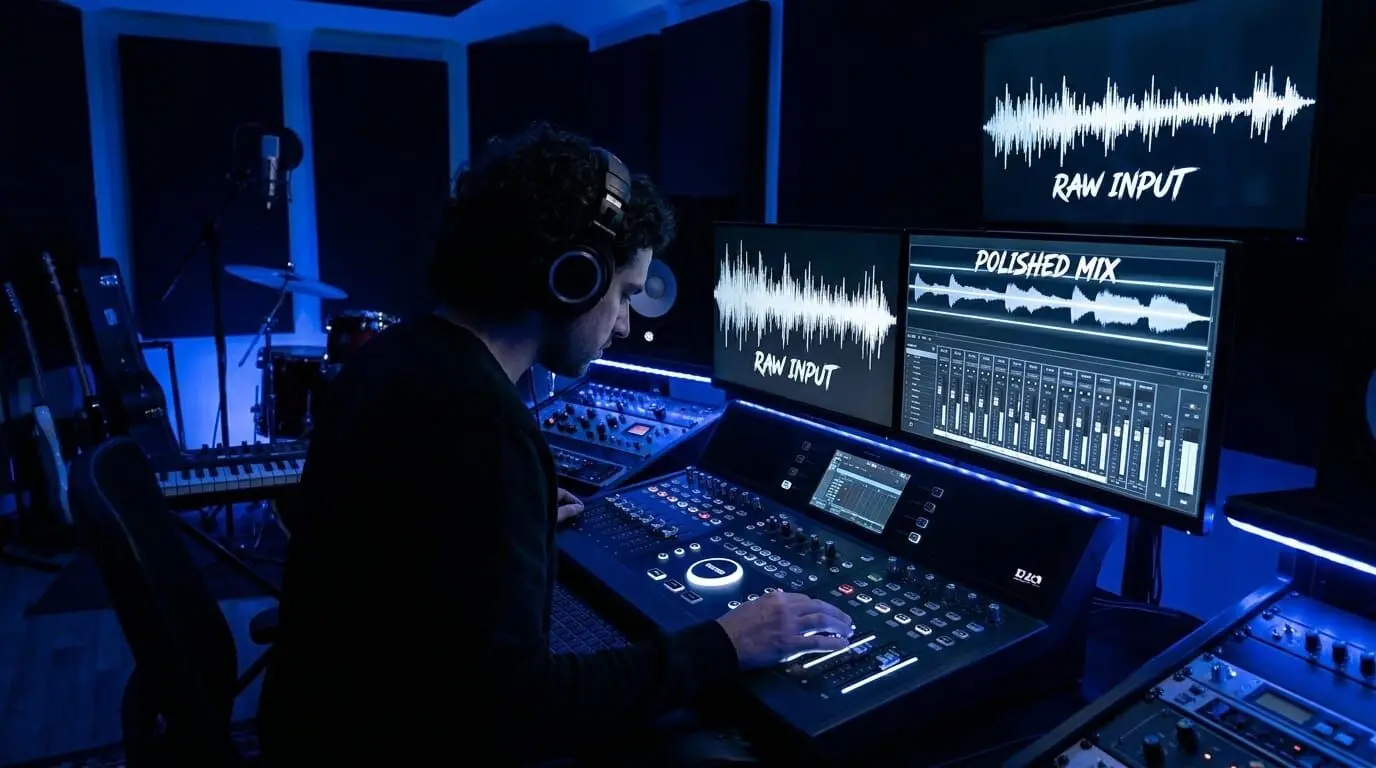
Think of it like creating a painting. Every sound—whether it’s a drum hit, a vocal, or a synth—is a brushstroke. The producer’s job is to decide how those elements fit together to create a complete picture.
Most of this work happens inside a digital audio workstation (DAW), such as Ableton Live or FL Studio. These tools act as your creative hub, where you can build, shape, and refine your music using effects like EQ, compression, reverb, and delay.
Whether you’re creating a simple loop or a full track, understanding how music production works is what allows you to turn ideas into something people actually feel.
Understanding music production
Music production is not just about assembling sounds; it's about creating an emotional connection with listeners. It combines technical skills with creative intuition. This dynamic process often begins with a spark of inspiration, which producers mold into a tangible sonic experience using digital tools. The emotional impact of music production can be profound, as it allows the producer to convey feelings and narratives that resonate deeply with audiences. As technology evolves, so do production techniques, offering new ways to experiment with sound and push creative boundaries.
Over the years, the evolution of music production has transitioned from analog to digital, revolutionizing how music is created and consumed. Today, producers have access to a plethora of software and plugins that offer unprecedented control over sound design and manipulation. This technological prowess enables producers to craft intricate soundscapes that were once unimaginable. Understanding music production is about embracing this evolution and using it to enhance the creative process, ultimately leading to more innovative and impactful music.
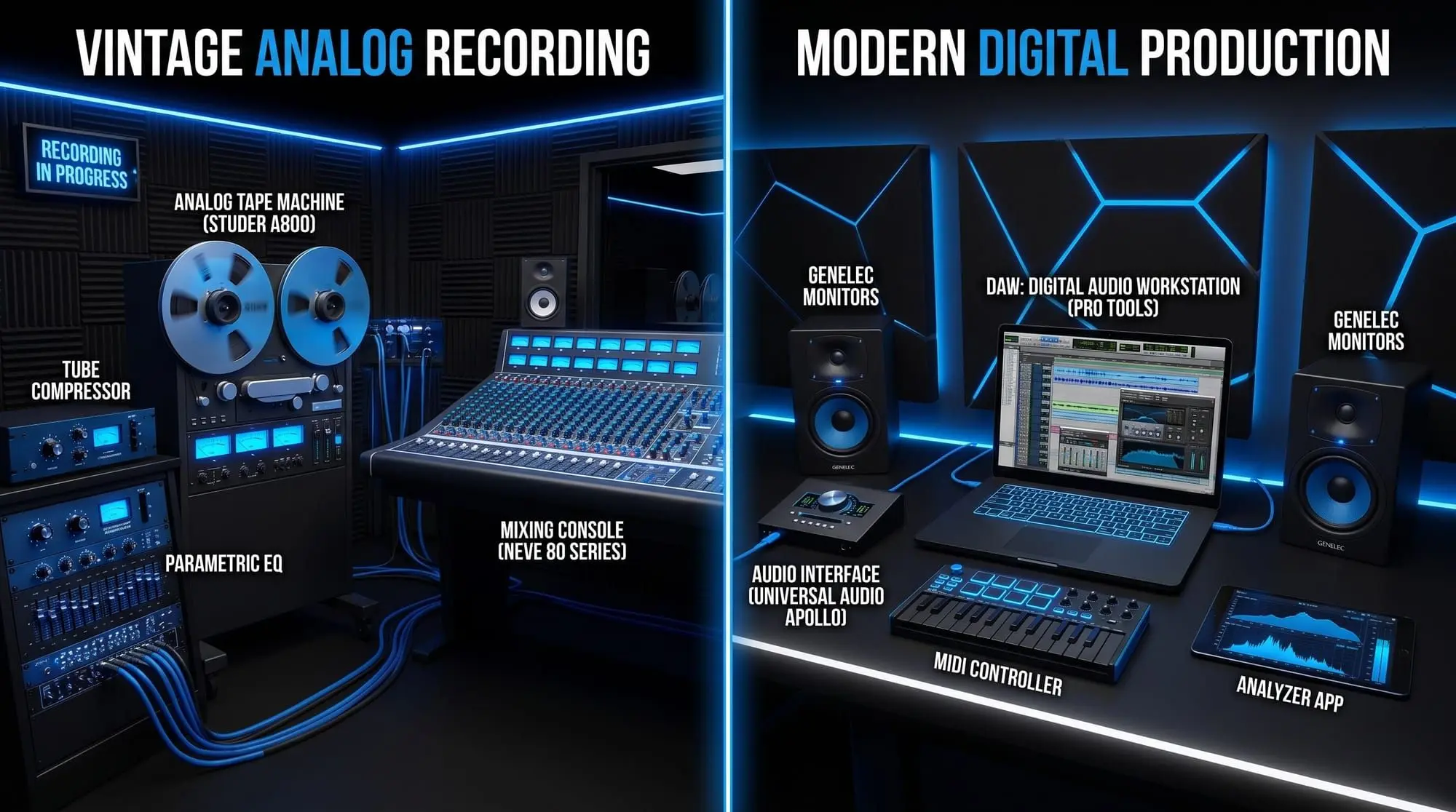
At its core, music production is the intricate art of transforming raw sound into a polished and captivating piece of music. It involves a myriad of processes, from the initial conception of a musical idea to the final mastered track. But what is music production beyond just combining sounds? It's about crafting an emotive journey that resonates with listeners, using a blend of creativity and technical expertise.
The music production process typically starts with an idea or inspiration, which can come from a simple melody, a rhythmic pattern, or even a sound sample. Once the artistic foundation is set, producers dive into their DAW to lay down tracks and manipulate sounds as part of their creative art. Using a range of music production software and techniques, such as EQ, compression, and reverb, they sculpt the audio to fit the desired vibe and genre, turning their musical art into a polished piece. A hip-hop producer might focus on punchy 808s and crisp snares, while an electronic producer might layer lush synths and create tension with risers and drops, showcasing their unique artistic vision.
To achieve a professional sound, understanding the tools available is key. According to a survey by Sound On Sound, over 80% of producers use plugins like FabFilter Pro-Q and Serum to refine their mixes. These tools allow for precise control over frequencies and sound design, essential for crafting tracks that stand out. Beyond the technical, producers must also be adept at managing the dynamics and flow of their tracks, ensuring each element complements the others. This holistic approach is what separates a good track from a great one.
Ultimately, great music production is about blending technical skills with artistic vision. As you explore different music production tips, remember that innovation often comes from experimenting with new techniques and breaking conventional rules. With dedication and creativity, your tracks can resonate on both an emotional and auditory level.
Key stages of music production
The journey through the key stages of music production is akin to a painter crafting a masterpiece, each brushstroke adding depth and emotion to the canvas. Understanding what is music production involves recognizing its distinct phases, each contributing to the final sonic artwork. The initial stage of composition is where creativity takes the driver's seat, with producers experimenting with MIDI patterns, chord progressions, and catchy hooks that lay the foundation for the track.
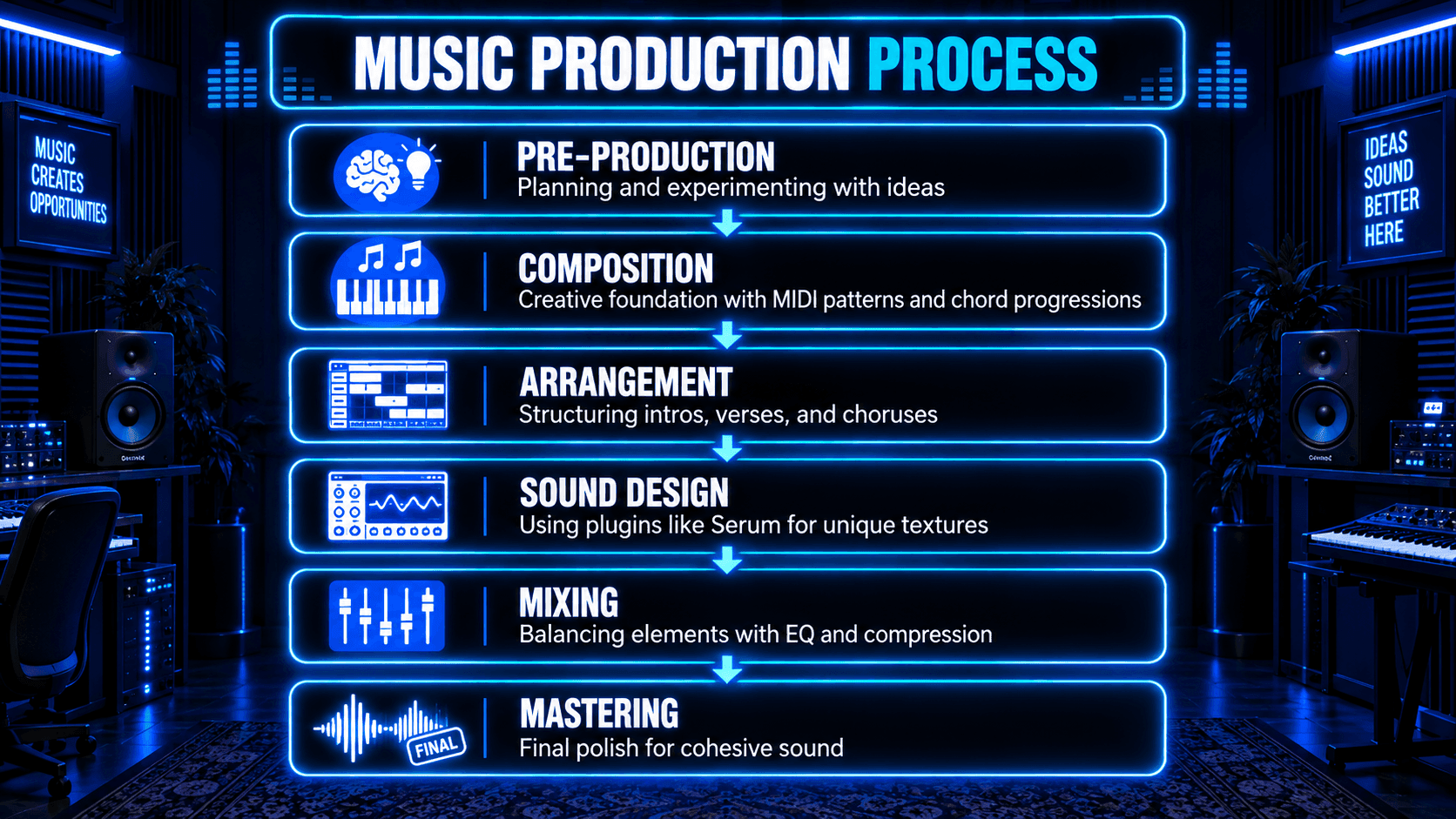
Once the blueprint is set, the production process shifts into arrangement. Imagine this as organizing the pieces of a complex puzzle, where every element finds its place. Here, producers decide on the structure of the track, crafting the intros, verses, choruses, and breakdowns. It's a meticulous process, like orchestrating a symphony, where balance and flow are key to maintaining the listener's engagement.
Next comes the sound design phase, where the magic of plugins like Serum and Omnisphere come into play. This stage is all about sculpting unique textures and tones that give the track its character. Think of it as selecting the right colors for a painting, where each shade adds vibrancy and depth.
The mixing stage follows, acting as the polishing phase, where dynamics are balanced, and space is created using techniques like EQ and compression. This step ensures that every element punches through the mix clearly. Finally, the mastering stage is the last polish, akin to framing the painting, ensuring the final product is cohesive and ready for distribution.
Understanding these stages is crucial to mastering the art of music production, as each plays a pivotal role in transforming raw ideas into a polished, professional track.
Pre-Production planning
Before recording or producing a full track, it helps to plan things out. Pre-production is where you define your direction. You might sketch out ideas, test different sounds, or build a rough demo. This stage helps you avoid problems later by making sure everything works together from the start.
For example, you might experiment with different chord progressions or tempos to see what fits best. You might also decide on the overall mood or reference other tracks for inspiration. Spending time here can save hours later in the process.
Recording techniques
Recording is where your ideas start becoming real audio. Capturing the perfect sound begins with understanding the nuances of mic placement, room acoustics, and the use of various music production software. For instance, when recording vocals, positioning a condenser microphone at a slight angle can reduce sibilance while maintaining clarity. It's these subtle adjustments that can transform a raw recording into a polished performance.
Consider the case of Billie Eilish's "Ocean Eyes" recorded in a bedroom studio—demonstrating that with the right music production techniques, even a humble setup can produce chart-topping results. Key to this process is the use of compression to control dynamics, and EQ to sculpt frequencies, ensuring each element sits perfectly in the mix. As you master these techniques, you'll find that recording is not just capturing sound, but sculpting it, a vital part of the music production process.
Mixing and mastering
Once everything is recorded, mixing and mastering are the final touches that transform raw recordings into polished, industry-standard tracks. Mixing involves balancing the individual elements of a track, such as vocals, drums, and synths, to create a cohesive sound. By using tools like EQ, compression, and reverb, you sculpt each sound to fit perfectly within the mix. For instance, a well-placed low-cut filter can prevent the bass from overpowering the vocals, ensuring clarity and presence.
Mastering, on the other hand, is all about fine-tuning the final stereo mix to ensure it translates well across all playback systems. It's the last step before a track is released and often involves subtle adjustments using multiband compression and limiting. According to a 2023 study, tracks that are professionally mastered have a 30% higher chance of being playlisted on major streaming platforms. Understanding mixing and mastering is essential in grasping what is music production and elevates your tracks to a professional level.
Essential music production equipment and software
In music production, your tools are your allies. A Digital Audio Workstation (DAW) is your primary canvas, where the magic begins. Programs like Ableton Live and FL Studio offer unique features tailored to different production styles, helping you shape your musical vision. Plugins enhance this creative process, acting as spices that add flavor to your sound. Whether it's the warm analog emulations of Universal Audio plugins or the cutting-edge sound design capabilities of Xfer Serum, each tool serves a specific purpose. An audio interface connects your instruments to your computer, ensuring high-quality sound capture. Meanwhile, studio monitors and headphones are essential for accurate sound reproduction, allowing you to fine-tune your mixes with precision.
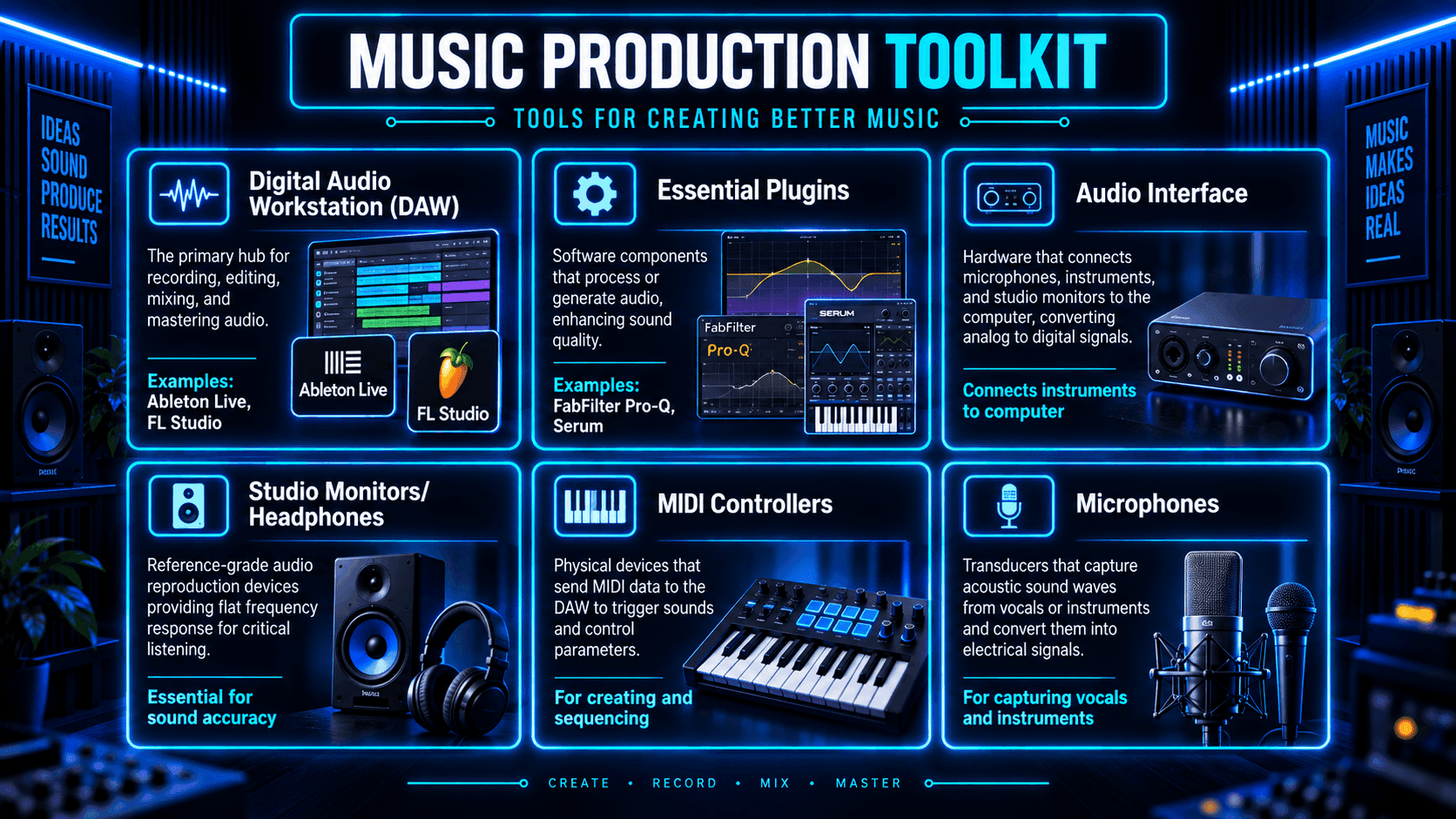
Physical equipment also plays a crucial role in the music production process. A reliable audio interface is essential, acting as the conduit between your instruments and your computer. High-quality headphones or monitors are necessary for critical listening, ensuring your mixes translate well across various playback systems. Imagine trying to build a skyscraper without the right tools; it’s the same with music production, where every piece of equipment and software works in concert to bring your creative visions to life. Each selection, from the MIDI controller to the microphone, influences the final product, shaping your tracks from raw ideas into polished masterpieces. In essence, a well-chosen toolkit is the foundation of professional-grade music production.
AI Tools in music production: from ideas to finished tracks
Modern music production is no longer limited to recording audio, dragging loops, or programming MIDI into a DAW. Many producers now work in a hybrid way: they write ideas in a DAW, shape performances with specialized tools, then bring everything back into the session for arrangement, mixing, and final decisions.
ACE Studio fits into that part of the workflow. It is an AI music workstation designed for creating and refining musical performances, not replacing the producer’s role. In a MIDI-driven workflow, you can write the melody, choose the harmony, decide the structure, and shape the emotion of the track. You can also start from songs generated from text descriptions or lyrics with Inspire Me and develop those ideas further. ACE Studio gives you flexible starting points and tools for shaping your music.
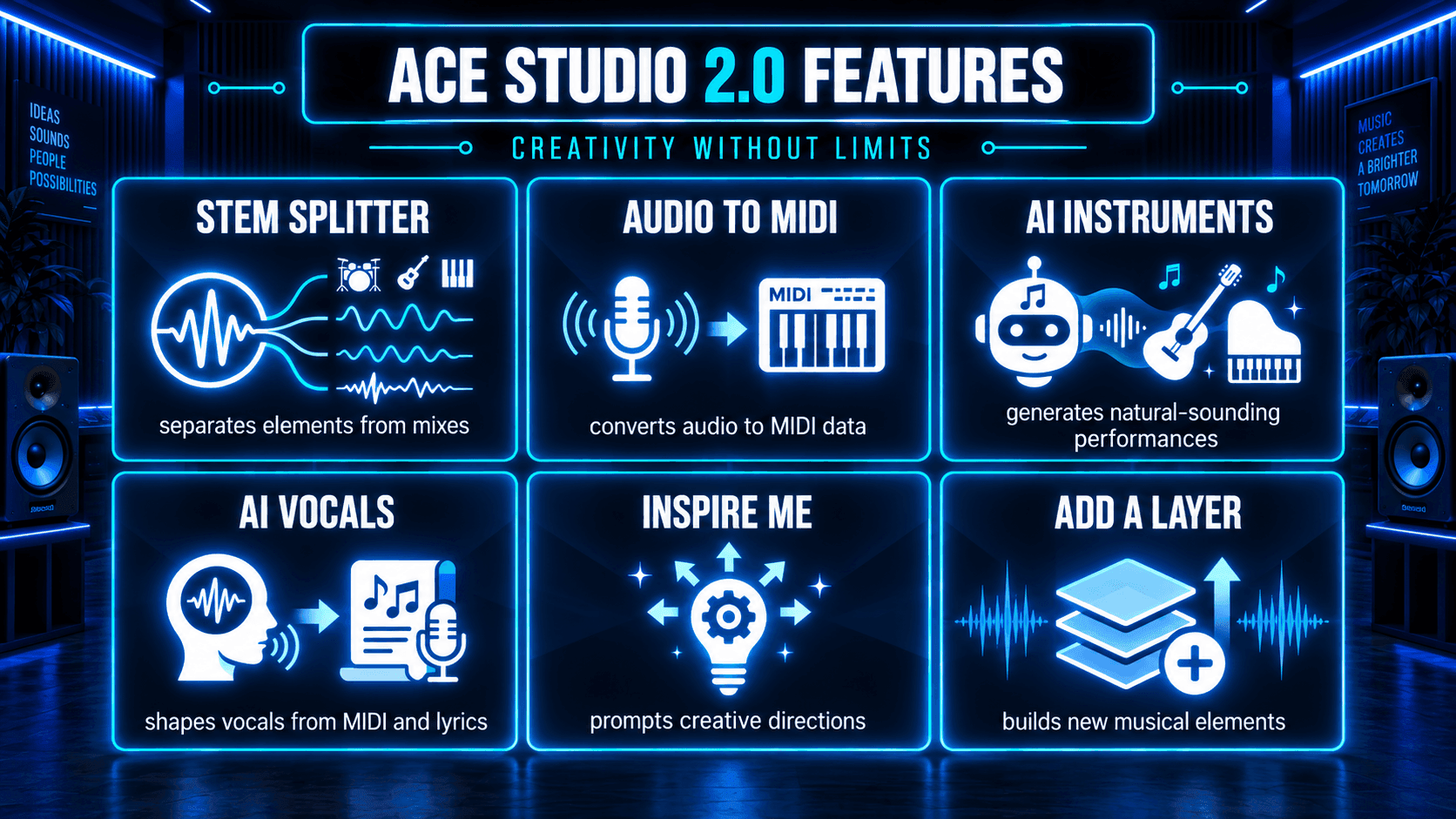
For vocals, you can create singing parts from MIDI and lyrics, then refine details like pitch, timing, phrasing, breath, vibrato, and emotional delivery. This is useful when you want to test a lead vocal idea, build harmonies, or hear how a lyric sits before committing to a final arrangement. ACE Studio also includes AI Choir features, so you can build stacked vocal parts with different voices instead of relying on duplicated takes that feel too identical.
But ACE Studio is not only for vocals. ACE Studio 2.0 expands into AI Instruments, allowing producers to turn MIDI into more natural instrument performances while keeping the part editable. That means you can sketch strings, brass, woodwinds, or other instrumental layers, then adjust the performance so it supports the song instead of sounding like stiff notes on a grid. This can be helpful for pop, cinematic music, electronic production, R&B, and any style where arrangement and texture matter.
ACE Studio also includes tools like Stem Splitter and Audio to MIDI, which can help when working from existing audio. If you have a rough demo, a full bounce, or an old idea trapped inside a mixed file, these tools can make it easier to separate, rebuild, or reshape parts before bringing them back into your main production session.
The important point is that ACE Studio does not make the creative decisions for you. It gives you more control over the source material before mixing begins. You decide what stays, what changes, what supports the song, and what should be removed.
Prompt-based functionalities in ACE Studio
ACE Studio 2.0 also includes prompt-based Generative Kits for moments when a track needs a starting point, a supporting layer, or a fresh direction. For example, Inspire Me can help generate musical ideas based on a mood or direction, while Add a Layer can create an extra part around an existing section. Music Enhancer can help develop rough material into something more expressive. These tools are best treated like a sketchbook: they give you something to react to, but you still edit, arrange, and produce the final result yourself.
ACE Studio also connects with DAWs through ACE Bridge, so producers can keep working inside their usual production environment while using ACE Studio as a creative extension. That keeps the workflow practical: shape the performance in ACE Studio, then finish the balance, panning, effects, automation, mixing, and mastering in your DAW.
In that sense, it is useful because it sits between the first idea and the finished production. It helps turn rough musical thoughts into editable vocals, instrument parts, layers, stems, or performance ideas that you can continue shaping with your own taste.
Exploring music production across genres
Music production isn’t one-size-fits-all. While the core process stays the same, every genre has its own workflow, priorities, and sound characteristics. Understanding these differences helps you produce more intentionally—and sound more authentic in each style.
Electronic (EDM)
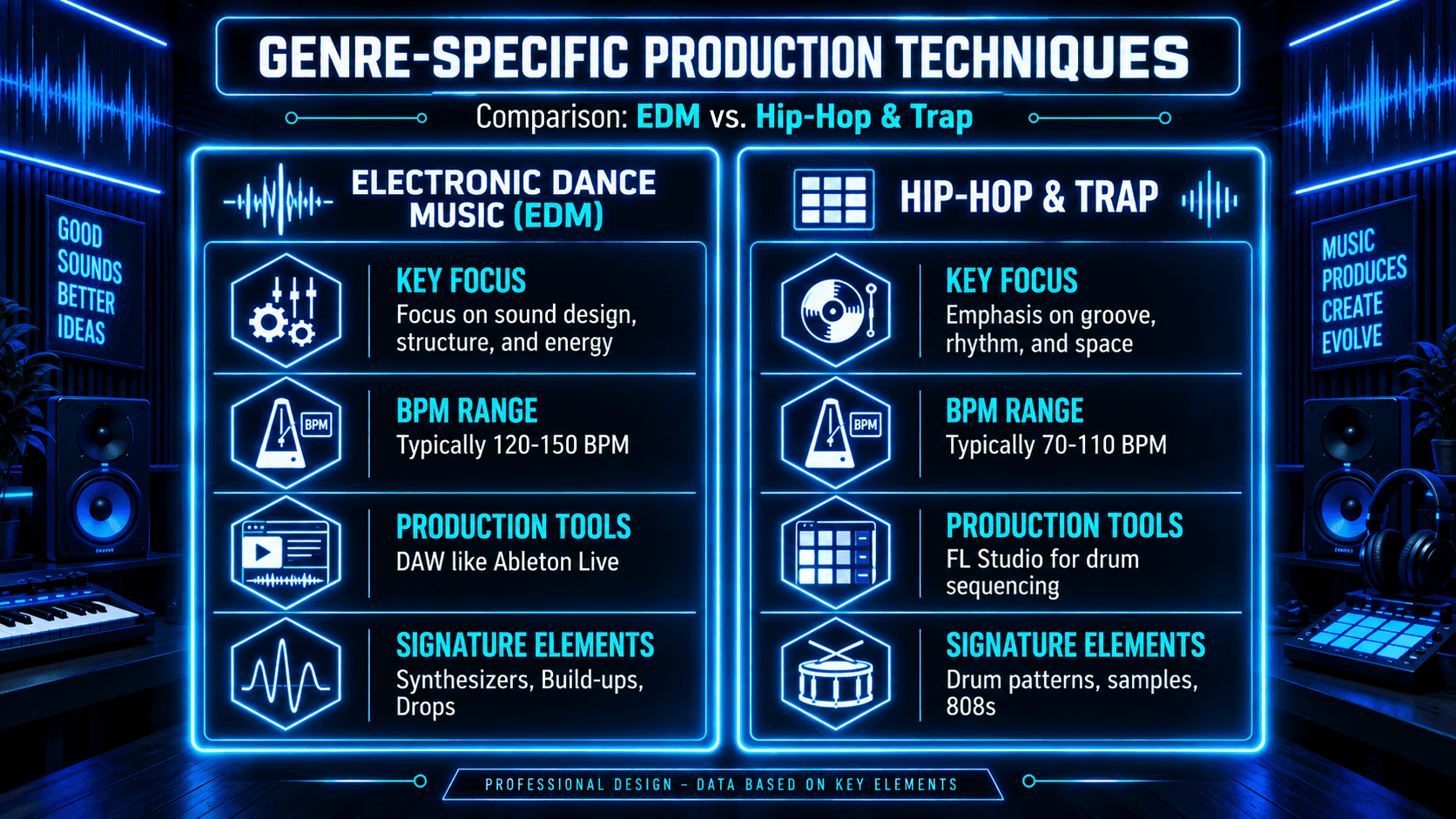
In electronic music, production is at the center of everything. Tracks are usually built entirely inside a DAW like Ableton Live.
Producers focus heavily on sound design, energy, and structure. Synths are layered to create rich textures, while drums are designed to hit clean and hard. Techniques like sidechain compression are used to create movement, especially between the kick and bass.
Arrangement is also key. EDM tracks often follow a clear structure: intro, buildup, drop, breakdown. Each section is designed to control energy, especially for live settings like clubs or festivals. A typical EDM track might sit around 120–150 BPM, depending on the subgenre, with a strong focus on rhythm and impact.
Hip-Hop & Trap
Hip-hop production revolves around groove, rhythm, and space. Instead of filling every moment, producers often leave room for the vocal to lead.
Beats are usually built using drum patterns, samples, and basslines—especially 808s. Programs like FL Studio are popular because of their fast workflow for sequencing drums. Timing plays a huge role. Hi-hats might roll rapidly, kicks can be slightly off-grid, and swing is often used to create a laid-back or bouncy feel.
Unlike EDM, hip-hop production is less about big drops and more about consistency and vibe. A strong beat doesn’t need constant changes—it just needs to feel right.
Pop
Pop music is all about clarity, balance, and accessibility. Production focuses on making every element clean and easy to understand. Vocals are the centerpiece, so everything else is built around supporting them. This means careful use of EQ, compression, and layering to avoid clutter.
Pop producers often blend elements from multiple genres—electronic sounds, acoustic instruments, and even hip-hop drums. The goal is to create something familiar but still fresh.
Structure is also very intentional. Catchy hooks, strong choruses, and smooth transitions are essential. Most pop tracks sit around 90–120 BPM, designed to feel natural and engaging to a wide audience.
Rock
Rock production is centered around live instruments and performance. Instead of building everything digitally, producers focus on recording guitars, bass, and drums in a way that captures energy and authenticity. This makes mic placement, room acoustics, and performance quality especially important.
Mixing in rock is about balance and separation. Guitars need to sound full without overpowering vocals, and drums need to feel punchy without being too processed. Compared to electronic genres, rock production often uses fewer digital effects and relies more on natural sound.
Lo-Fi & Chill
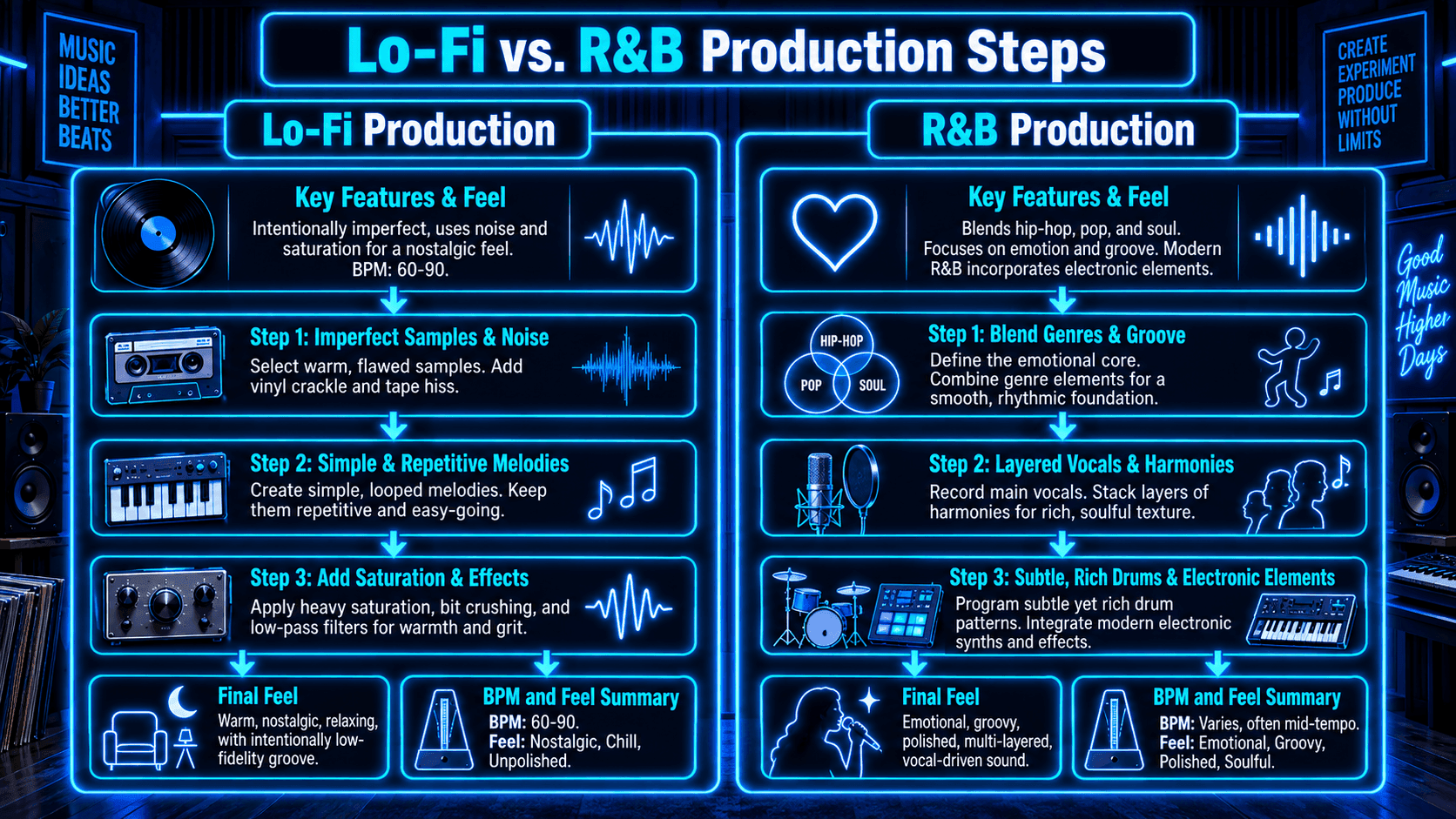
Lo-fi production is intentionally imperfect and relaxed. Producers often add noise, saturation, or vinyl crackle to create a warm, nostalgic feel. Drums are usually soft and slightly off-grid, giving the track a human, unpolished vibe.Melodies are simple and repetitive, often built around jazz-inspired chords or sampled loops.
Tempo tends to be slower—usually around 60–90 BPM—creating a laid-back atmosphere that’s easy to listen to in the background. What makes lo-fi unique is that imperfections aren’t mistakes—they’re part of the aesthetic.
R&B
R&B blends elements of hip-hop, pop, and soul, with a strong focus on emotion and groove. Vocals are the centerpiece, often layered with harmonies and effects to create depth. Production supports the vocal rather than competing with it.
Drums are usually subtle but rhythmically rich, while chords tend to be more complex than in other genres. Smooth transitions and atmosphere play a big role in shaping the sound. Modern R&B often incorporates electronic elements, but keeps a softer, more intimate feel compared to pop.
House & Techno
House and techno are built for rhythm and repetition. These genres rely on steady drum patterns—especially the classic four-on-the-floor kick. The goal is to create a groove that can run for minutes without losing momentum.
Producers focus on subtle changes over time, like adding or removing elements, adjusting filters, or introducing small variations. Instead of big drops, energy is controlled gradually. Tempo usually sits between 120–130 BPM, designed for dancefloors where consistency matters more than constant variation.
Avoiding common mistakes in music production
Most mistakes in music production don’t come from a lack of knowledge—they come from how you apply it. And many of them show up in the same ways, especially when you’re still developing your workflow.
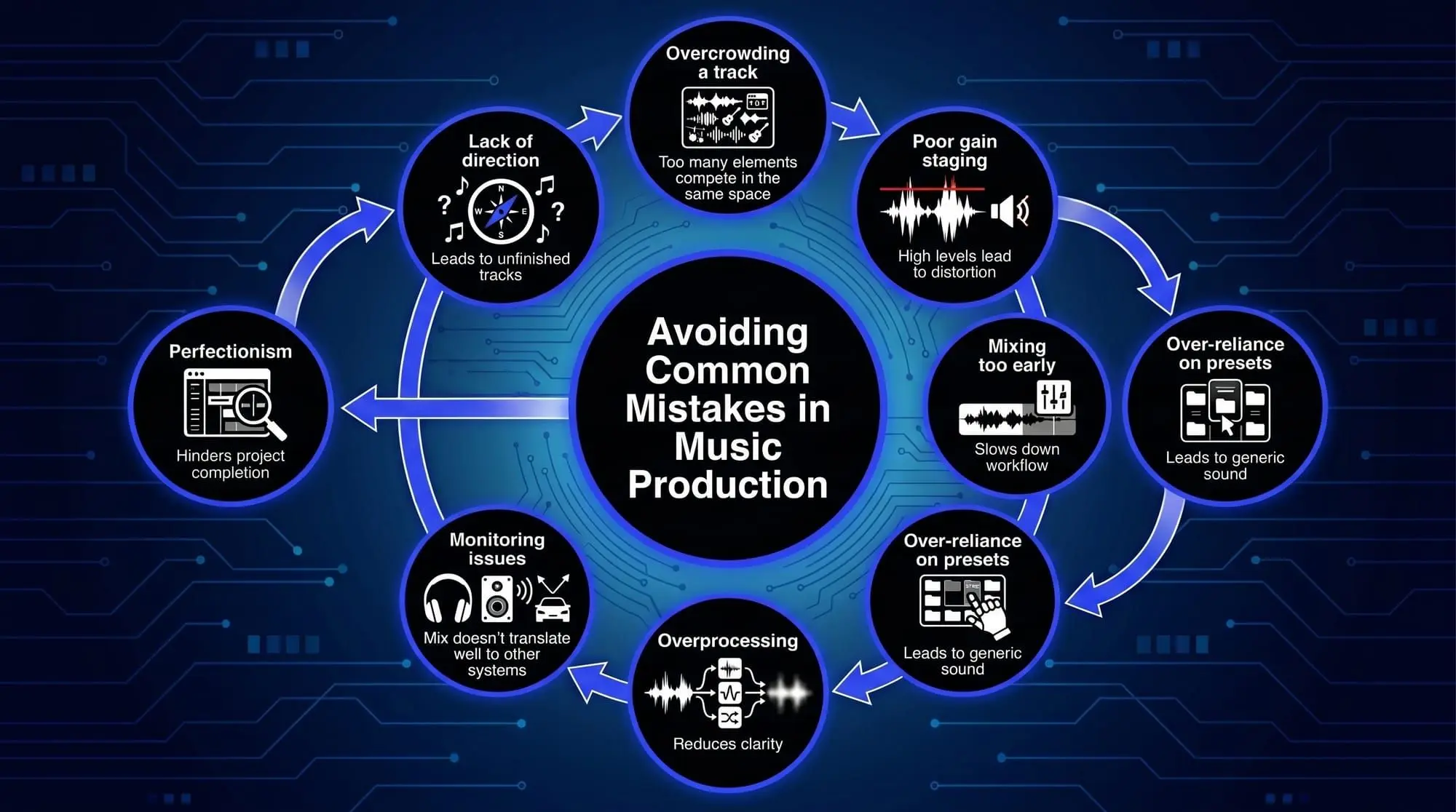
One of the most common issues is overcrowding a track. It’s easy to keep adding sounds because everything feels exciting in isolation. But when too many elements compete in the same space, the result is a mix where nothing stands out. Strong productions are often simpler than they seem. Each sound has a clear role, and there’s enough space for it to breathe.
Another frequent problem is poor gain staging. If your levels are too high early on, you’ll quickly run into distortion or lose control of your mix. Keeping your levels balanced from the start gives you more headroom and makes everything easier to manage later.
There’s also the tendency to focus on mixing too early. Tweaking EQs and compressors before the track is fully arranged can slow down your workflow and break your creative momentum. It’s usually more effective to build the full idea first, then refine it once the structure is in place.
Over-reliance on presets is another trap. Presets are useful starting points, but leaving them untouched can make your tracks sound generic. Even small adjustments—changing a filter, tweaking envelopes, or reshaping the tone—can help create something more personal.
A related issue is overprocessing. Adding too many effects doesn’t automatically improve a sound. In fact, it often does the opposite—removing clarity and making the mix feel cluttered. Most of the time, subtle and intentional processing leads to better results.
Monitoring can also be a challenge. If you’re working in an untreated space or only using one pair of headphones, your mix might not translate well to other systems. Listening on different devices helps you catch problems early and build a more balanced track.
Then there’s perfectionism. Spending too much time on small details can prevent you from finishing anything at all. Progress in music production comes from completing projects, not endlessly refining one.
Finally, a lack of direction can make the process feel stuck before it even begins. Starting without a clear idea often leads to unfinished tracks. Even a rough concept—like a reference track, tempo, or mood—can give you enough direction to move forward.
These mistakes are part of the process. The key is recognizing them early and adjusting your approach. Over time, your decisions become more intentional—and your tracks start to come together faster and more naturally.
The benefits of music production
Music production offers more than just the ability to create songs—it changes how you think about sound, creativity, and problem-solving.
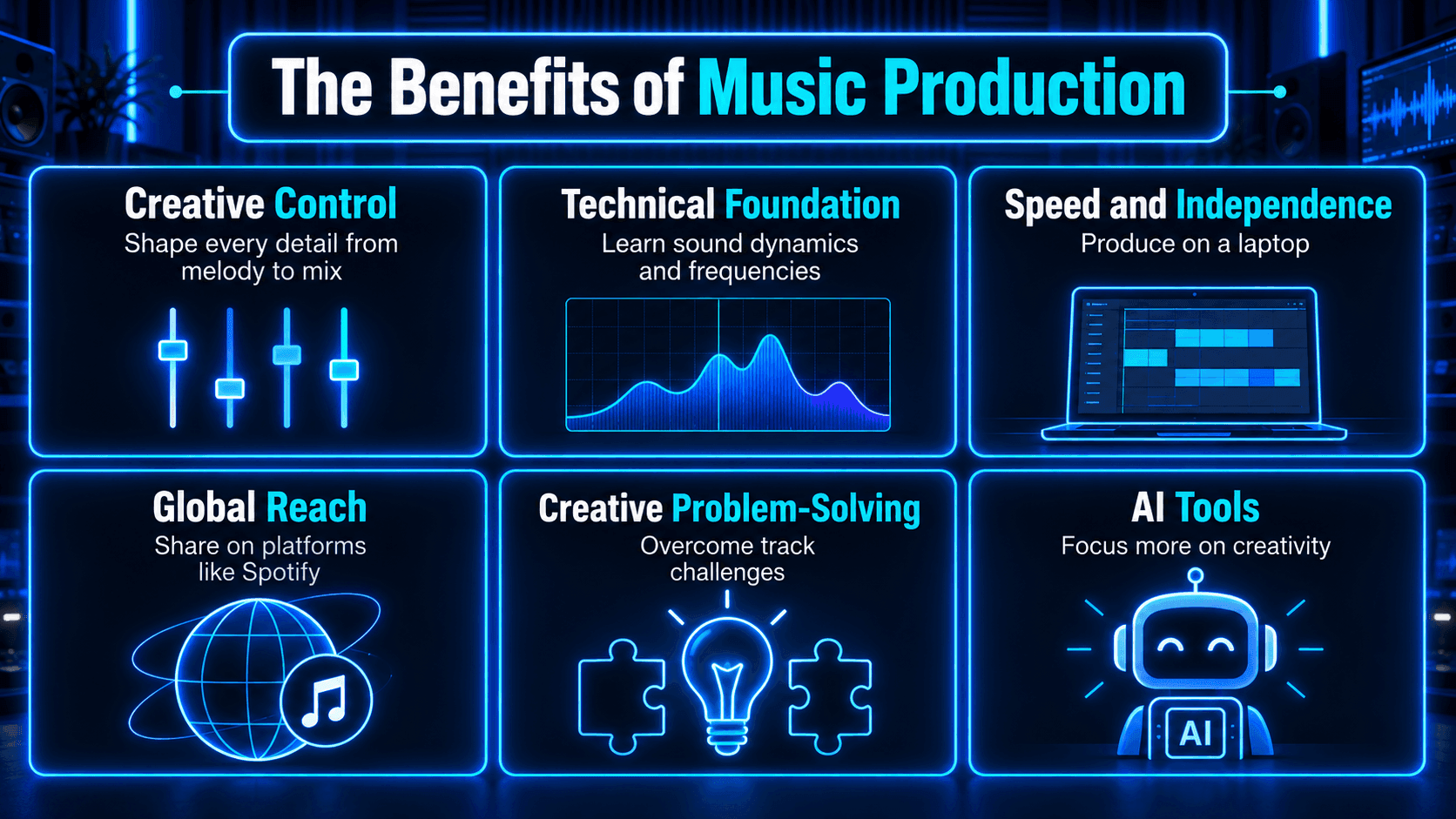
One of the biggest benefits is creative control. Instead of relying on others to bring your ideas to life, you can shape every detail yourself—from the melody to the final mix. This allows you to experiment freely and develop a sound that’s truly your own.
It also builds a strong technical foundation. As you produce more, you naturally learn how sound works—how frequencies interact, how dynamics affect energy, and how different elements sit together in a mix. Over time, this sharpens not only your production skills, but also how you listen to music.
Another key advantage is speed and independence. What once required a full studio and team can now be done on a laptop. Modern tools allow producers to move quickly from idea to finished track, removing many of the traditional barriers to entry.
Music production also opens the door to global reach. Platforms like Spotify and SoundCloud make it possible to share your work instantly with listeners around the world. This has shifted the industry from being gatekeeper-driven to creator-driven.
There’s also a strong element of creative problem-solving. Every track presents challenges—how to make a drop hit harder, how to clean up a muddy mix, how to make a vocal sit right. Solving these problems is what develops your skill over time.
And increasingly, production tools are helping you focus more on creativity by handling technical tasks. AI-assisted tools, for example, can speed up processes like mixing or sound generation, allowing producers to spend more time on the creative side of music-making.
Ultimately, music production is valuable because it combines art and skill. It gives you a way to express ideas while constantly improving your technical ability—and that combination is what keeps people progressing.
Future trends in music production
Music production is evolving quickly, and most of the changes are being shaped by technology. But these changes are not replacing producers. They are changing how producers move from idea to finished track.
One of the biggest shifts is the rise of AI as a creative support tool. Instead of only using software to record or edit audio, producers can now use AI to test melodies, generate starting points, shape performances, clean up audio, or build arrangement ideas faster. The goal is not to remove the human part of music production. It is to give producers more ways to explore an idea before committing to it.
This is where tools like ACE Studio fit naturally into the future of production. A producer might use ACE Studio to sketch vocal lines from MIDI and lyrics, build harmonies, try choir textures, generate instrument parts, separate stems, or create prompt-based layers for inspiration. But the producer still decides what works. The creative judgment stays human.
Another major trend is the growth of hybrid workflows. Producers are no longer choosing between traditional recording and modern software. They are combining both. A track might start with a guitar loop, move into a DAW, use AI tools for vocal or instrumental ideas, then return to the producer for arrangement, mixing, and mastering.
Cloud-based tools and remote collaboration are also making production more flexible. Music is no longer tied to one room, one studio, or one setup. Producers can build, share, revise, and finish tracks from almost anywhere.
At the same time, authenticity is becoming more important. As AI becomes more common, producers are paying closer attention to originality, emotion, and human feel. The best results will likely come from using technology with intention – not as a shortcut, but as a way to shape ideas more clearly.
What’s clear is that music production is not becoming less creative. It is becoming more flexible. The tools are changing, the workflows are expanding, but the core idea stays the same: turning musical ideas into sound with taste, control, and purpose.
Frequently Asked Questions about music production
What does a music producer actually do?
A music producer oversees the creative and technical process of making a song. This can include writing ideas, arranging instruments, recording artists, choosing sounds, mixing, and helping shape the final direction of the track. In many modern setups, the producer is involved from the first idea all the way to the finished release.
Do I need to know music theory to start producing?
No, you do not need deep music theory to begin. Many beginners start by experimenting by ear inside a DAW. However, learning basic concepts like chords, scales, rhythm, and song structure can make production much easier as your skills improve.
Can I produce music with just a laptop?
Yes. Many producers begin with only a laptop, headphones, and software. Forums like Reddit often show examples of successful tracks made in simple bedroom studios. While better equipment can help later, strong ideas matter more than expensive gear at the beginning.
Which DAW is best for beginners?
The best DAW depends on your workflow. FL Studio is popular for beat-making, Ableton Live is known for electronic music and performance, and Logic Pro is common among Mac users. Most professionals on music forums recommend choosing one and learning it deeply rather than constantly switching.
How long does it take to learn music production?
That varies by person. Some people understand the basics in a few weeks, while developing professional-level skills can take years. Many experienced producers say improvement comes faster by finishing tracks regularly instead of endlessly starting new ones.
What is the difference between mixing and mastering?
Mixing focuses on balancing all the individual sounds inside a song. Mastering is the final step that prepares the completed mix for release by improving consistency, loudness, and playback across different systems.
Do expensive plugins make better music?
Not necessarily. Many beginners ask this online, but experienced producers often say stock plugins can produce professional results when used well. Expensive plugins can speed up workflow, but they cannot replace good listening skills and arrangement decisions.
Why do my songs sound unfinished?
This usually happens because of arrangement, sound selection, or lack of structure rather than equipment. Many beginner producers focus heavily on sounds but overlook transitions, energy changes, and proper song development, which make a track feel complete.
Should I learn recording before producing?
It helps, but it is not required right away. If you mainly create electronic music, you can begin producing without recording live instruments. If you plan to work with vocals or instruments, learning basic recording techniques becomes much more important.
Is music production hard for beginners?
Music production can feel overwhelming at first because it combines creativity and technical skills. The learning curve is real, but most producers improve faster once they focus on one skill at a time instead of trying to master everything at once.