

Key Takeaways
- Dynamic microphones convert sound into electrical signals through electromagnetic induction, using a diaphragm, voice coil, and magnetic field rather than active electronics.
- Moving coil dynamic microphones are durable, affordable, and reliable, making them a strong choice for live vocals, drums, guitar amps, podcasts, and untreated recording spaces.
- Different polar patterns serve different recording needs: cardioid mics reject rear sound, supercardioid and hypercardioid mics offer tighter isolation, and omnidirectional models capture sound evenly from all directions.
- Dynamic microphones usually have lower sensitivity than condenser microphones, which helps reduce room noise, stage bleed, and unwanted background sound.
- Their ability to handle high SPL, resist humidity, and survive physical stress makes dynamic microphones one of the most practical tools for both beginners and professional audio engineers.
- ACE Studio gives creators a way to shape vocal ideas, harmonies, phrasing, and performance direction first, so the recording stage becomes more intentional instead of guesswork.
Understanding the Fundamentals of Dynamic Microphones
Definition and Core Architectural Framework
In the domain of audio recording equipment and electroacoustics, a dynamic microphone represents a specific class of transducer designed to convert acoustic energy into an analog electrical signal. The foundational mechanism relies on the principles of electromagnetism. Unlike capacitive systems, a dynamic mic utilizes physical movement within a magnetic field to generate its output voltage. This architectural choice defines its operational capabilities, structural resilience, and distinct sonic character, establishing it as a cornerstone of modern microphone technology.
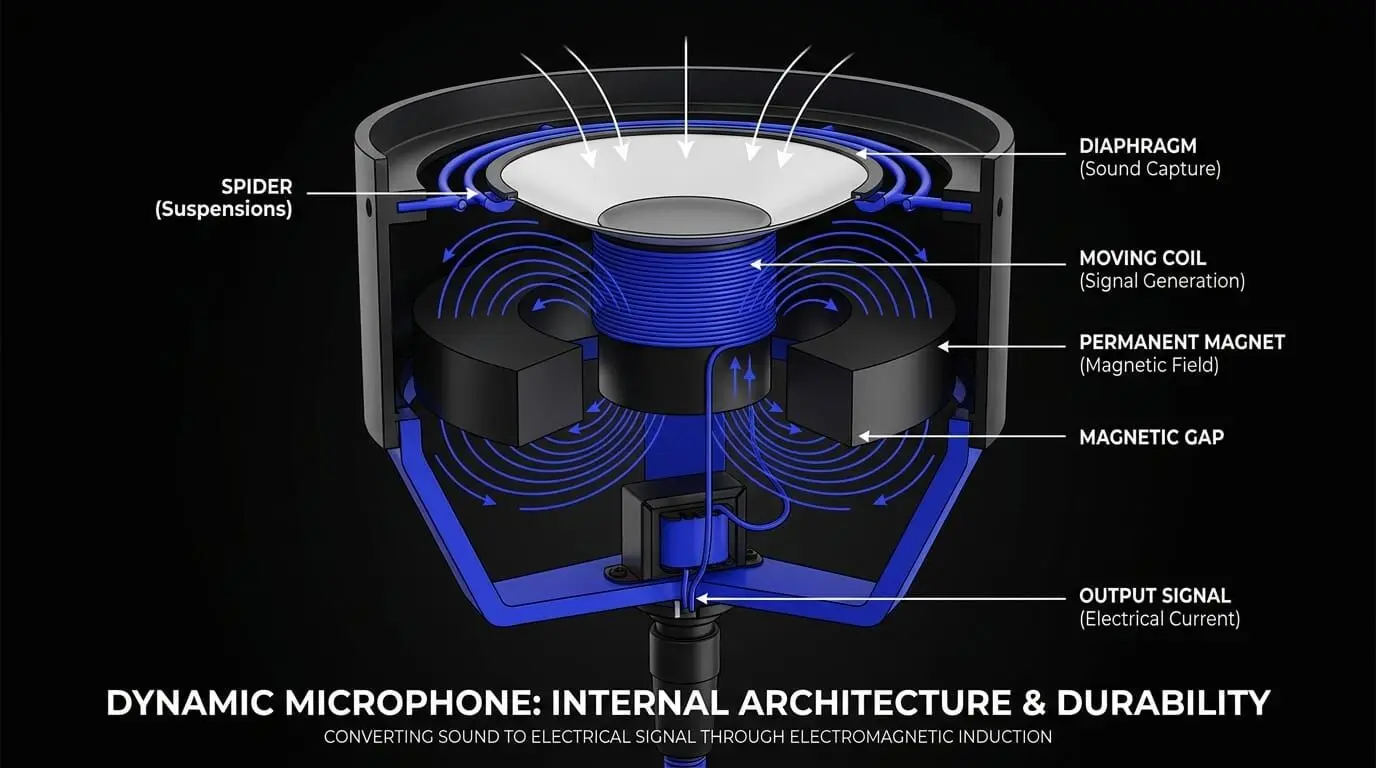
Within the broader landscape of microphone types, the dynamic variant is characterized by its passive operation, low output impedance, and exceptional mechanical stability. It serves as an essential tool across both live reinforcement and studio environments, offering a predictable interface for preamplification stages. The structural simplicity ensures that the capsule remains stable under extreme conditions, making it fundamentally different from high-sensitivity condenser alternatives.
How Dynamic Microphones Work
The Moving Coil Principle
The primary variant of the dynamic microphone is the moving coil microphone. The operation of this device is a direct application of the Moving Coil Principle executing a mechanical-to-electrical energy conversion without requiring external polarization voltage.
Faraday’s Law and Signal Generation
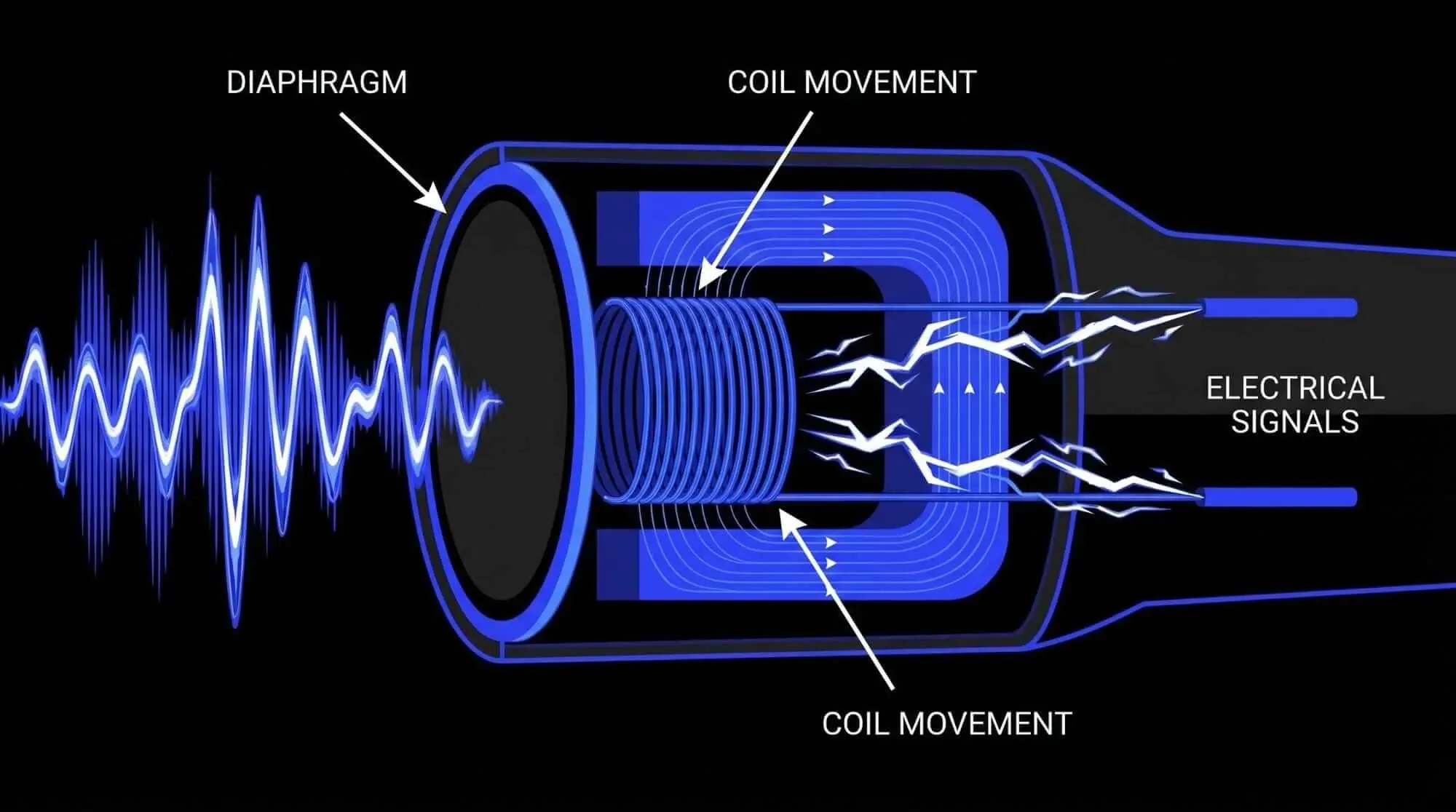
The core operational principle is governed by Faraday's Law of Induction, which dictates that an electromotive force is induced within a conductor when it experiences a changing magnetic flux. In the context of a moving coil capsule, sound waves strike a thin, flexible diaphragm, causing it to vibrate in sympathy with the alternating air pressure. Because a coil of finely wound copper wire is bonded directly to the rear of this diaphragm, the coil moves back and forth within a concentrated magnetic field. This physical displacement cuts across the magnetic lines of flux, inducing an alternating electrical current across the terminals of the coil that mirrors the frequency and amplitude of the incoming acoustic waveform.
Diaphragm and Voice Coil Interactivity
The design of the diaphragm and voice coil assembly requires a precise balance of mass, compliance, and structural stiffness:
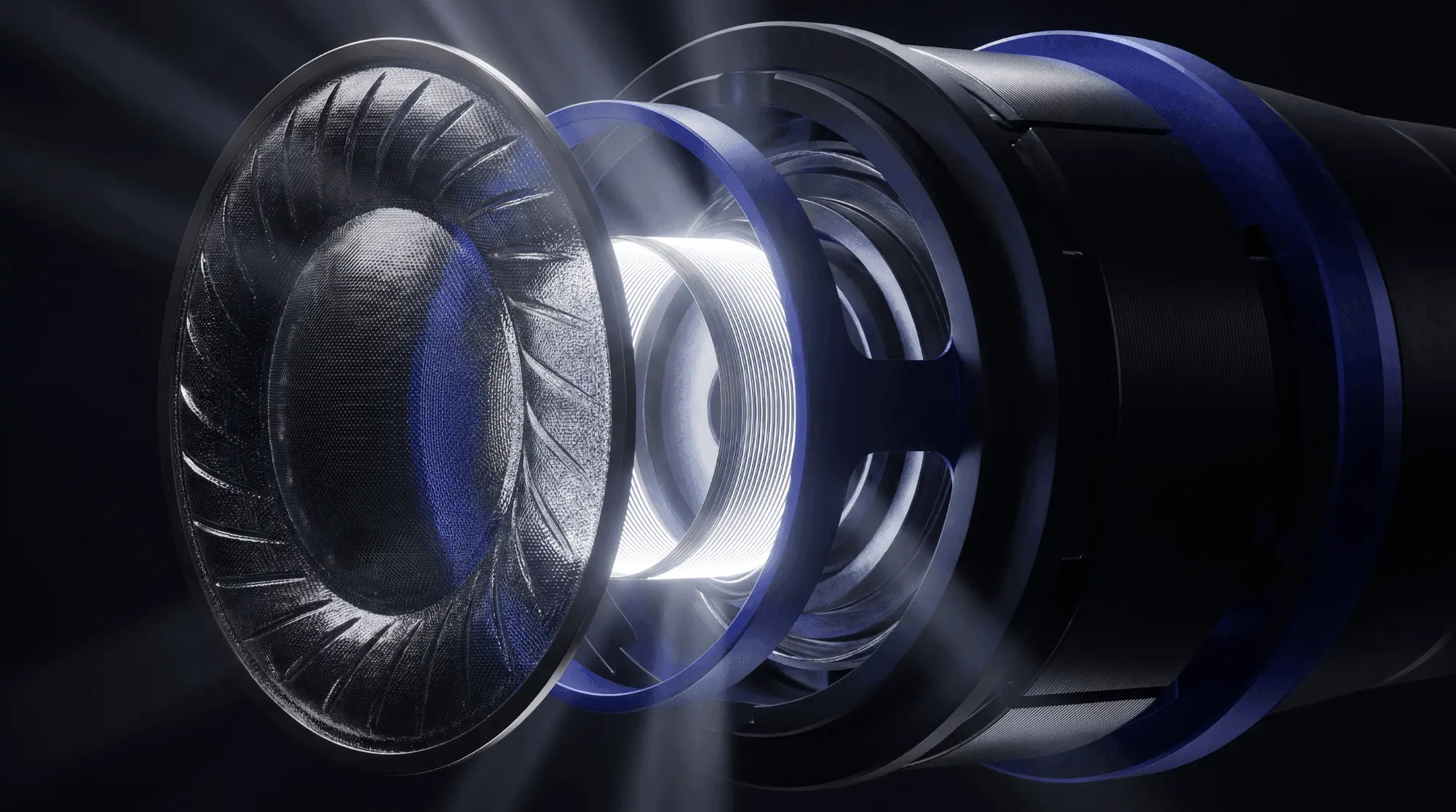
- Diaphragm Substrates: Modern dynamic diaphragms are typically manufactured from ultra-thin polyester films, such as Mylar, varying in thickness from a few microns to tens of microns. The surface is often embossed with radial or concentric ridges to optimize compliance, allowing controlled excursion while preventing structural deformation.
- Voice Coil Composition: The voice coil consists of ultra-fine insulated copper or copper-clad aluminum wire wound precisely around a cylindrical former. The mass of this assembly is significantly higher than that of a condenser microphone diaphragm, which creates greater mechanical inertia.
- Acoustic Damping: This inherent inertia means that the moving assembly requires higher acoustic energy to initiate movement, resulting in a lower native sensitivity and a dampened response to high-frequency transients.
Magnetic Field Enclosures and Permanent Magnets
To maximize the efficiency of the induction process, the voice coil is suspended inside a precise, narrow annular gap within a magnetic circuit. A heavy permanent magnet, positioned at the core of the structure, connects to soft iron pole pieces that focus the magnetic flux into this gap. The density of this magnetic flux directly influences the sensitivity and transient recovery of the microphone.
Modern high-performance dynamic capsules leverage neodymium magnet structures, which offer a substantially higher flux density than traditional ferrite or Alnico magnets. This enables engineers to reduce the number of coil windings—thereby lowering the moving mass and improving high-frequency response—without sacrificing output signal levels.
Ribbon Microphone Architecture as a Dynamic Variant
While moving coil designs are the most common interpretation of the technology, ribbon microphones constitute a crucial second category within the dynamic family. Both share the fundamental reliance on electromagnetic induction, but their physical implementation differs significantly.
Velocity-Based Transduction Mechanics
A ribbon microphone replaces the separate polymer diaphragm and copper voice coil assembly with a single, ultra-thin strip of corrugated aluminum suspended between the poles of a powerful permanent magnet. This ribbon acts simultaneously as the acoustic sensor and the electrical conductor.
Unlike moving coil designs, which are pressure-responsive systems, traditional ribbon microphones are pressure-gradient devices. They respond directly to the velocity of the air particles rather than the absolute acoustic pressure, capturing the difference in pressure between the front and rear faces of the ribbon. When sound waves pass, the ribbon flexes within the magnetic gap, generating a minute voltage across its ends through electromagnetic induction.
Architectural Differences: Moving Coil vs. Ribbon
The mechanical differences between moving coil and ribbon designs yield distinct acoustic signatures and operational profiles:
| Mechanical Feature | Moving Coil Microphone | Ribbon Microphone |
|---|---|---|
| Diaphragm Element | Synthetic polymer film (Mylar) with attached coil. | Ultra-thin corrugated aluminum ribbon less than 2 microns thick. |
| Moving Mass | Moderately high due to copper/aluminum wire windings. | Extremely low; allows rapid transient response. |
| Acoustic Operation | Pressure or pressure-gradient based on porting. | Pure pressure-gradient operation. |
| Native Polar Pattern | Adaptable (cardioid, supercardioid, omnidirectional). | Inherently bidirectional (figure-8). |
| Structural Durability | Exceptionally high; resilient against physical impacts. | Delicate; vulnerable to strong wind blasts and stretching. |
| Output Impedance | Low nominal impedance (150 to 600 ohms). | Extremely low fraction of an ohm; requires internal transformer. |
Impedance Matching and Signal Transmission
- The electrical signal generated by the interaction of the moving coil or ribbon within the magnetic gap is low in amplitude and requires careful management.
- Professional dynamic microphones are designed with a low output impedance, typically ranging from 150 to 600 ohms.
- Low impedance minimizes high-frequency attenuation caused by the inherent capacitance of long analog cables.
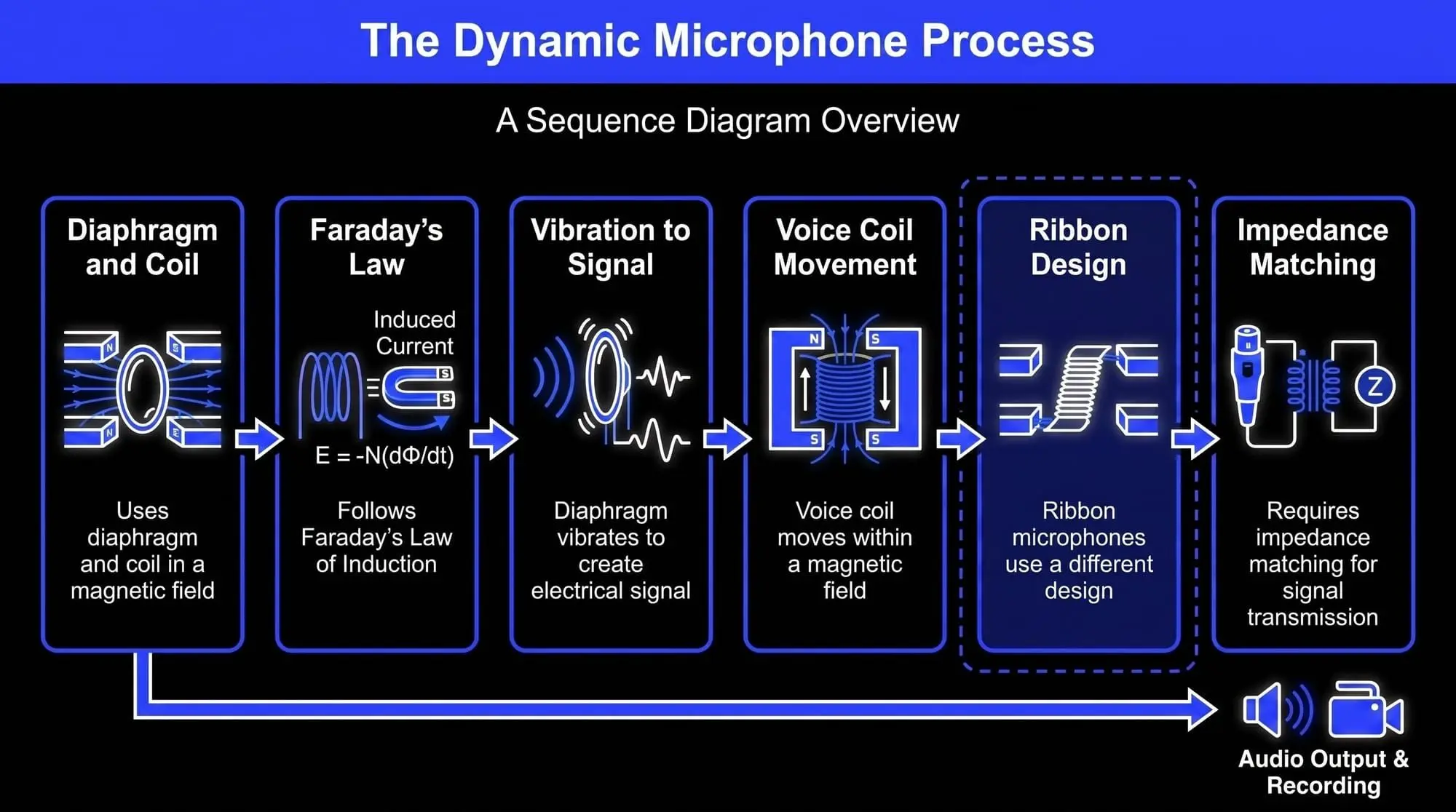
To interface effectively with standard audio preamplifiers, many dynamic microphones incorporate an internal step-up transformer within the chassis. This component serves multiple purposes:
- Voltage Step-Up: It steps up the minute voltage generated by the capsule to a usable microphone-level signal.
- Impedance Balancing: It transforms the raw impedance of the capsule to match the input impedance of standard preamplifiers, ensuring optimal power transfer and minimizing signal degradation.
- Common Mode Rejection: The transformer assists in providing a truly balanced output across pins 2 and 3 of an XLR connector, allowing any electro-magnetic interference or radio-frequency interference picked up along the cable path to be canceled out at the preamplifier stage.
Classification and Polar Patterns: Types of Dynamic Microphones
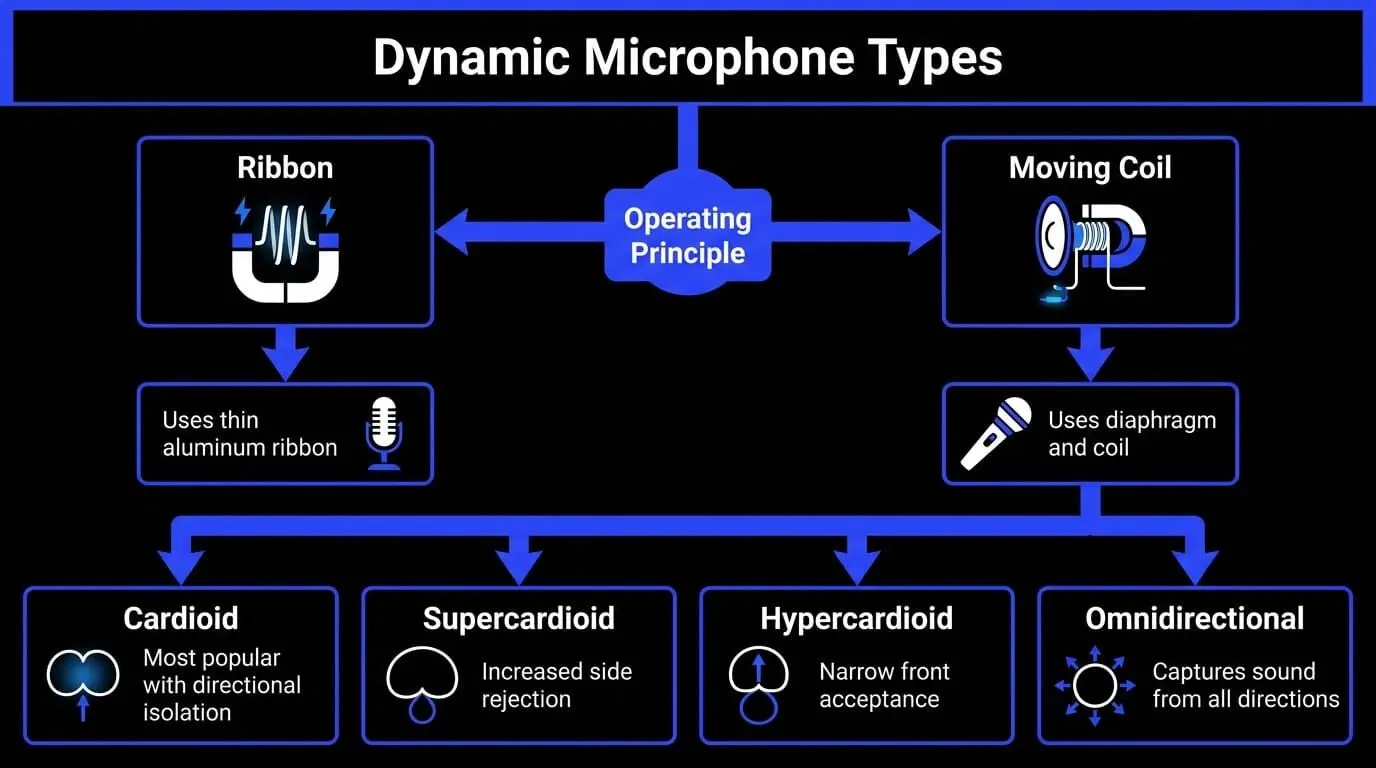
The directional sensitivity of a dynamic microphone, known as its polar pattern, determines how the capsule reacts to sound arriving from various angles. This characterization dictates the suitability of the microphone for specific acoustic environments and isolation challenges.
Cardioid Polar Patterns: Directional Isolation Architecture
The Cardioid pattern is the most prevalent directional profile utilized in moving coil dynamic designs. Characterized by a heart-shaped response curve, this pattern exhibits maximum sensitivity directly on-axis (0 degrees) and achieves maximum rejection at the rear axis (180 degrees), typically providing 20 dB to 30 dB of attenuation for rear-originating sound waves.
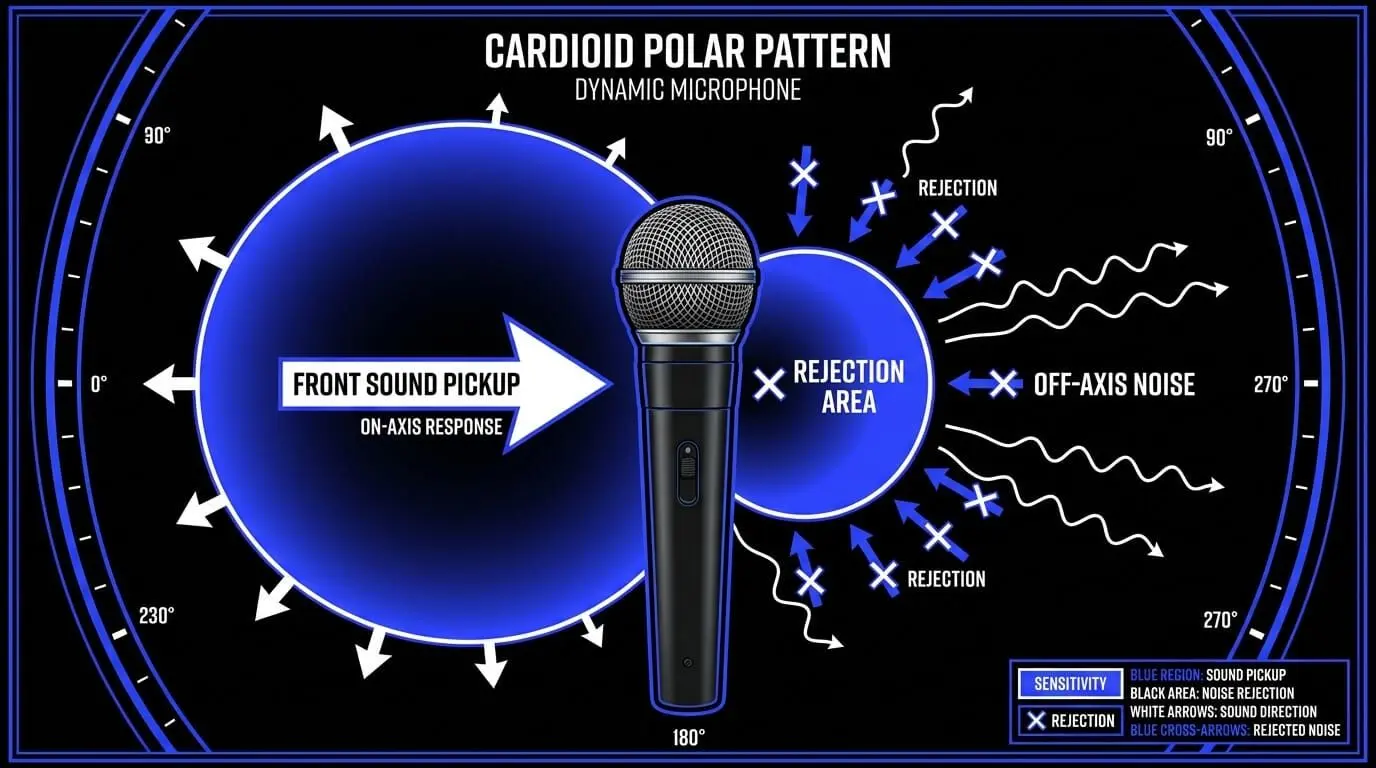
To achieve this directional behavior, capsule designers utilize rear acoustic ports. These precisely engineered openings allow sound waves arriving from the sides and rear to enter the internal cavity behind the diaphragm. By passing through an acoustic delay network, these rear-entering waves arrive at the back side of the diaphragm exactly out of phase with the waves striking the front of the diaphragm.
When a sound originates from 180 degrees, the front and rear forces balance out, resulting in phase cancellation and minimal diaphragm displacement. This precise phase cancellation makes cardioid dynamic microphones highly effective at isolating a specific sound pickup source while rejecting ambient room reflections and stage bleed.
Supercardioid and Hypercardioid Variations: Advanced Side Rejection
When tighter directional isolation is required, Supercardioid and Hypercardioid configurations are used. These polar patterns narrow the front acceptance angle, offering increased rejection from the sides (90 and 270 degrees) compared to a standard cardioid pattern.
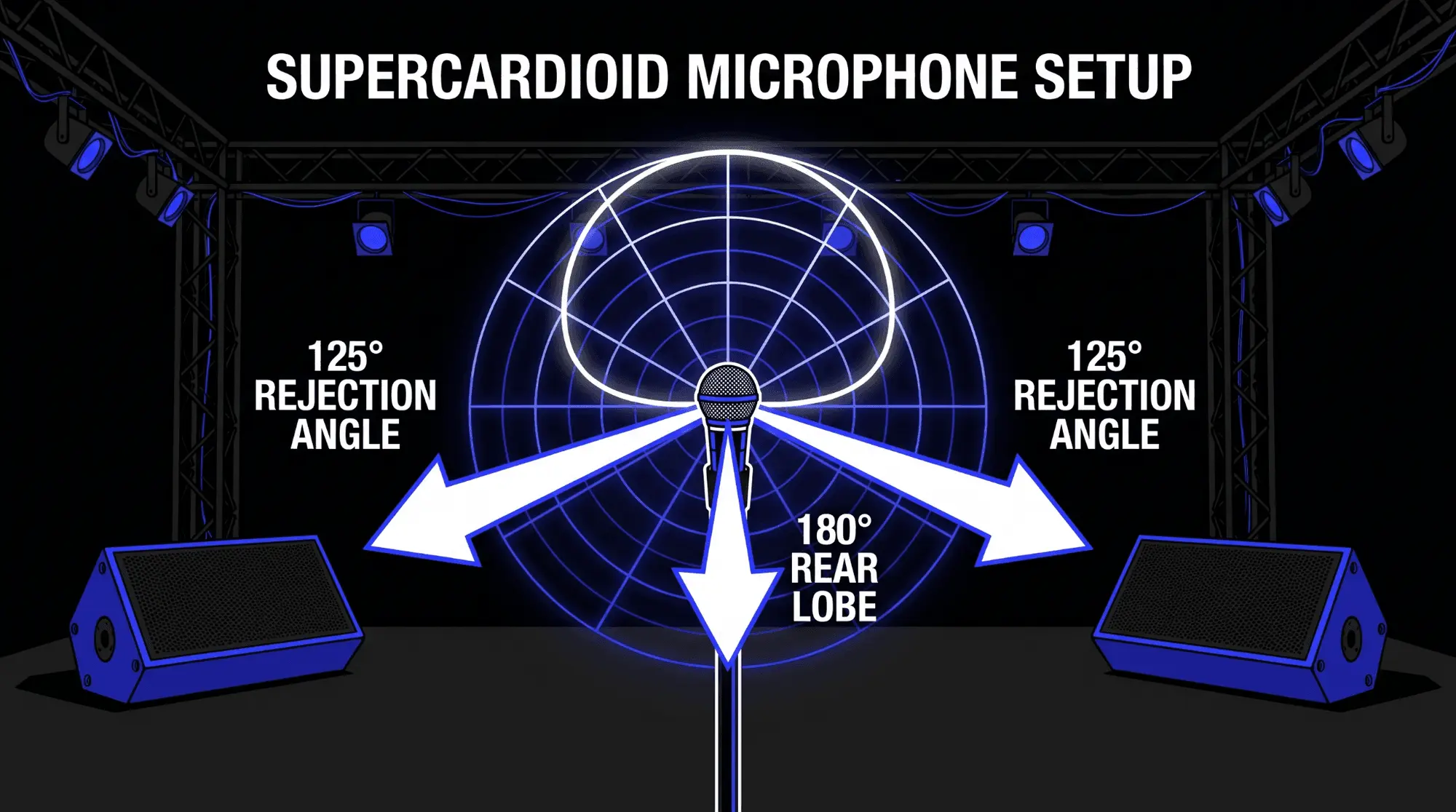
- Supercardioid: Features an optimal rejection angle located around 125 degrees off-axis, introducing a minor rear pickup lobe at 180 degrees.
- Hypercardioid: Narrows the front acceptance zone further, pushing the maximum rejection points to approximately 110 and 250 degrees off-axis, which creates a more pronounced rear pickup lobe.
The implementation of these patterns requires careful management of the rear lobe. Live sound engineers must position floor monitors or side-fills at the exact angles of maximum rejection rather than directly behind the microphone chassis to prevent acoustic feedback loops. These patterns are highly effective for close-miking individual instruments within a dense ensemble or managing bleed on a high-energy stage.
Omnidirectional Dynamic Designs: Ambient Stability
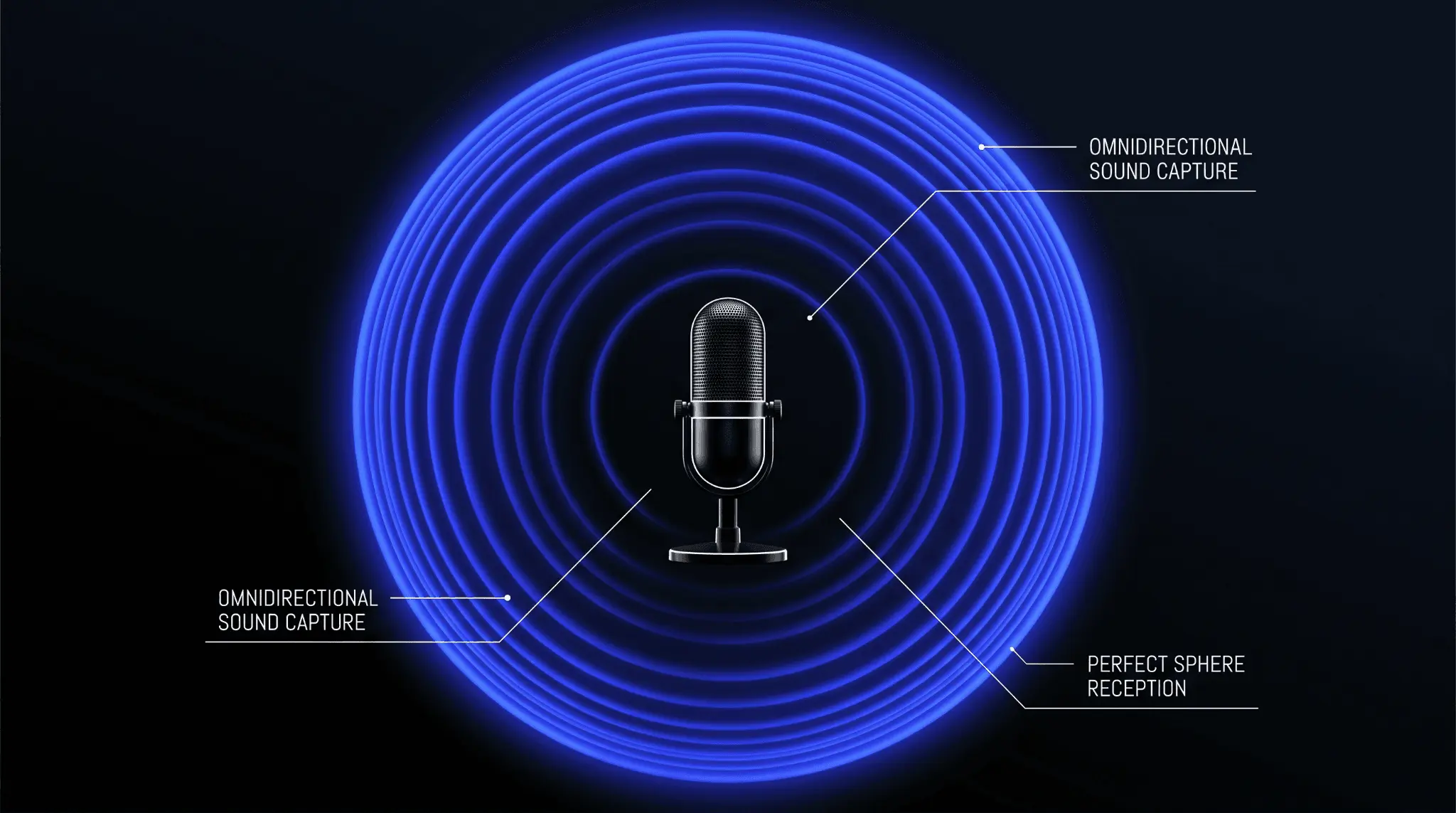
- Omnidirectional dynamic microphones capture sound equally from all directions, regardless of the angle of arrival.
- This characteristic is achieved by sealing the capsule enclosure completely behind the diaphragm, isolating the rear face from external acoustic pressure.
- The diaphragm responds exclusively to the absolute pressure fluctuations at its front surface.
- Absence of Proximity Effect: They maintain a consistent low-frequency response regardless of the distance between the source and the capsule.
- Low Wind and Handling Sensitivity: They are highly resistant to structural vibrations, plosives, and wind noise.
- Off-Axis Consistency: They capture the acoustic environment without the off-axis coloration or comb-filtering artifacts common to directional microphones.
These attributes make omnidirectional dynamics highly effective for field interviews, ENG (Electronic News Gathering) applications, and measurement environments.
Proximity Effect and Off-Axis Response Characteristics
A defining trait of all directional, pressure-gradient dynamic microphones is the Proximity Effect. This acoustic phenomenon causes an inflation of low-frequency response as the sound source moves closer to the microphone capsule. The effect intensifies with narrower polar patterns, showing greater prominence in hypercardioid designs than in standard cardioid variations.
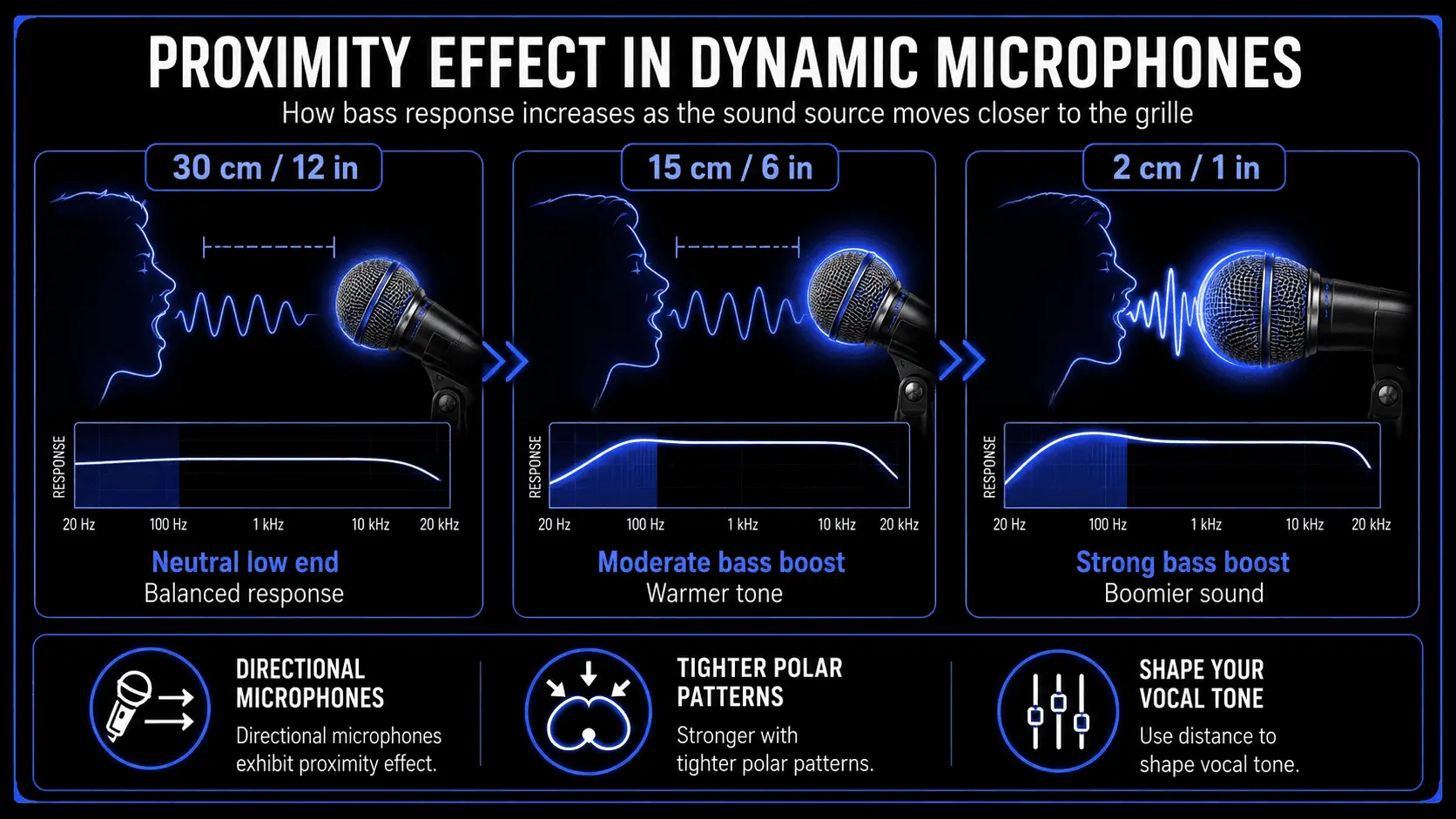
The underlying cause relates to the changing relationship between the inverse-square law and phase angles. At long distances, the path length difference between the front and rear ports creates a minor phase differential that drives the diaphragm. When the source is placed within a few centimeters of the capsule, the difference in distance from the source to the front versus the rear diaphragm face introduces a substantial sound pressure level differential. This pressure drop overwhelms the phase-derived component, causing a significant boost in low frequencies that can reach up to 15 dB or more below 200 Hz.
While this bass boost can be leveraged by vocalists to add warmth and authority to a performance, it can also impair clarity, causing a muddy or boomy signal if unmanaged.
Technical Analysis: Frequency Response and Sound Quality
Understanding the Acoustic Profile of Moving Coils
The dynamic microphone frequency response is shaped by the physical mass and mechanical resonance of its internal components. Due to the weight of the copper voice coil bonded to the polymer substrate, a moving coil dynamic microphone naturally behaves as a mechanical low-pass filter. Consequently, most dynamic designs exhibit a roll-off in high-frequency sensitivity starting between 15 kHz and 16 kHz, contrasting with condenser alternatives that often extend cleanly past 20 kHz.
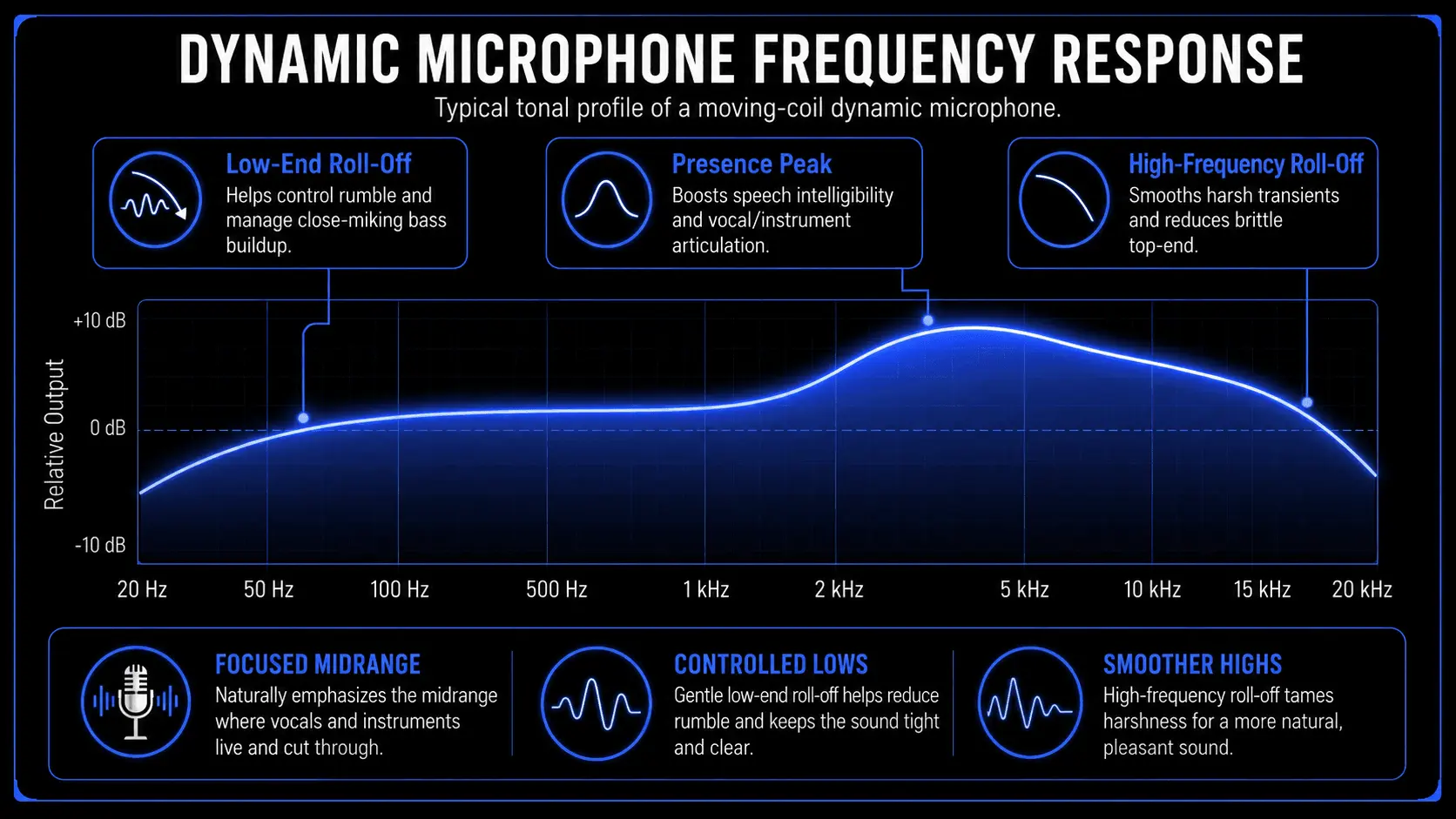
Furthermore, the natural resonant frequency of the capsule assembly typically falls within the mid-range spectrum. Audio engineers intentionally tune this resonance to create a presence peak—a deliberate boost of 2 dB to 6 dB situated between 2 kHz and 6 kHz. This presence peak enhances articulation and intelligibility, allowing speech and lead vocals to cut through dense instrument mixes without requiring extensive equalization. Below 100 Hz, directional models show a gradual acoustic roll-off that helps counteract the proximity effect during close-miking applications.
High Sound Pressure Level Handling and Transient Response
A core technical advantage of the dynamic transducer is its ability to handle extremely High Sound Pressure Levels (SPL) without experiencing electrical clipping or mechanical failure. The maximum SPL of a high-quality moving coil microphone is rarely limited by internal electrical components, as its passive induction circuit lacks active transistors or field-effect tubes that can overload. Instead, the limit is governed by the maximum physical excursion of the diaphragm. Many professional dynamic microphones can tolerate fields exceeding 150 dB SPL before harmonic distortion reaches measurable thresholds.
Conversely, this high mechanical mass affects the transient response of the microphone. When exposed to fast, sharp acoustic impulses—such as the initial strike of a snare drum or the pluck of an acoustic guitar string—the moving coil assembly reacts with higher inertia than an ultra-lightweight condenser diaphragm. This mechanical lag softens the initial attack transient, rounding off the sharp edge of the impulse. This dampening effect can be beneficial for smoothing out harsh or brittle sound sources, delivering a focused, punchy, and cohesive signal that integrates easily into an analog or digital mix.
Head-to-Head Architectural Comparison
To understand how dynamic microphones integrate into modern production workflows, it is helpful to contrast them with other primary transducer options available to engineers.
Dynamic vs. Condenser Microphones
The comparison between dynamic microphone vs condenser microphone systems centers on their differing conversion mechanisms. Condenser microphones operate on an electrostatic principle, utilizing an ultra-thin, gold-sputtered diaphragm positioned parallel to a fixed backplate to form a variable capacitor. This system requires a constant polarization voltage—typically supplied via 48V phantom power—to maintain an electrical charge across the plates.
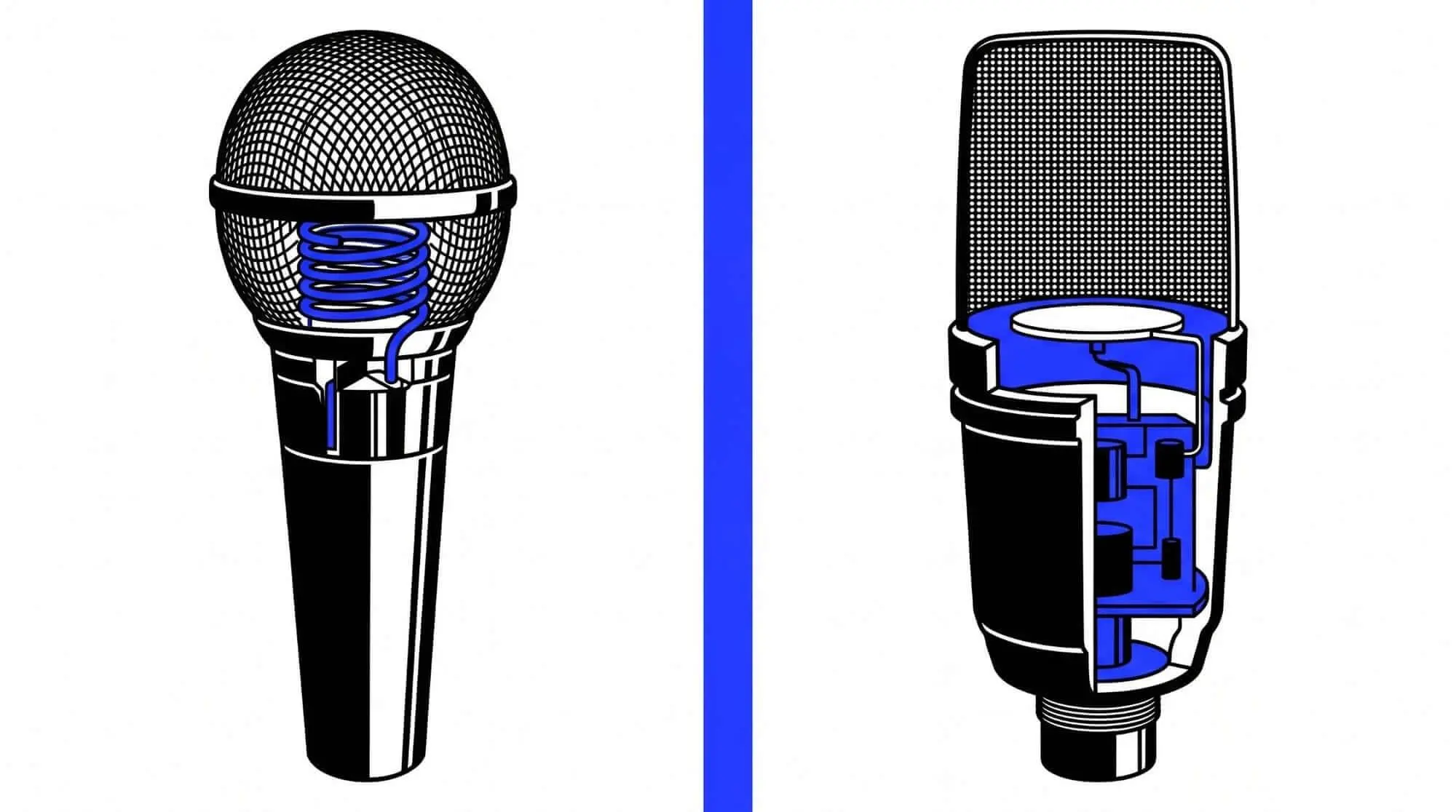
Because the condenser diaphragm has minimal mass, its sensitivity is significantly higher, and its transient response is faster and more accurate across an extended frequency spectrum. However, this high sensitivity makes condenser microphones more prone to overload in high-SPL environments and highly sensitive to ambient room reflections.
In contrast, the passive, lower-sensitivity dynamic microphone acts as a natural acoustic filter. It rejects distant low-level noise and focuses on the immediate on-axis source, making it highly effective for live performance and untreated project studios.
Dynamic vs. Ribbon Microphones
While both reside under the electromagnetic umbrella, moving coil dynamics and ribbon microphones offer contrasting performance styles. Moving coil microphones are built for durability, high-energy projection, and targeted isolation, making them standard choices for rugged live use.
Ribbon microphones provide a highly detailed response that bridges the gap between dynamic punch and condenser clarity. The low mass of the ribbon delivers a fast, precise transient response and a smooth, uncolored high-frequency reproduction that avoids the presence peaks of moving coil designs or the high-end exaggeration of some condensers.
However, traditional ribbons remain delicate mechanical systems. They are vulnerable to damage from powerful wind blasts, physical drops, or accidental exposure to phantom power on miswired cables.
Comparative Feature Sheet
| Mechanical Feature | Moving Coil Microphone | Ribbon Microphone |
|---|---|---|
| Diaphragm Element | Synthetic polymer film (Mylar) with attached coil. | Ultra-thin corrugated aluminum ribbon less than 2 microns thick. |
| Moving Mass | Moderately high due to copper/aluminum wire windings. | Extremely low; allows rapid transient response. |
| Acoustic Operation | Pressure or pressure-gradient based on porting. | Pure pressure-gradient operation. |
| Native Polar Pattern | Adaptable (cardioid, supercardioid, omnidirectional). | Inherently bidirectional (figure-8). |
| Structural Durability | Exceptionally high; resilient against physical impacts. | Delicate; vulnerable to strong wind blasts and stretching. |
| Output Impedance | Low nominal impedance (150 to 600 ohms). | Extremely low fraction of an ohm; requires internal transformer. |
Comprehensive Operational Advantages
Structural Integrity and Environmental Durability
The primary operational benefit of the moving coil dynamic microphone is its exceptional durability. The simple mechanical layout isolates the internal components from common failure points that affect more sensitive equipment. Encased in rugged die-cast zinc or aluminum chassis and protected by hardened steel mesh grilles, high-quality dynamic microphones can withstand severe physical impacts, including drops onto hard surfaces, without losing functional capacity.
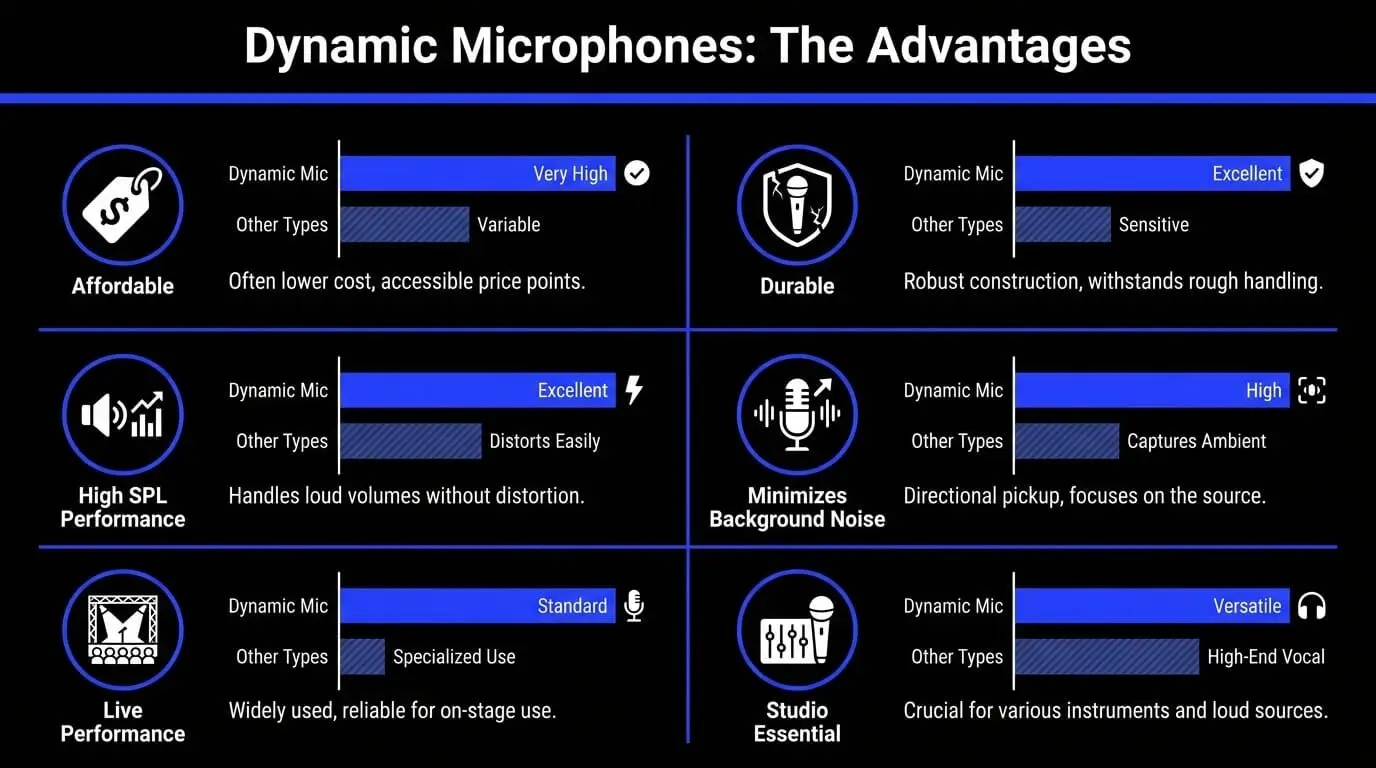
Furthermore, dynamic capsules are highly resistant to environmental variables. They are unaffected by high humidity, ambient moisture from vocal performances, or extreme temperature shifts. This environmental resilience prevents the polarization failure or structural arc discharge that can occur in condenser capsules under humid conditions. For touring sound reinforcement, outdoor festivals, and rigorous broadcast applications, this reliability makes the dynamic microphone an indispensable option.
Passive Electronics and Power Independence
The passive architecture of the traditional moving coil dynamic microphone provides significant deployment advantages:
- No Phantom Power Required: They function entirely independently of external electrical supplies, requiring no batteries or phantom power from a mixing console or audio interface.
- Simplified System Design: This independence reduces complexity in live audio setups, eliminates potential ground loop hums, and prevents damage caused by hot-patching microphones on active stage lines.
- Operational Reliability: Eliminating active internal preamplification circuits removes potential failure points like blown surface-mount transistors or degraded capacitors, ensuring consistent performance over decades of use.
Cost Efficiency and Lifecycle Longevity
From an economic and procurement perspective, dynamic microphones offer an exceptional cost-to-performance ratio. Because their manufacturing processes are well-established and free from the tight tolerances required for high-voltage electrostatic capsules, professional-grade dynamic microphones can be produced cost-effectively. Industry-standard models are available at accessible price points while delivering reliable performance.
This affordability is paired with long operational lifecycles. It is common for dynamic microphones to remain in continuous service in commercial rental inventories, broadcast studios, and live venues for decades with minimal performance degradation. They require no specialized storage chambers, and maintenance is typically limited to occasional cleaning or replacing the external mesh windscreen foam.
Practical Deployments: Dynamic Microphone Applications
Live Sound and Vocal Performance Ecosystems
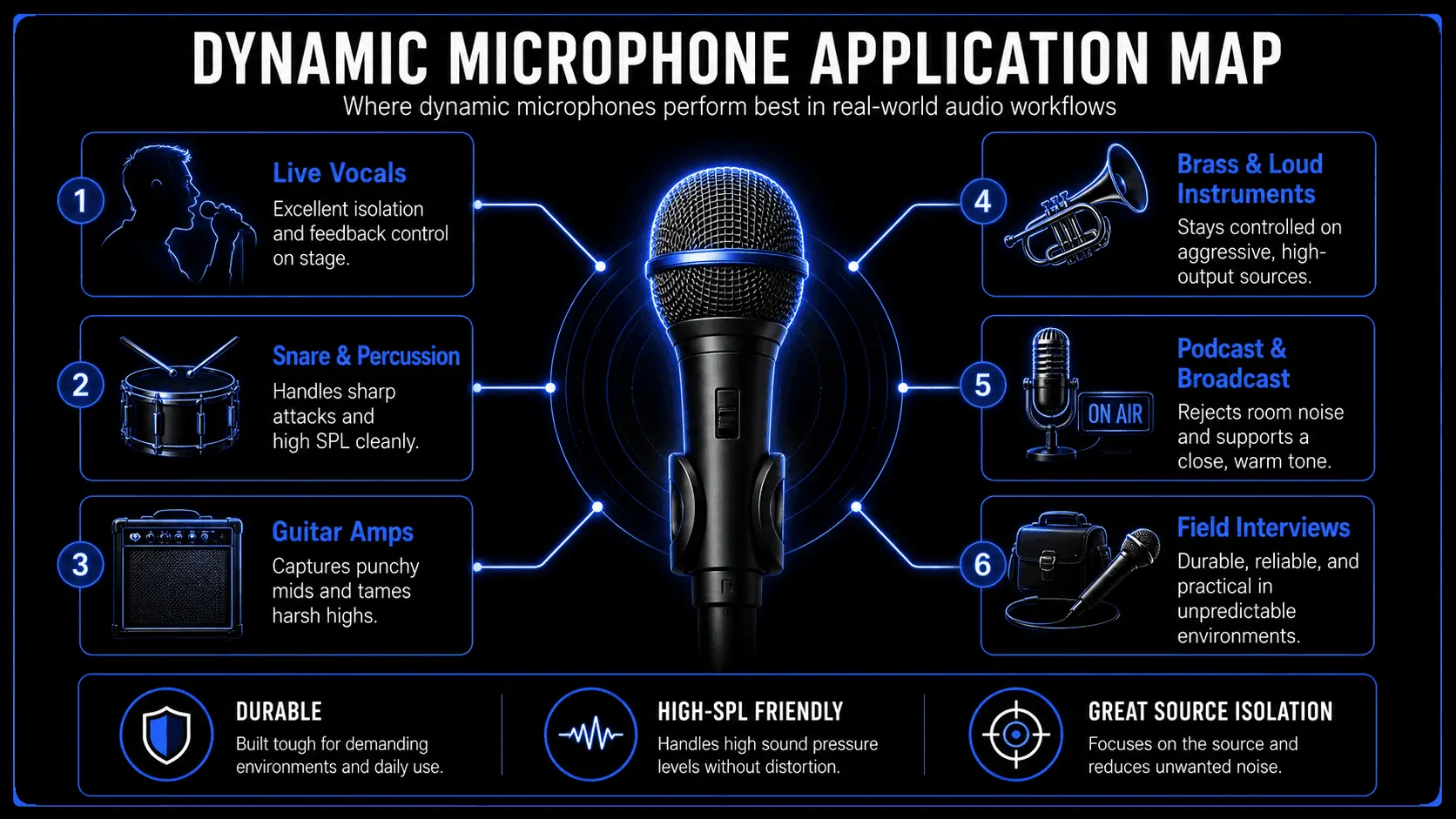
- In the demanding environment of live sound reinforcement, dynamic microphones serve as the standard choice for vocal performance capture.
- The acoustic conditions of a live stage—characterized by high-power monitor wedges, nearby instrument amplifiers, and ambient crowd noise—require excellent isolation and feedback control.
- A cardioid or supercardioid stage microphone addresses these challenges by rejecting off-axis sound sources, helping to prevent acoustic feedback loops.
Studio Recording Workflows for High-Transient Instruments
While condenser models are common in controlled studio environments, dynamic microphones are frequently chosen for tracking high-transient, high-amplitude sound sources.
- Snare Drums and Percussion: Placed close to a snare drum head, a dynamic microphone handles the high initial sound pressure level cleanly. Its controlled transient response adds weight and punch to the recorded signal, smoothing out harsh peaks.
- Guitar Amplifiers: The high sound pressure levels generated by guitar amplifier speakers can easily overload sensitive capsules. A dynamic microphone positioned near the speaker cone captures the mid-range details and low-end warmth of electric guitars while naturally rolling off brittle high frequencies.
- Brass and Heavy Instrumentation: For tracking brass sections, trumpets, or aggressive vocal styles, the dynamic capsule provides a clear, focused path that tames harsh transients before the signal enters the digital domain.
Broadcast, Podcasting, and Voiceover Implementations
The rise of digital broadcasting, podcasting, and independent voiceover production has expanded the use of dynamic microphones in voice applications. Standard project studios often lack professional acoustic treatment, leaving them vulnerable to external environmental noises such as traffic, air conditioning units, or computer fan hums.
A directional dynamic microphone manages these challenging acoustic environments effectively. Its lower native sensitivity requires the sound source to be positioned close to the capsule, making distant environmental noises negligible by comparison.
When paired with the proximity effect from close positioning, the microphone delivers a warm, authoritative broadcast tone that mimics traditional radio delivery. This allows creators to capture clean, professional voice tracks in untreated or semi-treated spaces.
Strategic Purchasing: Choosing a Dynamic Microphone
Key Procurement Metrics
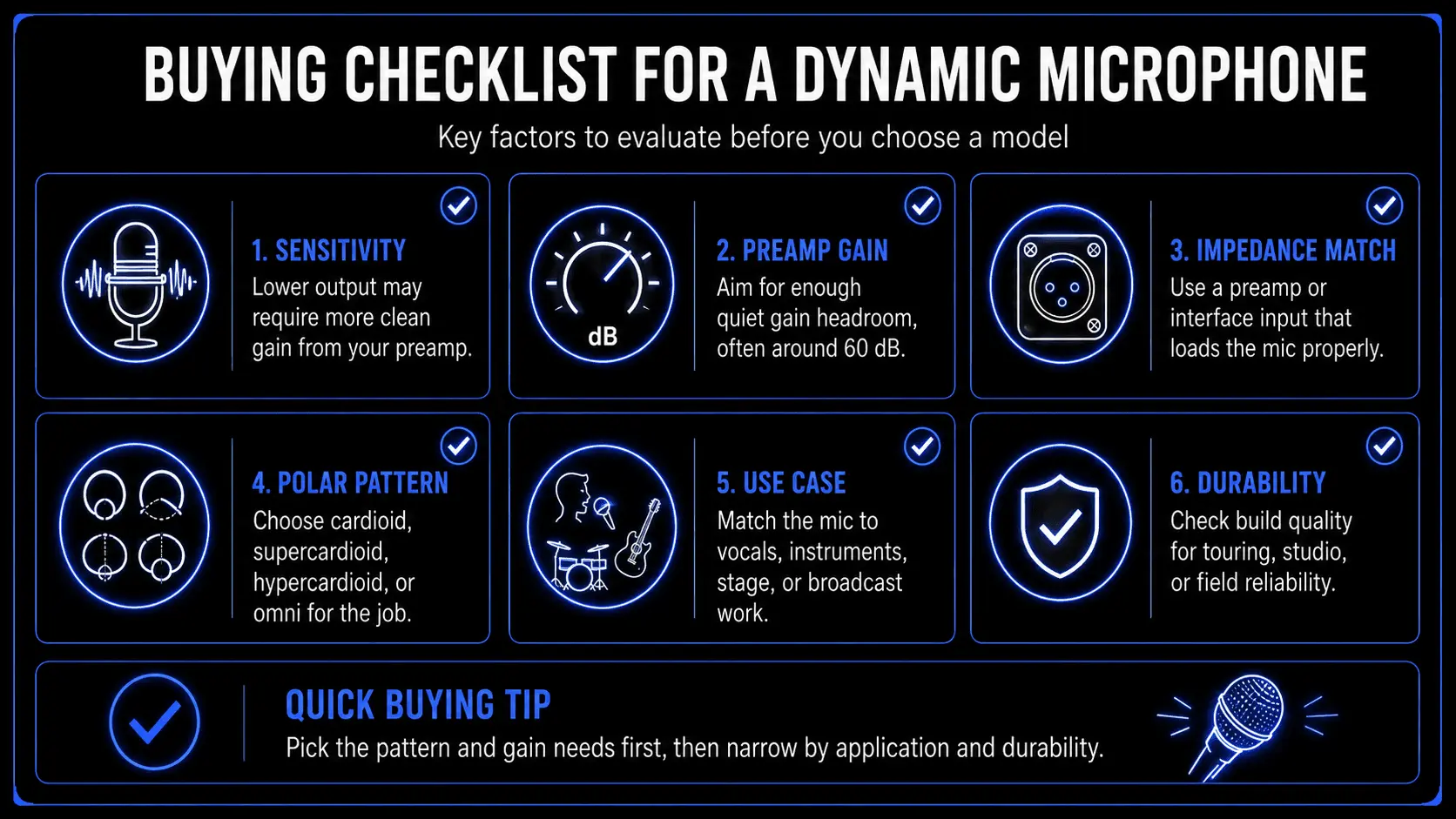
- Selecting the right dynamic microphone requires analyzing technical parameters relative to the target application.
- Assessment of sensitivity ratings and preamplifier gain requirements is essential.
- Matching impedance profiles between the microphone and audio interface ensures signal integrity.
- Sensitivity Rating: Dynamic microphones generally feature lower sensitivity ratings, typically between -50 dBV/Pa and -60 dBV/Pa (1.0 mV to 3.0 mV at 1 Pascal). If a model has a particularly low output level, it requires a high-quality preamplifier with a clean gain range of at least 60 dB to prevent introducing preamplifier hiss into the signal path.
- Impedance Matching Profiles: Ensure the microphone nominal impedance aligns with the input specifications of your preamplifiers or audio interfaces. Standard bridge ratios require the preamplifier input impedance to be at least five to ten times higher than the microphone output impedance to prevent loading effects that degrade low-end clarity.
- Application-Specific Selection: Assess whether your project requires the extreme durability and feedback rejection of a stage microphone, or the broader frequency extension and optimized casing of a dedicated broadcast dynamic microphone.
Premium Product Highlights and Market Options
Several dynamic models have earned industry-standard status due to their reliable engineering and consistent performance:
Shure SM57 / SM58
Built on the Shure SM57 / SM58 (Unidyne III capsule architecture), these models are benchmarks for durability and performance. The SM57 features a compact grille optimized for instrument placement, making it a standard choice for snare drums and guitar cabinets. The SM58 incorporates an integrated ball grille with an internal pop filter, establishing it as a global standard for live vocal reinforcement.
Electro-Voice RE20
A staple of the broadcast and radio industry, the Electro-Voice RE20 utilizes specialized Variable-D technology. This design uses multiple acoustic ports along the microphone body to cancel out low-frequency accumulation, eliminating the proximity effect. This allows vocalists to move freely in front of the microphone without altering their tonal balance, making it highly effective for voiceover and broadcast applications.
Shure SM7B
Originally developed for broadcast applications, the Shure SM7B has become a popular choice for tracking rock vocals and podcast commentary. It features a spacious housing with a large internal cavity that optimizes low-frequency performance, along with rear switchable passive controls for a bass roll-off and presence boost. Its integrated shielding protects the signal from electromagnetic hum generated by studio monitors and lighting systems.
Sennheiser MD421-II
Known for its larger diaphragm design, the Sennheiser MD421-II offers an extended low-frequency response and clear high-end detail, approaching the performance of a condenser microphone while retaining dynamic characteristics. It features a five-position bass roll-off switch, making it highly adaptable for tracking tom-toms, bass cabinets, and brass instruments.
Sound Samples and Testing Methodology
When evaluating dynamic microphones, audio professionals rely on structured, repeatable testing methods to analyze performance across different models. A standard testing process involves capturing a series of raw sound samples across diverse sound sources to assess how each capsule handles specific acoustic challenges:
- On-Axis Vocal Articulation Test: This sample evaluates the character of the presence peak. A speaker or vocalist delivers a script at a fixed distance of 15 cm directly on-axis. This reveals whether the high-mid response enhances clarity or introduces harshness.
- Proximity Effect Excursion: The vocalist records a passage while closing the distance from 30 cm down to 2 cm from the grille. This sample demonstrates how the low-end inflates, helping engineers evaluate if the model remains intelligible during intimate close-up performances.
- Off-Axis Rejection Performance: While a consistent sound source—such as pink noise or a metronome—plays from a fixed position, the technician rotates the microphone chassis from 0 degrees through 90, 180, and 270 degrees. Listening to these samples reveals how effectively the rear ports reject out-of-phase sound and highlights any off-axis coloration that could affect stage bleed.
- High-Transient Impact Handling: Capturing direct strikes on a snare drum or an aggressive acoustic guitar strum illustrates the speed of the capsule transient recovery. It shows how effectively the mechanical inertia rounds off sharp peaks to deliver a punchy, cohesive signal.
Analyzing these comparative sound samples allows buyers to select a dynamic model tailored to their specific preamplifier capabilities and acoustic environments.
Using Dynamic Microphone Recordings with ACE Studio
A dynamic microphone is often the first reliable capture point for a song idea. You might use it to record a scratch vocal, hum a melody, track a guitar amp, capture a room rehearsal, or test how a voice sits against an instrumental. The mic gives you a focused, sturdy recording. ACE Studio helps you take that recording further once the idea is on the timeline.
One practical use is turning a rough dynamic microphone vocal into something you can edit musically. If you record a melody with a dynamic mic, ACE Studio’s Vocal to MIDI feature can convert that vocal line into MIDI notes with lyrics attached. From there, you can adjust pitch, timing, phrasing, and lyric placement instead of being locked into the first take. This is useful when the performance has the right emotion but the melody still needs shaping.
For songwriters who do not want to record full final vocals right away, ACE Studio can also generate AI vocals from MIDI and lyrics. That means a melody captured through a dynamic microphone can become a more polished vocal guide while the writer keeps control over the notes, words, and delivery.
ACE Studio also gives producers more options beyond vocals. Its AI Instruments can turn MIDI into expressive instrument performances, so a simple vocal idea or rhythm sketch can lead to string lines, brass parts, saxophone phrases, or layered instrumental textures. If you are testing a dynamic microphone on guitar amps, percussion, or rehearsal recordings, Stem Splitter can separate a mixed track into parts such as vocals, drums, bass, and instruments, making it easier to study or rebuild an arrangement.
This matters because dynamic microphones are often used in real-world conditions: untreated rooms, live sessions, loud instruments, and quick writing setups. ACE Studio gives those recordings more creative value after capture. A close-miked vocal can become editable MIDI. A scratch melody can become a lead vocal demo. A simple chord idea can be supported with AI instruments. A mixed rehearsal can be separated into usable stems.
For producers, this creates a clear advantage: the dynamic microphone handles the physical performance, and ACE Studio helps refine the musical material behind it. You still decide the melody, timing, lyrics, tone, and arrangement. ACE simply gives you more ways to develop the sound once the microphone has done its job.
Frequently Asked Questions
Do dynamic microphones require phantom power to operate?
No, standard moving coil and traditional ribbon dynamic microphones are completely passive devices that do not require phantom power. They generate their own electrical voltage through electromagnetic induction. In fact, applying phantom power to an incorrectly wired or damaged ribbon microphone can potentially stretch or destroy the delicate aluminum element. However, modern active dynamic or active ribbon microphones feature integrated preamplification circuitry and do require phantom power to operate.
Why are dynamic microphones preferred over condensers for live performances?
Dynamic microphones are preferred for live stages due to their exceptional physical durability, lower native sensitivity, and high maximum SPL handling. They naturally reject distant off-axis sound bleed from surrounding instruments and stage monitors, reducing the risk of acoustic feedback. Condenser microphones, with their high sensitivity and fast transient response, are more prone to picking up surrounding stage noise and generating feedback in high-volume environments.
Can a dynamic microphone be used effectively for studio recordings?
Yes, dynamic microphones are widely used in professional recording studios. While condenser models are often selected for delicate acoustic instruments or vocals due to their high-frequency extension, dynamic microphones excel at tracking high-amplitude, high-transient sources. They are standard choices for capturing snare drums, individual components of a drum kit, electric guitar amplifiers, and aggressive rock or metal vocals.
How does the proximity effect alter the sound of a dynamic microphone?
The proximity effect is an acoustic phenomenon found in directional (pressure-gradient) microphones that causes an inflation of low-frequency response as the sound source moves closer to the capsule. When a vocalist or instrument is positioned within a few centimeters of the grille, the bass frequencies below 200 Hz can be boosted significantly. This can add a warm, intimate character to a voice but can also lead to a muddy or boomy mix if unmanaged.
What is the typical operational lifespan of a professional dynamic microphone?
A professional-grade dynamic microphone can maintain its performance specifications for decades if handled with reasonable care. Due to their rugged mechanical construction, lack of delicate internal high-voltage electronics, and resilience against environmental factors like humidity, models like the Shure SM58 or Electro-Voice RE20 regularly remain in continuous service in commercial studios and rental inventories for 20 to 40 years or more.