
Key Takeaways
- An 808 is not a single frequency but a sustained bass sound, typically concentrated between 30Hz and 60Hz, that can function as both a kick and a bassline.
- Tuning the 808 to the song’s key is essential for helping it blend naturally with the chords, melodies, and other musical elements.
- A powerful 808 depends more on clarity than volume. Careful note length, low-end space, sample selection, and separation from the kick usually matter more than heavy processing.
- Subtle saturation can add audible harmonics, helping deep 808s translate clearly across headphones, car speakers, laptops, phones, and larger sound systems.
- ACE Studio can help producers evaluate the 808 within a complete arrangement by analyzing reference stems, generating supporting layers from prompts, testing editable instrument parts, and connecting with a DAW through ACE Bridge 2.
Why the 808 is Heard, Felt, and Built to Move Music
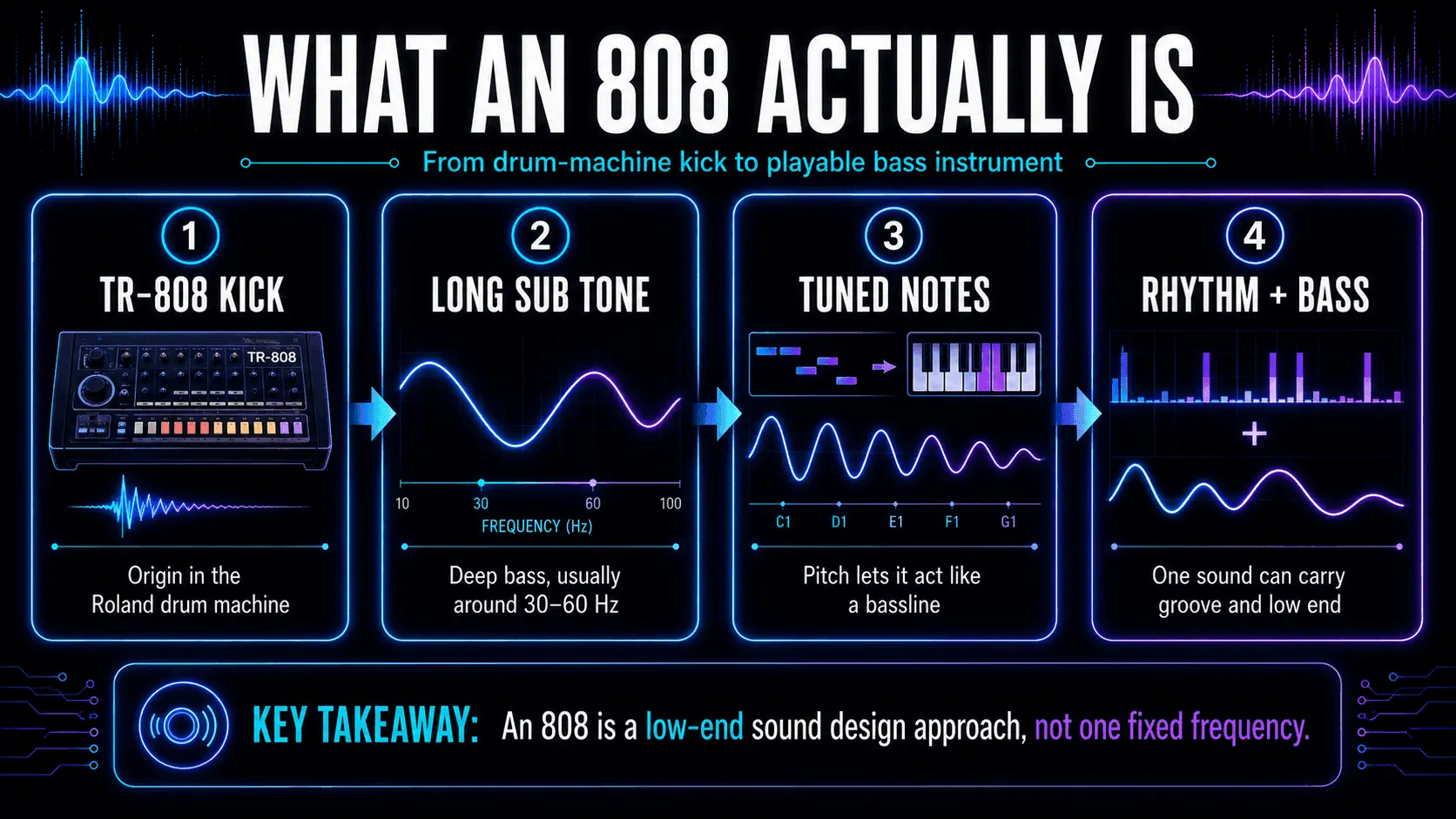
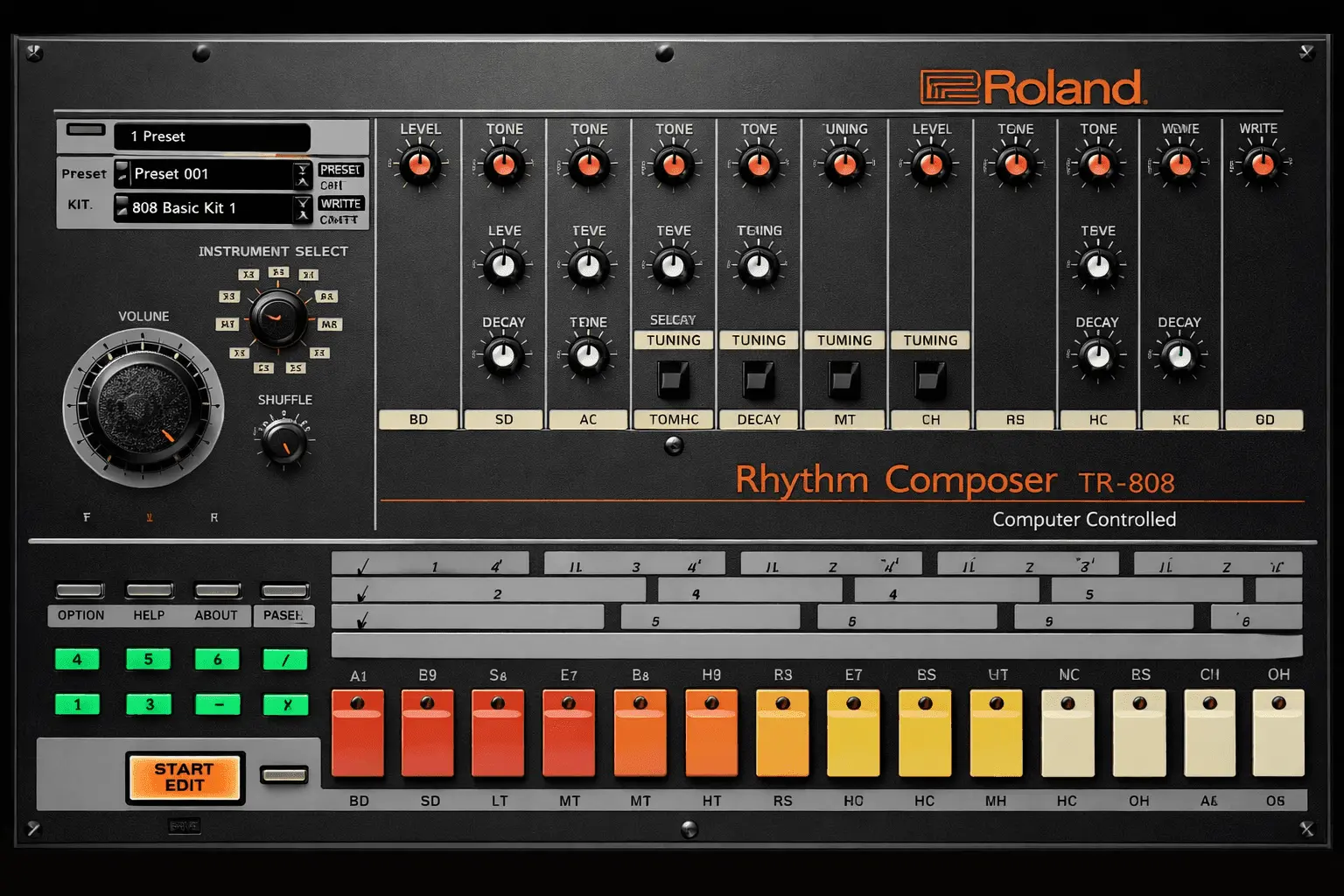
The 808 isn’t just a “frequency”—it’s a sound, a technique, and a cultural shift that reshaped modern music. Its origin traces back to the Roland TR-808, a drum machine that was initially dismissed for sounding too artificial. What made it special, though, wasn’t realism. It was the low end.
The 808 kick produces a deep, sustained sine-wave-like tone that typically lives somewhere between 30Hz and 60Hz. Unlike a traditional kick drum, which is short and punchy, the 808 can act as both rhythm and bassline at the same time. That’s where its power comes from.
If you’ve ever been in a car where the bass feels like it’s vibrating your chest rather than just playing music, you’ve experienced what a well-mixed 808 does. It’s not just heard—it’s felt.
From Failure to Foundation
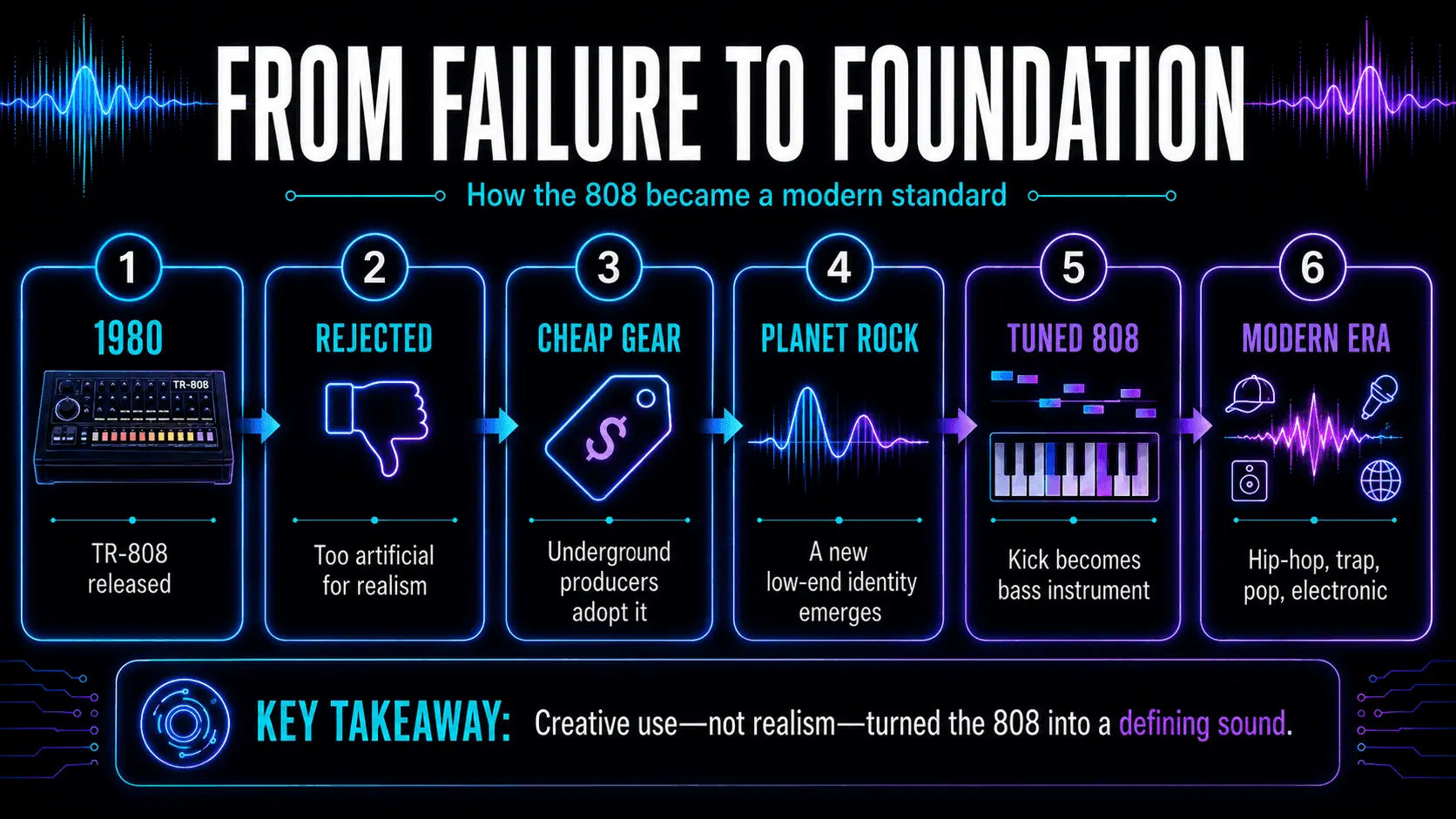
The Roland TR-808 drum machine has left an indelible mark on the music industry, shaping genres and influencing countless artists since its release in 1980. Originally, the 808 was not an immediate success. Its analog drum sounds were considered less realistic compared to the sampled drums of its competitors. Yet, the unique 808 frequency spectrum has become a foundational element in music production, particularly in genres like hip-hop, trap, and electronic music.
The 808 kick drum, characterized by its deep, resonant bass, was initially criticized for its artificial sound.
How Underground Producers Changed Its Reputation
Because of this, the machine became relatively cheap, and that’s where things took an unexpected turn, which inadvertently led to its adoption among underground producers. As these producers began to experiment with its sounds, the 808's signature bass drum started to emerge as a powerful tool in shaping the low-frequency energy of tracks.
One famous example of the 808's impact can be seen in Planet Rock by Afrika Bambaataa, where the drum machine's sounds helped define the electro-funk genre and demonstrated the power of these frequencies in creating a new musical landscape.
The Cultural Impact of the 808 Frequency
Interestingly, the 808 frequency shares similarities with what are known as Solfeggio frequencies, believed by some to offer healing and meditative properties. While the exact science behind these claims remains debated, this parallel showcases the broader cultural and psychological impact that certain frequencies can have. Just as sound therapy and meditation music harness specific frequencies for relaxation and healing, the 808 frequency has found its place in music as a source of energy and movement, resonating with audiences on both a subconscious and physical level.
The transformation of the 808 from an overlooked piece of gear to a studio staple is a testament to its versatility and timeless influence. It serves as a reminder that what may initially seem unconventional can redefine entire genres when placed in the hands of creative visionaries. The 808 frequency is not merely a sound; it's an integral part of music's history, continuing to inspire and innovate decades after its inception.
The Role of 808 in Modern Music Genres
The 808 has become one of the defining elements of modern music production, not because of a single frequency, but because of how it’s used. What started with the Roland TR-808 has evolved into a core building block across multiple genres, especially hip-hop and electronic music. Today, the 808 is rarely treated as just a kick drum—it functions more like a hybrid between rhythm and bass, often shaping the entire low-end of a track.
How Hip-Hop Turned the 808 Into a Musical Instrument
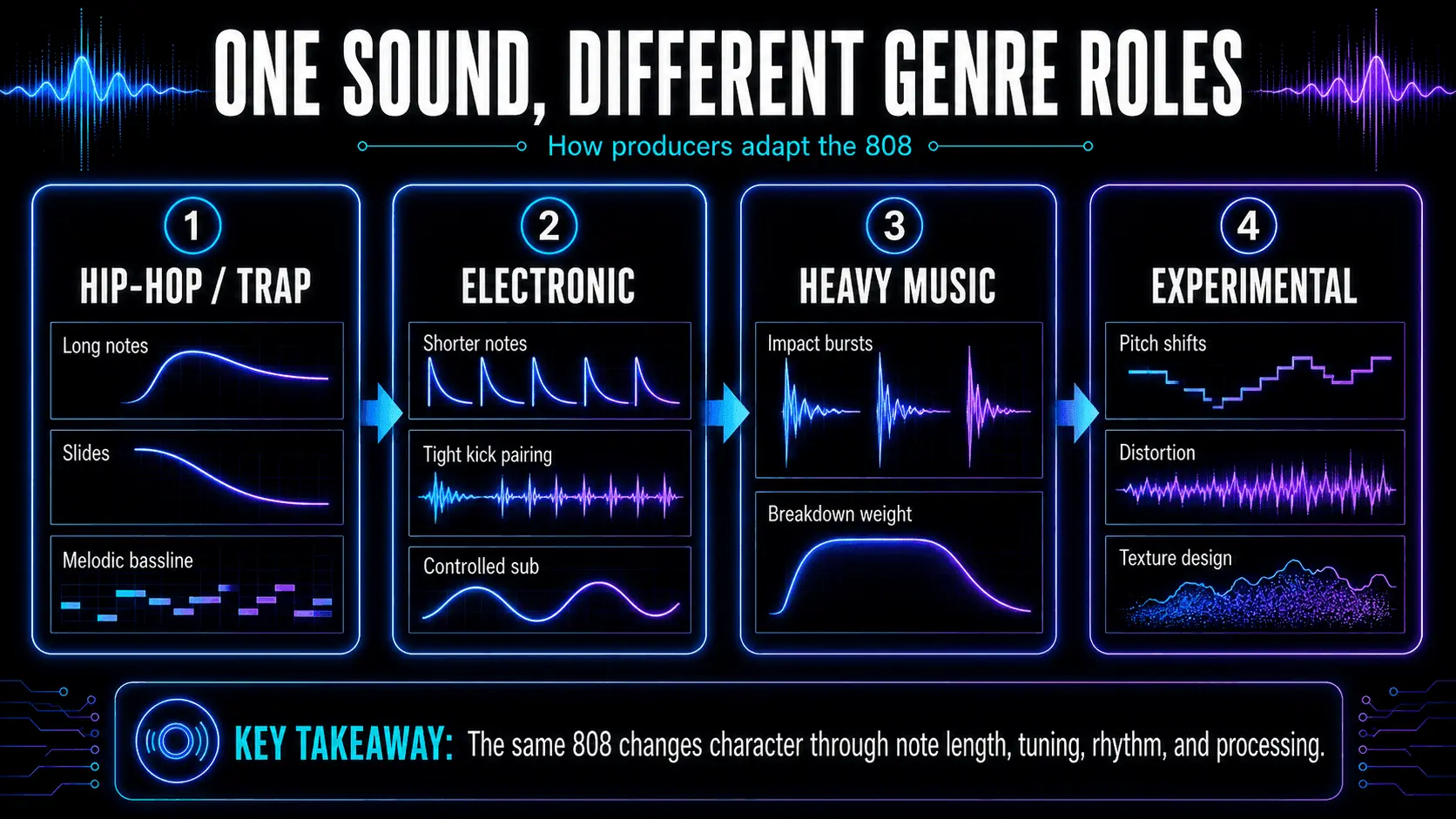
In hip-hop, the 808 acts as the foundation. It doesn’t simply support the beat; it often defines the groove and musical direction. Producers commonly tune 808s to match the key of the track, allowing them to behave like basslines that interact naturally with melodies and vocals.
This approach became more prominent through artists like Kanye West, who showed that 808s could carry emotional weight rather than just rhythmic energy. Later, artists such as Travis Scott expanded on this by pushing 808s through distortion and effects, giving them more texture and presence inside dense, atmospheric productions.
How Electronic Music Uses the 808 Differently
In electronic music, the role of the 808 shifts slightly. While it still provides sub-bass energy, it is usually more controlled and tightly integrated with the kick drum. Instead of long, sustained notes, producers often use shorter, more precise 808 patterns that reinforce rhythm and maintain clarity.
The focus here is not just depth, but consistency—especially in clubs and festival systems, where excessive low-end can quickly become overwhelming if it is not carefully managed.
How Other Genres Continue to Adapt the 808
Beyond these core genres, the 808 continues to evolve. In heavier styles like metalcore, it is often used in short, impactful bursts to emphasize breakdowns and transitions, adding weight to already aggressive arrangements.
In more experimental music, producers push the 808 even further by manipulating pitch, timing, and distortion to create textures that go beyond a traditional bass role.
Why the 808 Still Dominates Modern Production
What becomes clear across all these contexts is that the effectiveness of an 808 depends less on the sound itself and more on how it fits within the mix. A well-balanced arrangement allows the 808 to stand out without competing for space, while poor balance can make even a well-designed 808 feel weak or unclear.
The reason the 808 remains so dominant is its flexibility. It can be melodic or percussive, clean or heavily processed, subtle or overwhelming. More importantly, it adapts to the needs of the track, making it one of the most versatile tools in modern music production.
Build the Track Around the 808 With ACE Studio
A powerful 808 should never be judged in isolation. It has to retain its pitch, weight, and rhythmic impact once the drums, chords, melodies, and vocals enter the arrangement. ACE Studio gives producers a practical way to make those decisions against a complete song, so low-end choices are based on musical context rather than how impressive a soloed bass channel sounds.
One useful starting point is reference analysis. ACE Studio’s Stem Splitter can separate a finished track into vocals, drums, bass, and other instruments. Listening to the bass and drum stems independently makes it easier to identify where the kick provides the initial impact, how long the bass notes are allowed to ring, and when other instruments leave the low frequencies open. Instead of copying the sound, producers can study the decisions behind its clarity and apply those principles to their own arrangements.
ACE Studio is particularly useful when the 808 sounds strong on its own but becomes buried once the rest of the arrangement starts playing. AI Instruments can turn MIDI parts into editable instrument performances, making it easy to test different chords, melodies, and supporting textures around the bassline.
With Add a Layer, producers can describe the sound they need through a text prompt—such as higher-register chords, a sparse synth pulse, or a subtle percussion layer—and generate audio that follows the selected section of the song. This makes it possible to try lighter or fuller arrangements quickly, identify which elements are masking the 808, and create more low-end space without relying on excessive EQ, compression, or distortion.
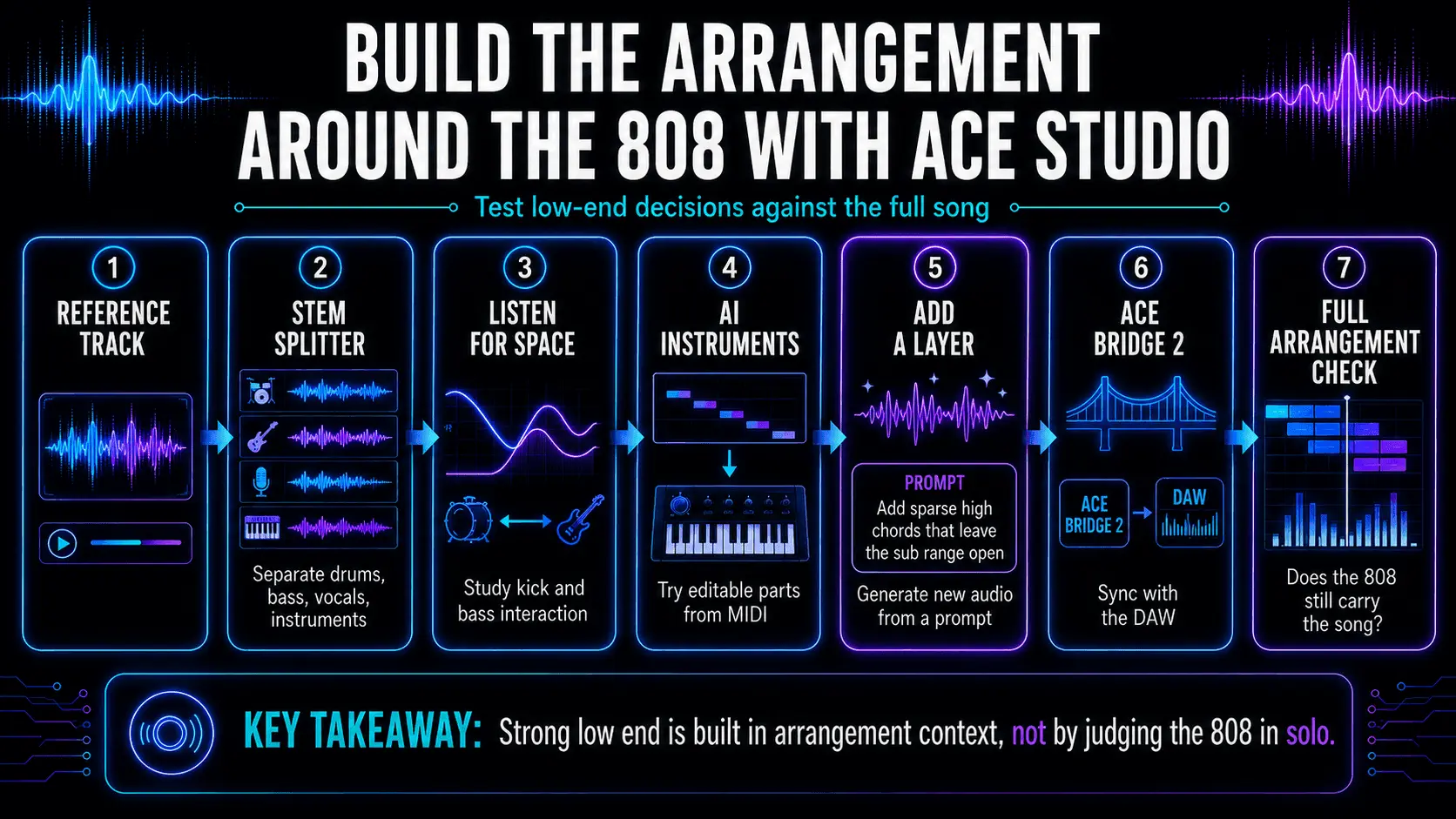
The detailed 808 sound design can remain inside the producer’s main DAW. ACE Bridge 2 creates a synchronized audio and MIDI connection between ACE Studio and the DAW, allowing the bass to be tuned, automated, saturated, or sidechained with familiar tools while it plays against ACE Studio vocals and instrument parts. This makes the final question more useful than simply asking how loud the 808 is: does it still carry the song when the entire arrangement is playing?
Technical Aspects of Using 808 in Music Production
Understanding how to work with 808s is less about memorizing settings and more about learning how low frequencies behave inside a mix. While the sound itself is simple, integrating it properly requires both technical awareness and practical decision-making.
Simplifying Technical Concepts for Beginners
For beginners, the technical side of 808s can feel overwhelming at first, but the core ideas are easier to grasp when broken down into familiar concepts.
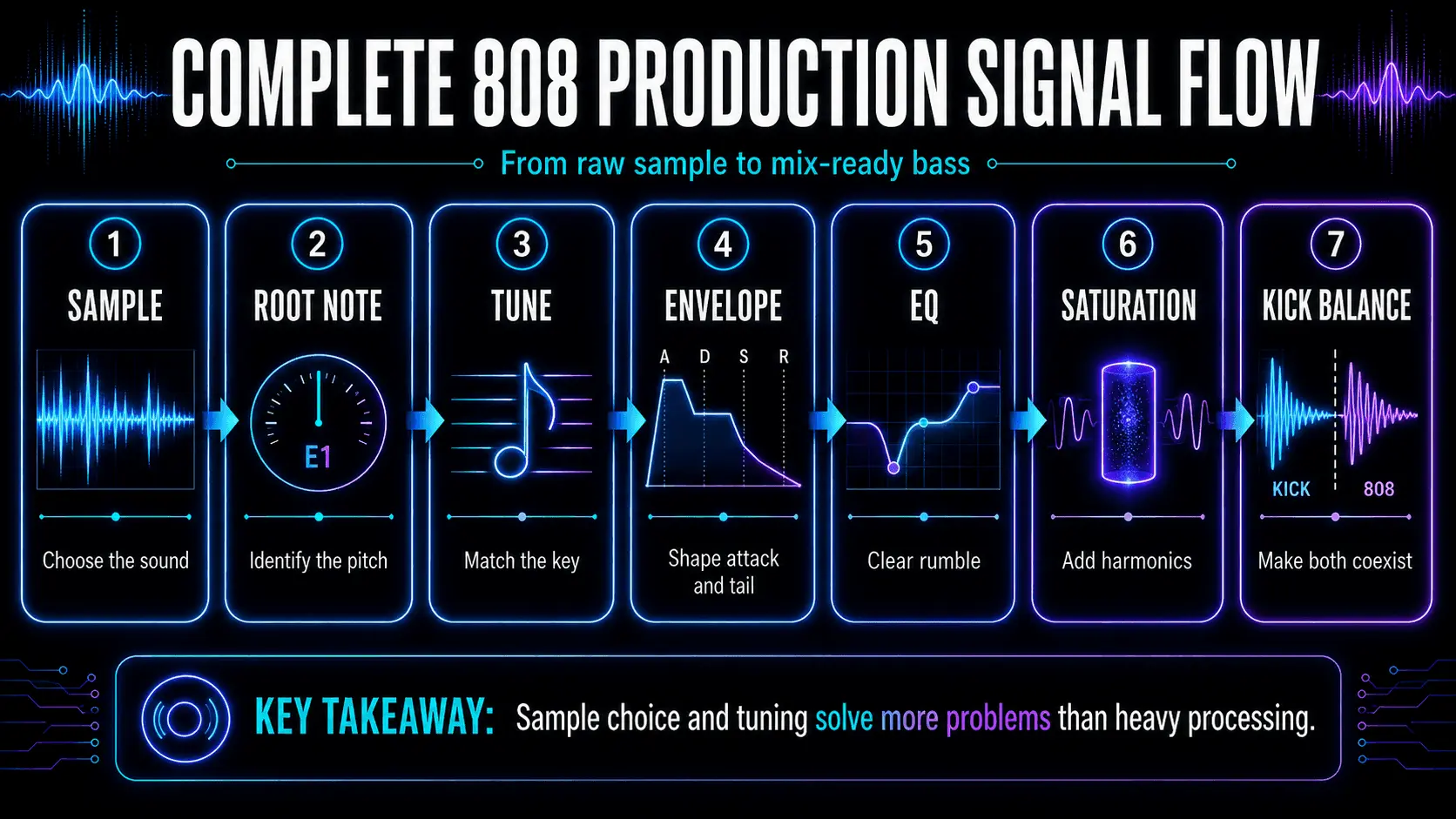
EQ can be thought of as shaping space rather than boosting sound. Instead of making the 808 louder, you adjust surrounding frequencies so it has room to sit clearly in the mix. This prevents it from clashing with other elements and keeps the low end clean.
Compression works as a form of control. It ensures that the 808 remains consistent, preventing certain notes from overpowering others. This is especially important when working with longer 808s that behave more like basslines than percussive hits.
Tuning is equally important. Just like any instrument, the 808 needs to match the key of the track. When it’s properly tuned, it blends naturally with melodies and chords. When it’s not, the entire mix can feel slightly off, even if everything else is technically correct.
Understanding the Frequency Range of 808s
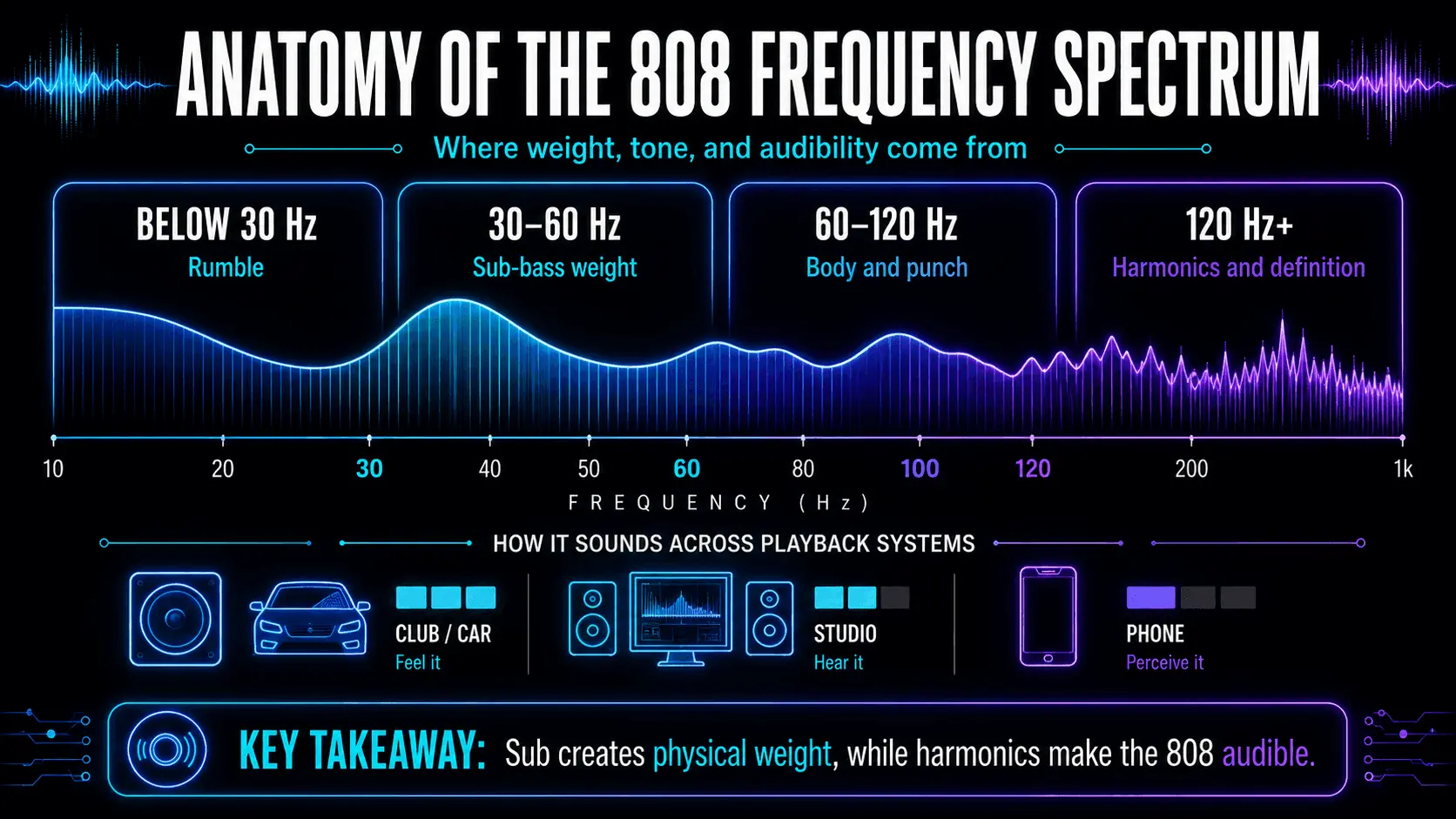
The 808 typically operates in the lowest part of the frequency spectrum, most commonly between 30Hz and 60Hz. This range is powerful but also sensitive.
Too much emphasis in the sub-bass region can quickly make a mix sound muddy and undefined. On the other hand, if the 808 lacks harmonic content, it may not translate well on smaller speakers. The key is balance—maintaining depth while ensuring the sound remains audible across different systems.
Creative Production Techniques for Advanced Producers
As producers gain experience, they move beyond basic control and start shaping the 808 more intentionally.
Multi-band compression allows specific frequency ranges of the 808 to be controlled independently, making it possible to tighten the low end without affecting the overall character. Spectral shaping tools can be used to refine harmonic content, helping the 808 cut through the mix without increasing its volume.
Artists like Travis Scott often treat the 808 as more than just a bass element. By layering it with melodic structures and applying distortion creatively, the 808 becomes a defining part of the track’s texture and atmosphere.
Fine-Tuning 808s for Professional Mixes
At a more advanced level, small adjustments have a significant impact. Fine-tuning the pitch ensures that the 808 resonates properly within the mix, reinforcing the musical foundation instead of conflicting with it.
Harmonic saturation is often used to introduce subtle overtones, giving the 808 more presence without making it louder. This is particularly useful for ensuring the sound translates well across different playback systems.
Sidechain compression is another widely used technique, helping the 808 and kick drum coexist without clashing. When applied with precision, it creates separation while preserving the strength of both elements.
Layering and Mixing Techniques
Layering can improve both depth and clarity when used with intention. Some producers combine a clean sub layer with a more textured top layer, allowing the low frequencies to remain solid while adding enough character to cut through the mix.
At the same time, it’s important to avoid overcomplicating the sound. Each layer should serve a clear purpose. Adding unnecessary elements often leads to a cluttered low end rather than a stronger one.
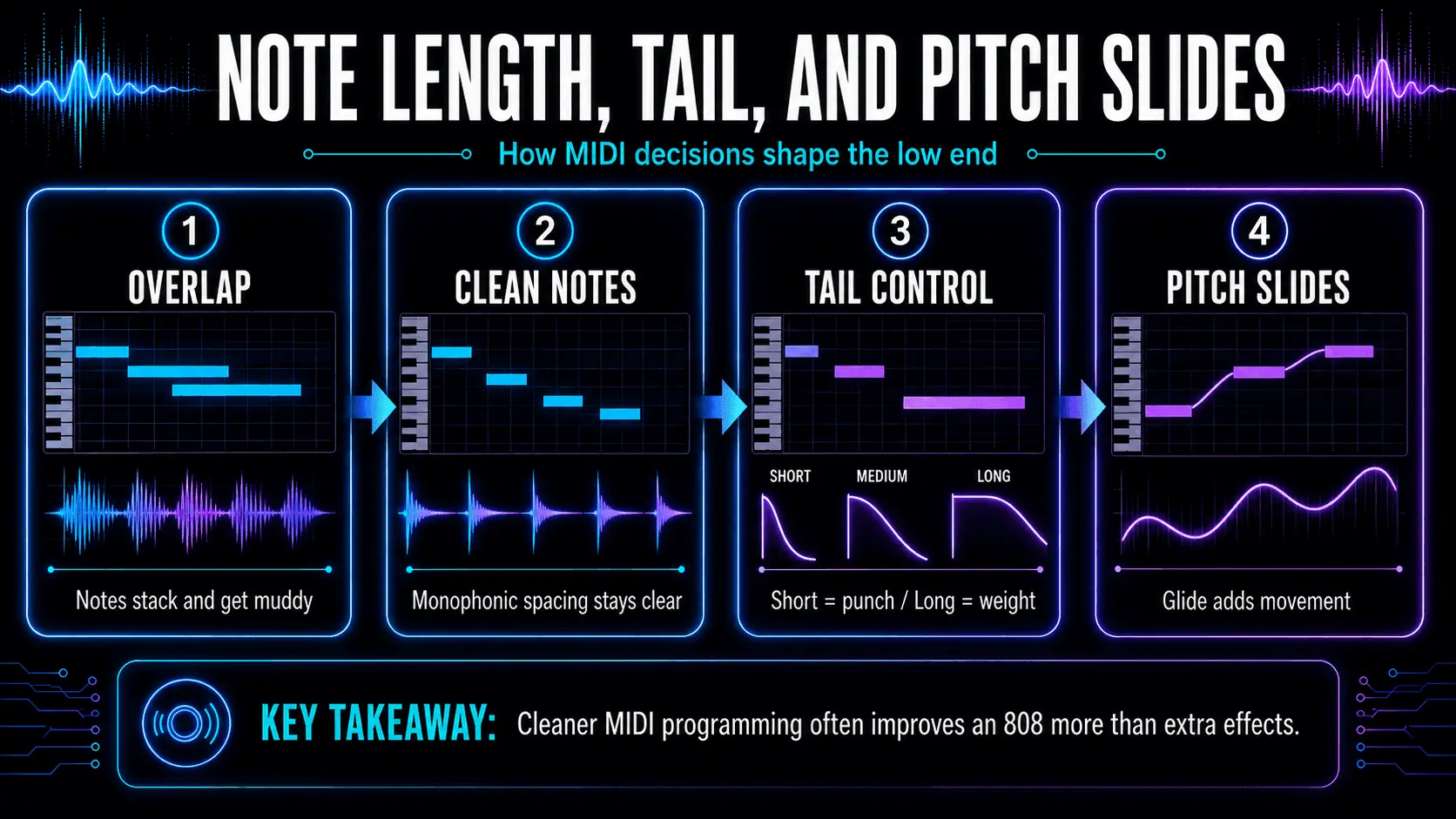
Arrangement also plays a major role. Leaving space between 808 notes, controlling their length, and avoiding overlap can make a bigger difference than heavy processing. A well-placed 808 will naturally feel more powerful than one that is constantly competing for space.

How to Make an 808 Hit Harder
Many producers assume that making an 808 hit harder means simply turning it up. In practice, impact comes from clarity more than volume.
A stronger 808 usually begins with choosing the right sample. Some 808s are naturally soft, while others have a sharper transient that cuts through the mix more easily. Starting with the correct sound often makes a bigger difference than processing.
The next factor is transient shaping. Slightly enhancing the initial attack can help the 808 feel more defined without increasing overall loudness. This allows listeners to hear the front of each note more clearly.
Harmonic saturation can also improve perceived impact. Adding subtle upper harmonics helps the ear detect the 808 more easily, especially on speakers that struggle with deep sub frequencies. When done carefully, saturation can make the bass feel louder without actually raising the level.
Arrangement matters as well. An 808 often sounds bigger when other low-frequency instruments are reduced. Sometimes removing competing frequencies from surrounding sounds creates more impact than boosting the 808 itself.
Preventing 808 Notes from Overlapping
A common beginner mistake is allowing 808 notes to overlap each other. When one sustained note continues into the next, the low end can quickly become muddy and uncontrolled.
This usually happens because the release or decay of the sample is too long for the rhythm of the song. Shortening the envelope can create cleaner transitions between notes and make the groove feel tighter.
Many producers also use monophonic playback mode with glide disabled when they want each note to stop before the next begins. This prevents multiple sub frequencies from stacking on top of each other.
In slower songs, longer tails can work well, but in faster arrangements, controlling note length becomes essential. A cleaner low end often comes from simpler note spacing rather than additional processing.
Controlling the Tail of an 808
The tail of an 808 plays a major role in how it feels inside a mix. A longer tail creates a smoother and heavier sound, while a shorter tail produces more punch and separation.
If the tail is too long, it can mask the kick drum and reduce clarity throughout the low end. If it is too short, the 808 may lose the sustained weight that gives it character.
Producers often shape the amplitude envelope to control this balance. Adjusting the decay and release allows the 808 to support the groove without overwhelming it. In some genres, a long tail creates emotional depth, while in others a tighter tail keeps the rhythm more aggressive.
The ideal length depends on the tempo, arrangement, and role of the 808 within the track.
Using Pitch Slides for More Movement
Pitch slides have become one of the signature sounds of modern 808 production. Instead of each note staying static, the bass can glide between pitches to create movement and expression.
This technique is especially common in trap music, where the 808 often behaves like a melodic instrument rather than a simple sub-bass layer. By enabling portamento or glide inside a sampler, notes can transition smoothly into one another.
Used subtly, pitch slides can make a bassline feel more musical. Used aggressively, they can become a defining part of the song’s identity. The key is restraint. Too much movement can make the low end feel unstable, while controlled slides can add character without losing clarity.
Compression, EQ, and Effects in Practice
In practical terms, achieving a strong 808 comes down to balance and control.
Using EQ to remove unnecessary sub frequencies below the audible range helps eliminate rumble and improves clarity. Careful adjustments in the low-mid range can also prevent the mix from becoming muddy.
Compression should be applied with purpose, maintaining consistency without flattening the sound. Fast attack and release settings can help control peaks while preserving the initial impact of the 808.
Subtle saturation or distortion can add harmonic richness, making the 808 more audible without increasing its volume. When used correctly, these effects enhance presence while keeping the low end clean and controlled.
Tips for Beginners: Getting Started with 808s
Getting comfortable with 808s is one of the biggest turning points for any producer. While the concept seems simple—just a deep bass sound—the way it behaves in a mix often causes confusion early on. What separates beginners from more experienced producers is not access to better tools, but a clearer understanding of how to approach the 808 from the start.
Understanding the Role of the 808 in a Mix
One of the most consistent pieces of advice from professional engineers is that the 808 should not be treated like a background element. It often acts as both the sub-bass and the main bassline at the same time. This means it needs to be given space and intention from the very beginning of the production process.
A common issue beginners face is overloading the low end with too many elements. Experienced producers frequently point out that a strong mix doesn’t come from adding more bass, but from simplifying what’s already there. When the 808 is allowed to carry the low end on its own, the track tends to feel cleaner and more focused.
Choosing the Right 808 Sound
Before any processing begins, the choice of sample plays a major role. Many professionals emphasize that a well-selected 808 requires far less work later. Instead of trying to fix a weak or overly complex sound, they start with something that already fits the track’s direction.
This idea is often repeated by engineers who work across different genres: if an 808 needs heavy processing just to sit in the mix, it’s usually the wrong choice. A clean, simple 808 that matches the tone of the track will almost always outperform a heavily processed one.
Tuning and Musical Consistency
Tuning is one of the most overlooked aspects of working with 808s, yet it’s also one of the most important. An untuned 808 can create subtle clashes with melodies that make the entire track feel off, even if everything else is technically correct.
Producers who focus on musicality consistently highlight tuning as a non-negotiable step. Once the 808 is aligned with the key of the track, it stops sounding separate and starts feeling integrated. This is often described as the moment when a mix begins to “lock in.”
Managing the Kick and 808 Relationship
Another challenge that comes up repeatedly is the relationship between the kick and the 808. Since both occupy similar low-frequency ranges, they can easily interfere with each other if not handled carefully.
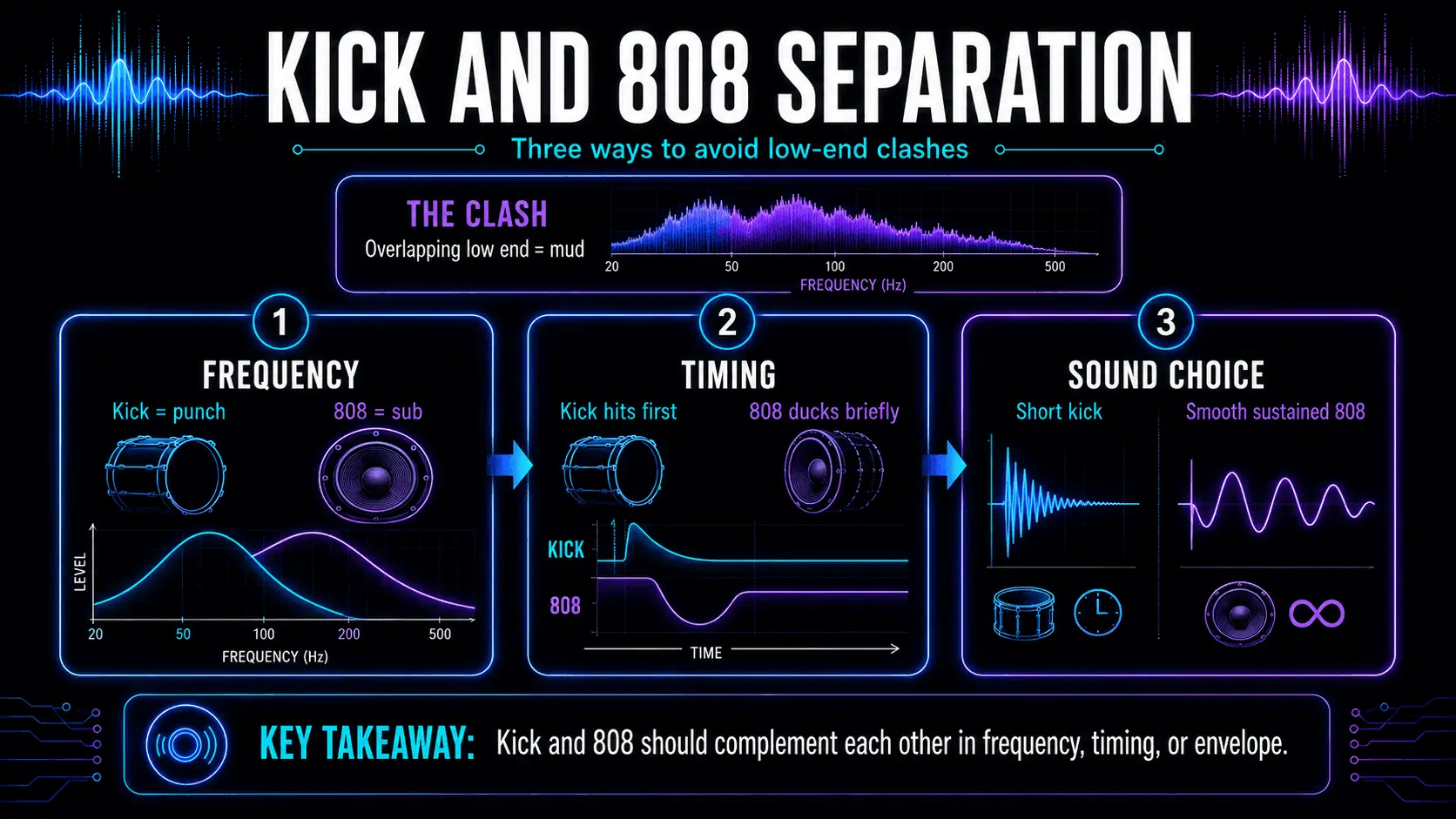
A widely accepted approach is to create separation rather than competition. Sidechain compression is one method, allowing the kick to briefly push the 808 down in volume. However, many experienced producers stress that this should be subtle. Overusing sidechain can make the low end feel unstable or unnatural.
An alternative approach is sound selection. By choosing a kick and 808 that naturally complement each other, less processing is required. This often leads to a more solid and controlled result.
Making 808s Translate Across Systems
One of the most frustrating experiences for beginners is creating an 808 that sounds powerful in the studio but disappears on smaller speakers. This is a well-known issue, and the solution is not simply increasing volume.
Mixing engineers often recommend adding harmonic content through saturation or distortion. This introduces higher frequencies that can be heard on devices that can’t reproduce deep sub-bass. The key is subtlety—too much distortion can remove clarity and definition.
This balance between sub energy and audibility is something professionals refine over time. The goal is to create an 808 that feels strong on large systems while still being present on smaller ones.
Learning from Real-World Examples
A track like “Bad and Boujee,” produced by Metro Boomin, is often referenced for its low-end clarity. The 808 in that track is carefully tuned and controlled, allowing it to hit hard without overwhelming the mix. What stands out is not just its power, but its consistency—every note feels intentional and balanced.
This reflects a broader principle seen in professional work: clarity often matters more than raw impact. A controlled 808 that fits the mix will always sound stronger than one that simply dominates it.
Common Mistakes and How to Avoid Them
Many of the same mistakes appear repeatedly when producers first start working with 808s. One of the most common is frequency buildup, where too many elements compete in the low end. Instead of boosting the 808, experienced producers focus on removing unnecessary low frequencies from other sounds.
Another issue is overcompression. While compression is useful for control, too much of it can flatten the dynamics and remove the natural movement of the 808. This results in a sound that feels lifeless rather than powerful.
There’s also a tendency to overprocess. Adding too many effects in an attempt to “fix” the 808 often leads to more problems. Professionals generally take the opposite approach—simplifying the signal chain and focusing on small, precise adjustments.
Building a Solid Foundation
The most important takeaway for beginners is that strong 808s come from clarity, not complexity. Choosing the right sound, tuning it properly, and giving it space in the mix will solve most problems before they even start.
As experience grows, the process becomes less about following steps and more about making decisions based on what the track needs. The 808 stops being a technical challenge and becomes a creative tool—one that can shape the entire feel of a song when used with intention.
Frequently Asked Questions About 808s
What frequency range should an 808 be?
An 808 typically sits between 30Hz and 60Hz, where the sub-bass energy is strongest. Some 808s extend higher when harmonics are added. Instead of boosting blindly, focus on balance—too much low end creates muddiness, while too little removes impact and weight from the mix.
Why does my 808 sound good in headphones but bad in the car?
This usually happens because pure sub-bass doesn’t translate well across different systems. Headphones emphasize low frequencies, while cars and speakers interact with the environment. Adding subtle saturation introduces harmonics, helping the 808 remain audible and consistent across all playback systems.
How do I stop my 808 and kick from clashing?
To prevent clashes, create separation between the kick and 808. Use sidechain compression so the kick briefly lowers the 808 volume, or choose sounds that naturally fit together. The goal is clarity, not volume—both elements should be heard without competing in the same frequency space.
Should I always tune my 808?
Yes, tuning your 808 is essential. An untuned 808 can clash with melodies and chords, making the mix feel off. When properly tuned to the key of the track, the 808 blends naturally with other elements and creates a more cohesive and professional sound.
Why does my 808 sound muddy?
Muddiness happens when too many sounds occupy the low-frequency range. Instead of boosting the 808, remove unnecessary bass from other instruments using EQ. Creating space in the mix allows the 808 to sound clearer, tighter, and more defined without increasing its volume.
How loud should my 808 be in the mix?
There is no fixed level for 808 volume. It should feel strong and present without overpowering the mix. If it distorts or masks other elements, it’s too loud. If it disappears when other sounds play, it’s too quiet. Focus on clarity and balance over raw volume.
Why can’t I hear my 808 on small speakers?
Small speakers cannot reproduce deep sub frequencies effectively. If your 808 relies only on low-end energy, it may disappear. Adding harmonic distortion or subtle upper frequencies helps the 808 remain audible on phones, laptops, and other limited playback systems.
Should I layer my 808 with another bass?
Layering is optional and depends on the track. A single well-designed 808 is often enough. If layering, ensure each layer serves a purpose—such as sub for depth and mids for clarity. Poor layering can cause frequency clashes and make the low end sound messy.
Why does my 808 distort when I increase volume?
Distortion usually occurs from excessive low-end energy or improper gain staging. Lower the volume, control peaks with compression, and remove unnecessary sub frequencies. Clean gain structure ensures the 808 stays powerful without unwanted clipping or harsh distortion.
What matters more: the 808 sample or processing?
The sample matters more. A high-quality 808 requires minimal processing and fits naturally into the mix. A poor sample is difficult to fix, even with heavy effects. Choosing the right sound from the start leads to better and faster results.