

Key Takeaways
- Music theory explains how rhythm, melody, harmony, pitch, texture, and form work together, giving musicians a practical language for understanding and creating music.
- Scales, keys, intervals, and chords help producers build cohesive melodies and progressions while controlling tension, resolution, and emotional direction.
- Theory improves professional skills by supporting faster collaboration, stronger improvisation, clearer communication, better arrangement decisions, and greater versatility across genres.
- Modern tools such as piano rolls, scale guides, chord tracks, and editable MIDI make music theory easier to learn and apply without requiring advanced sheet-reading skills.
- Music theory does not restrict creativity. It reduces trial and error, helps creators understand why musical ideas work, and provides a foundation for making more intentional choices.
Understanding the Language Behind Music
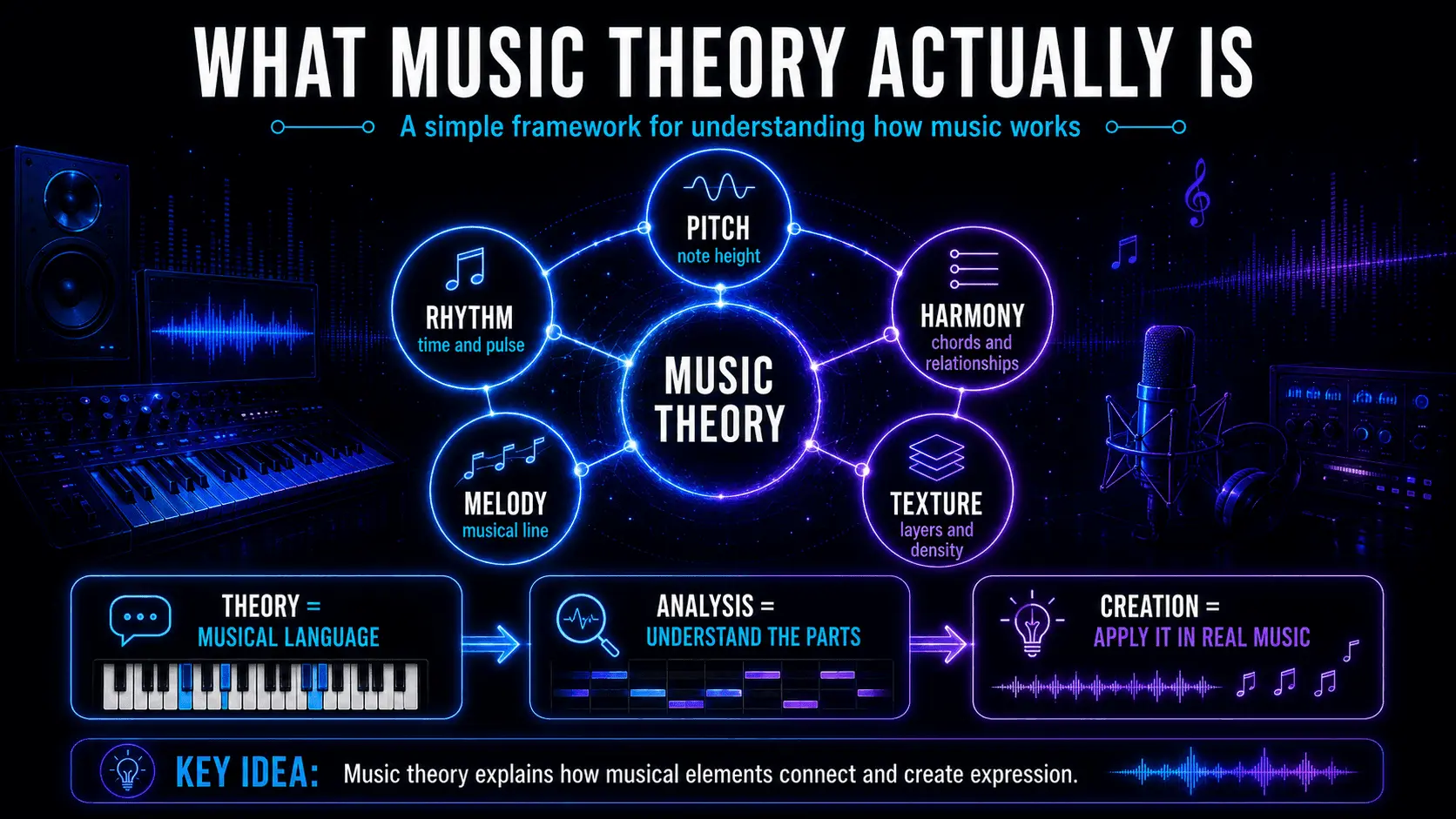
At its most fundamental level, music theory is the study of the practices and possibilities of music. It is a discipline that seeks to define the grammar of musical language. Just as a writer must understand the relationship between nouns, verbs, and syntax to craft a compelling narrative, a musician uses theory to understand the relationships between pitches, rhythm, and texture.
Music Theory for Beginners
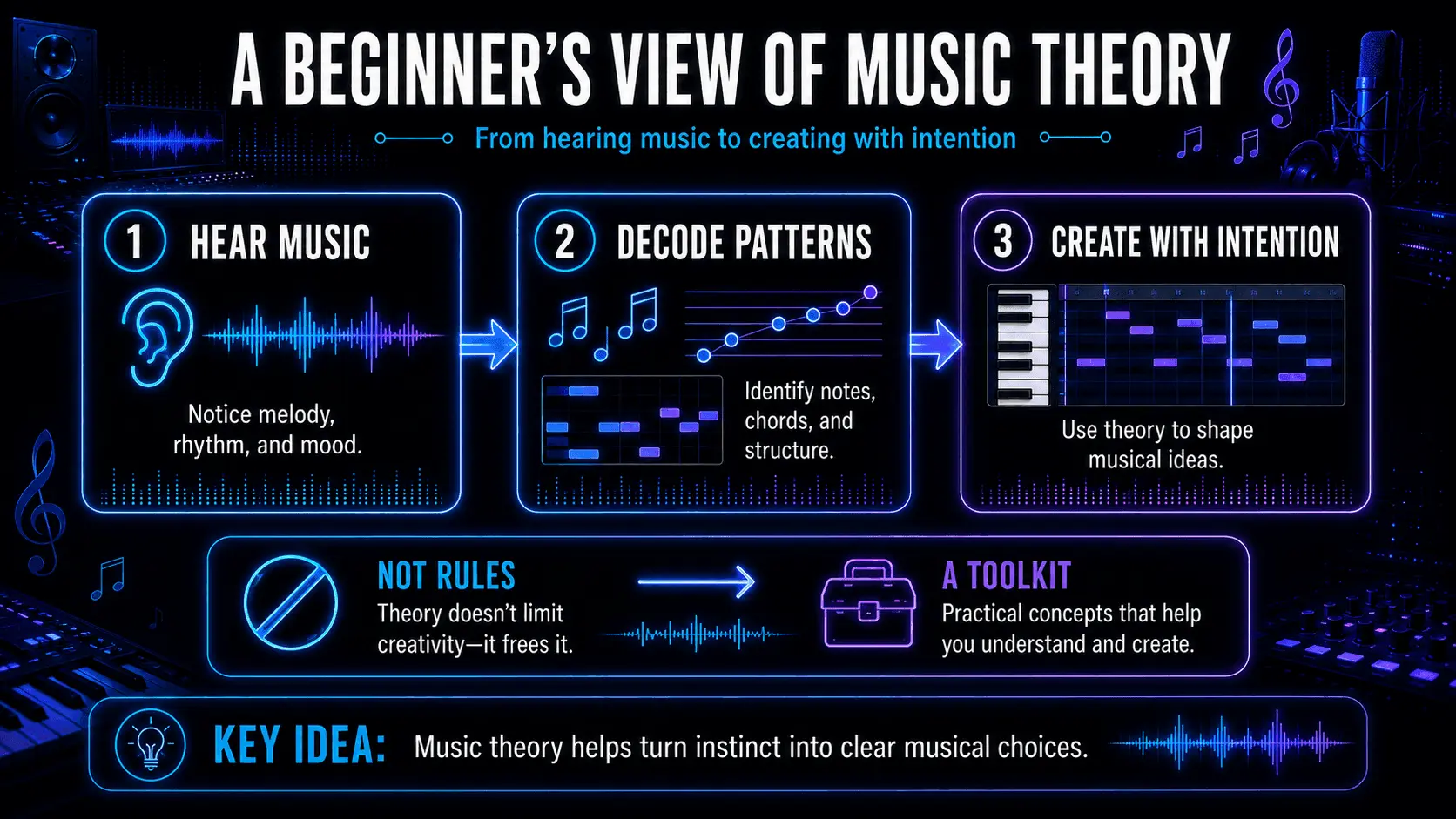
For those just starting, music theory can be viewed as the decoding of the musical experience. It is not a set of rigid laws that must be followed under penalty of failure; rather, it is a description of how music has functioned historically and how it can function in the future. For the producers of today, music theory is the toolkit used to translate an abstract emotion into a concrete chord progression or a driving heartbeat of a rhythm.
The Musician Guide to Theory and Analysis
Beyond simple identification, theory involves musical analysis. This is the process of deconstructing a piece of music to see how its various parts—the notes, intervals, and form—interact. Analysis allows musicians to understand why a certain piece of music feels tense, triumphant, or melancholic. By studying the works of masters, from Bach to modern film composers, one gains a deeper understanding of how to manipulate these elements in their own work.
The Historical Context of Music Theory
Music theory has a rich history that stretches back centuries, weaving through various cultures and musical traditions. Understanding what music theory is today requires a journey through time where theory was developed to explain and notate the art of music itself.
In ancient Greece, philosophers like Pythagoras explored the mathematical relationships in music, laying early ground for the music theory basics we know now. He discovered that the physical properties of vibrating strings corresponded to mathematical ratios, creating the first formal understanding of intervals. These concepts have evolved, but the core purpose remains—to serve as a language for musicians to communicate and innovate.
During the Middle Ages, music theory began to formalize with the introduction of notation systems, allowing compositions to be documented and shared among readers and performers. The Renaissance saw a blossoming of polyphony, where multiple independent melodies sang together in harmony, pushing the boundaries of music theory concepts. This era emphasized the importance of music theory in understanding complex musical structures, paving the way for the Baroque period.
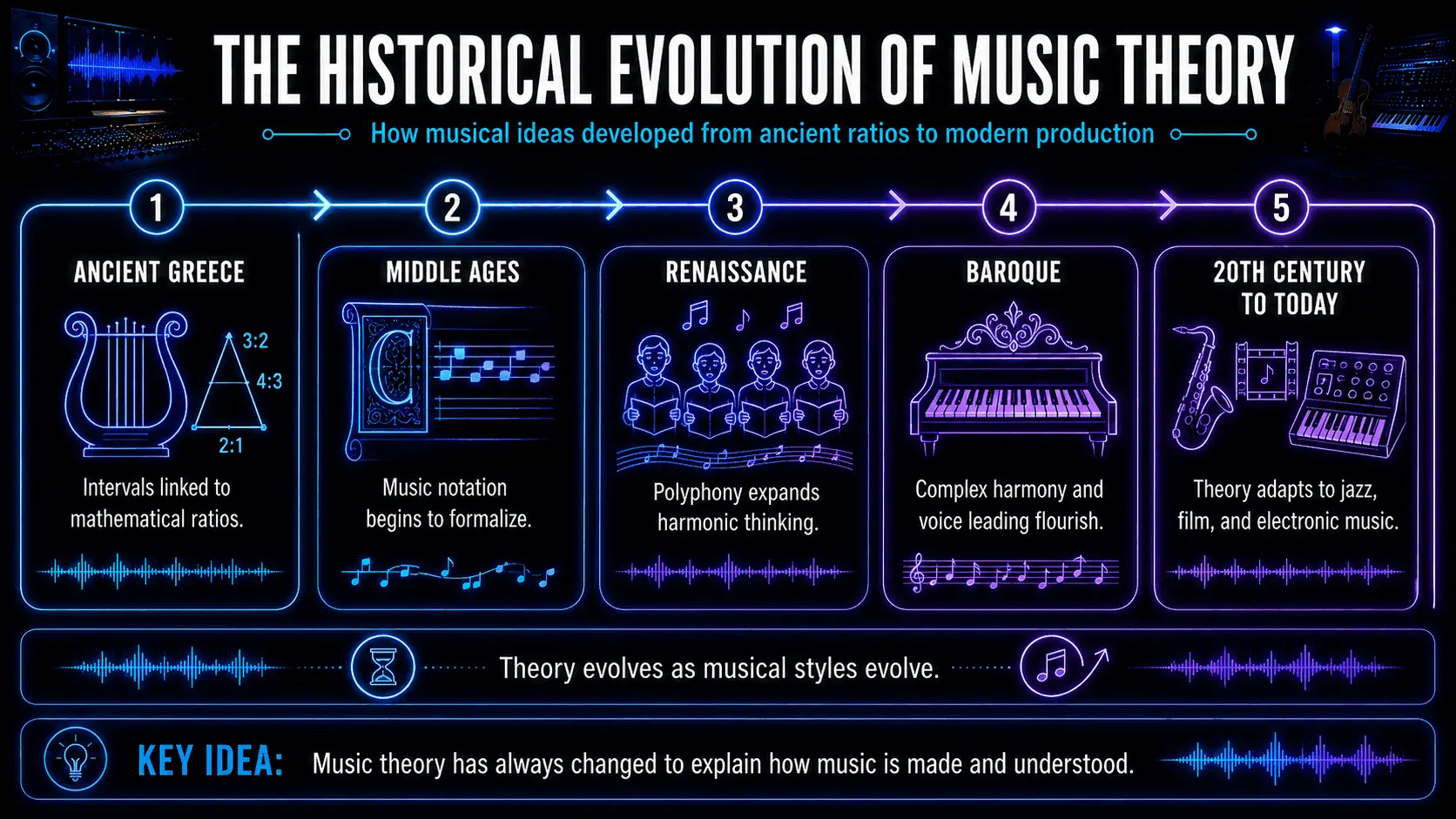
Composers like Bach leveraged these principles, crafting intricate fugues and counterpoint that continue to be studied by those learning music theory. Fast forward to the 20th century, music theory embraced new styles and genres, adapting to the rapid changes in music. Jazz introduced improvisation, while electronic music challenged traditional notions of harmony and rhythm. The historical tapestry of music theory not only underscores its importance but also highlights its adaptability and relevance in contemporary music creation.
Elements of Music: The Building Blocks
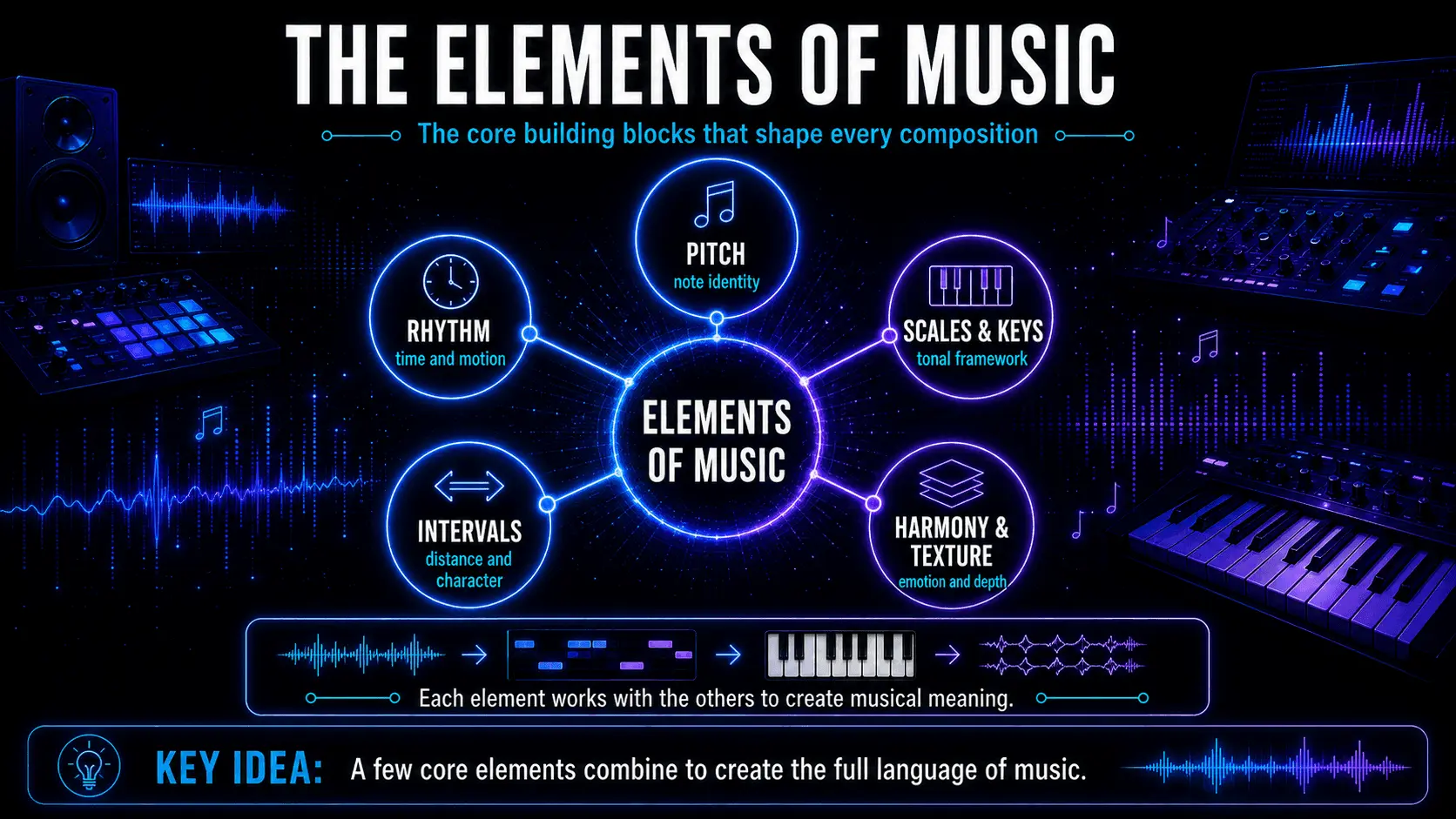
Understanding the elements of music theory is like learning the grammar of a new language. Just as grammar provides structure to sentences, music theory lays down the foundation for creating harmonious compositions. These elements work together much like ingredients in a recipe, each contributing a unique flavor to the final dish.
Rhythm: The Heartbeat of Composition
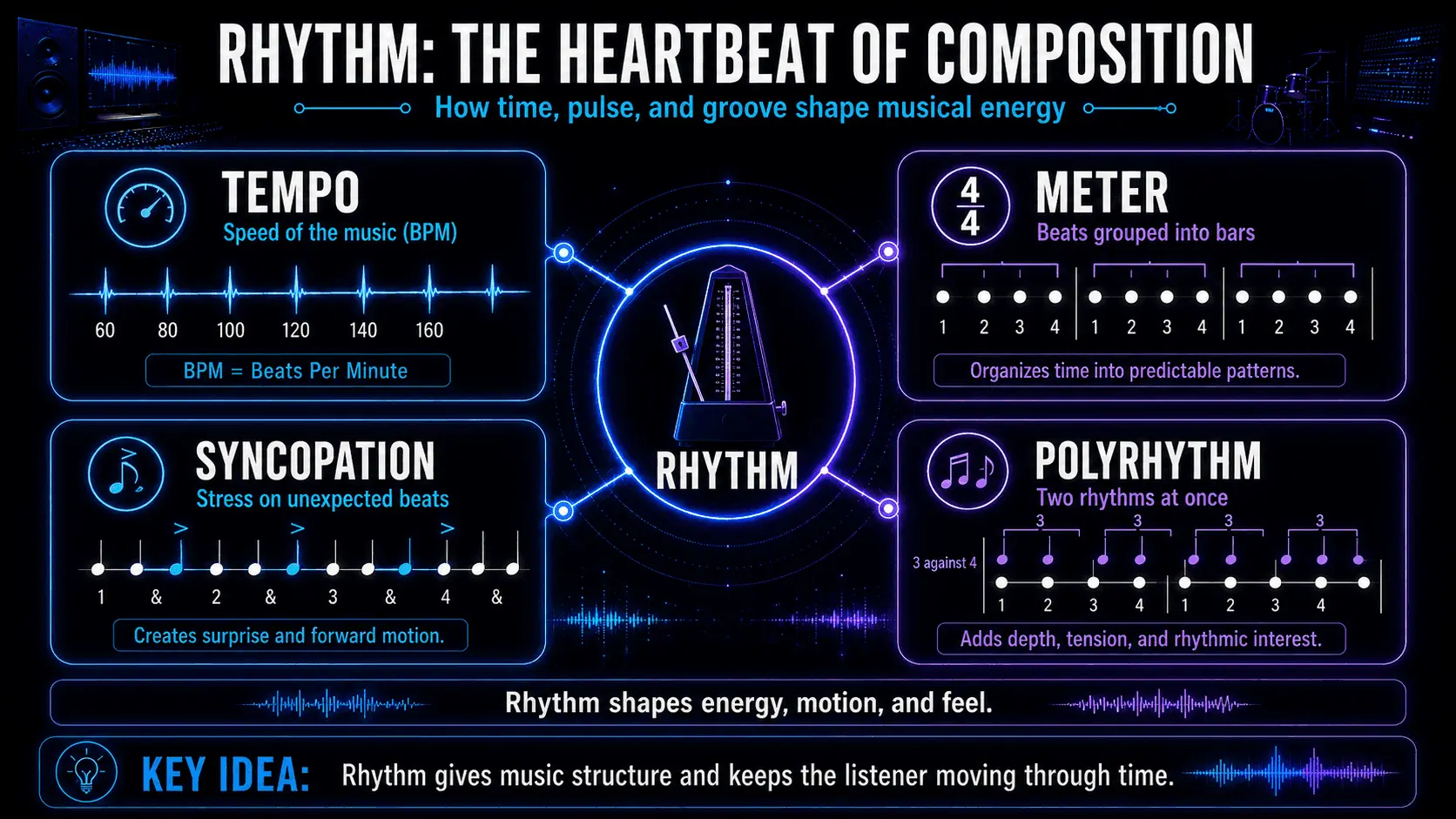
Rhythm is the heartbeat of a composition, driving the energy and pace of your track. Understanding rhythm starts with grasping the beat, which serves as the foundational pulse that musicians follow. Imagine rhythm as the framework of a house; it holds everything together and provides structure.
- Tempo: The speed at which the music is played, measured in beats per minute (BPM).
- Meter: The organization of beats into regular groups, known as measures or bars.
- Syncopation: The displacement of regular accents by stressing the weak beats.
- Polyrhythm: The simultaneous use of two or more conflicting rhythms.
Notes and Pitches
Notes are the individual units of sound. In Western music, we primarily use twelve unique pitches that repeat across different octaves. These pitches are the atoms of music, the smallest components that can be manipulated to create larger structures. The coincidence of certain frequencies creates what we perceive as specific notes.
Scales and Keys: The Structural Foundation
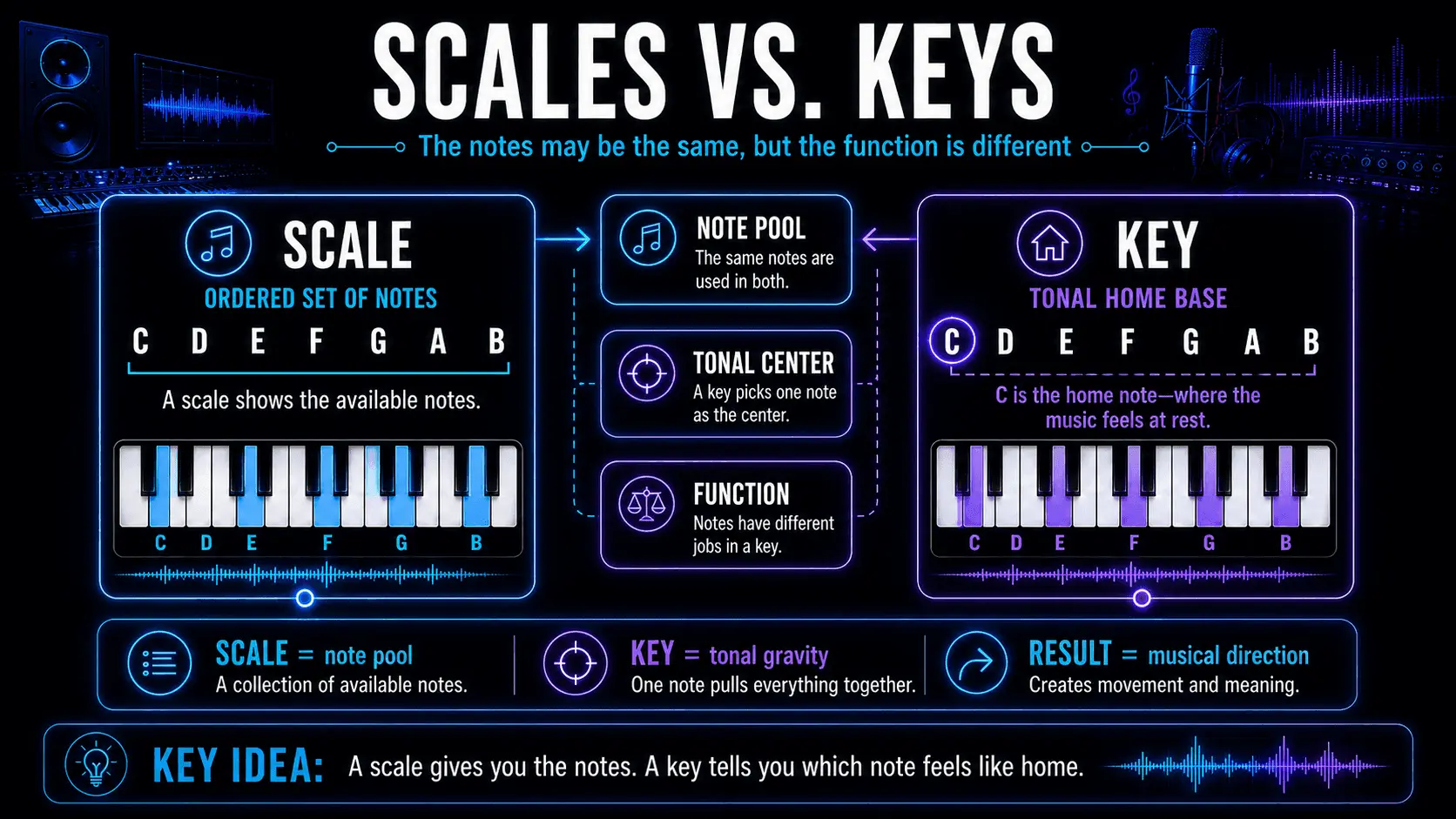
Scales are organized series of pitches. For instance, the C major scale consists of the notes C, D, E, F, G, A, and B. By mastering these music theory basics, you can unlock a world of creativity, enabling you to craft melodies and harmonies effortlessly.
How Do Scales Relate to Keys?
A key serves as the home base for a piece of music, dictating which notes and chords feel most stable. Scales provide the building blocks from which these keys are constructed. The key defines the tonal center, or the tonic, which feels like the point of rest.
Using Scales in ACE Studio
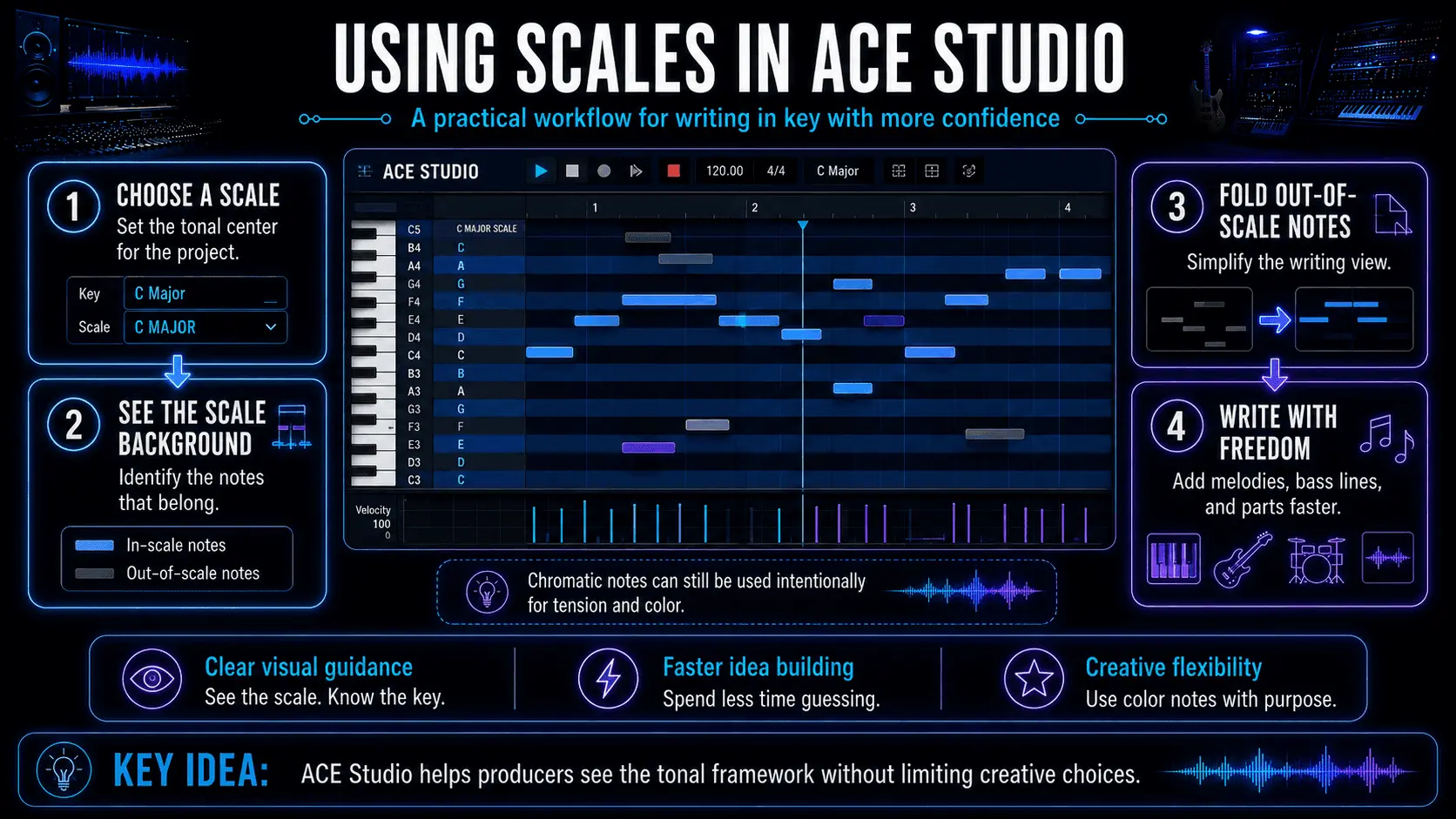
In ACE Studio, producers can use the scale background in the piano roll to identify the notes that belong to a selected scale. Notes outside the scale can also be folded from view, making it easier to write melodies, bass lines, and instrumental parts around a defined tonal centre. This provides useful visual guidance while still allowing deliberate chromatic notes when the arrangement calls for additional tension or colour.
Intervals: The Vocabulary of Sound
Intervals are the distances between pitches. They are the building blocks for scales and chords. Think of intervals as the steps in a staircase, each step representing a unique musical distance.
| Interval Name | Number of Semitones | Emotional Quality |
|---|---|---|
| Unison | 0 | Neutral/Stable |
| Minor Second | 1 | Tense/Dissonant |
| Major Second | 2 | Open/Developing |
| Minor Third | 3 | Sad/Melancholic |
| Major Third | 4 | Happy/Bright |
| Perfect Fourth | 5 | Hollow/Strong |
| Tritone | 6 | Highly Dissonant/Unresolved |
| Perfect Fifth | 7 | Very Stable/Powerful |
The Role of Intervals in Scales and Keys
Intervals define the character of a scale. For example, the difference between a major scale and a minor scale is primarily the interval between the first and third notes (the major third vs. the minor third).
Why Are Intervals Important?
Intervals allow musicians to understand the relationship between notes. Without this understanding, one cannot build chords or understand how to create tension and release in a melody.
Melody and Harmony: The Narrative and the Atmosphere
Melody: The Narrative Thread
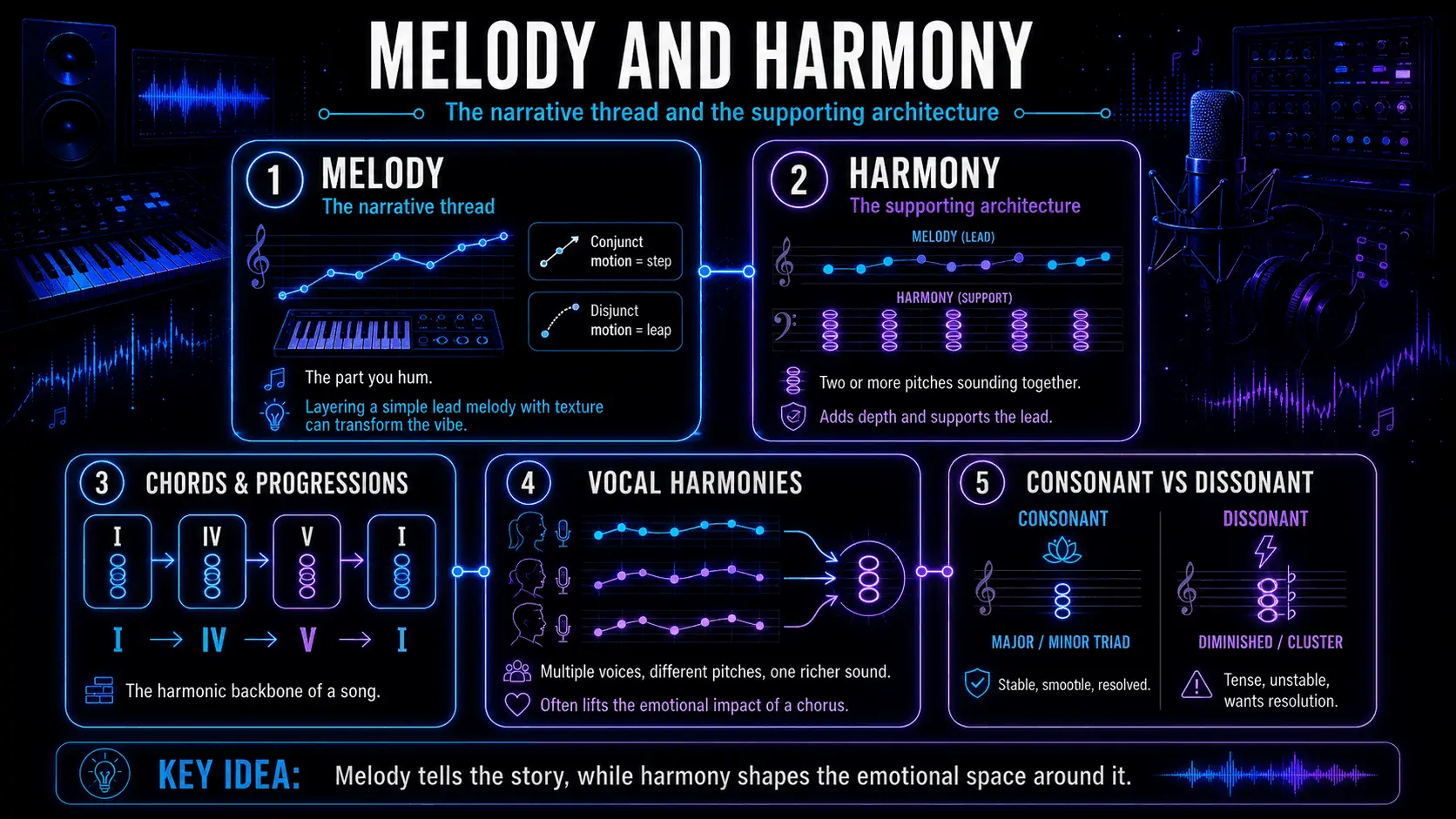
Consider melody as the main character in a story—it is the sequence of notes that you often find yourself humming. A strong melody relies on a balance of conjunct motion (moving by step) and disjunct motion (moving by leap). In electronic music, layering a simple lead synth melody with complex texture can transform a track's vibe.
Harmony: The Supporting Architecture
Harmony acts like the supporting cast, enriching the melody and adding depth with chords that complement the lead. It occurs whenever two or more pitches sound simultaneously.
Understanding Chords and Chord Progressions
Chords consist of multiple notes played simultaneously. Chord progressions are the sequences of these chords that form the harmonic backbone of a song. For example, the I-IV-V-I progression is the foundation of countless pop and blues hits.
The Role of Vocal Harmonies
Vocal harmonies involve multiple singers performing different pitches that combine to form chords. This adds a human expression and richness to the arrangement, often used to emphasize the emotional weight of a chorus.
Types of Harmonies: Dissonant and Consonant
- Consonant Harmonies: These sound stable and pleasing to the ear (e.g., major and minor triads).
- Dissonant Harmonies: These create tension and feel like they need to resolve to a consonance (e.g., diminished chords or clusters).
Building Harmony in ACE Studio
ACE Studio’s Chord Track provides a global space for creating and hearing chord progressions. Producers can select root notes, chord qualities, and inversions, then display the notes of each chord as a background in the piano roll. This makes it easier to write melodies, bass lines, vocal parts, and instrumental layers that support the intended harmony.
Dynamics, Timbre, and Texture
Dynamics refer to the variations in loudness across a piece. They shape the emotional intensity of the music. In music theory basics, we use terms like pianissimo (very soft) and fortissimo (very loud).
Timbre: The Sonic Color Palette
Timbre is the distinct color or quality of a sound. It is what differentiates a saxophone from a violin, even when they play the same note. In the Digital Age, timbre is manipulated through synthesis and sound design.
Exploring Timbre in ACE Studio
ACE Studio gives producers several ways to explore timbre while keeping the underlying musical idea editable. A MIDI melody can be assigned to different AI Instruments to compare how strings, brass, woodwinds, and other sources change its character. Producers can then refine articulations and expression, while vocal parts can be shaped through voice selection, pitch, phrasing, breath, phonemes, and other performance controls.
Texture: The Sonic Weave
Texture describes how many layers of sound are happening at once and how they relate to each other.
- Monophonic: A single melodic line.
- Homophonic: A primary melody supported by chords (the most common in modern music).
- Polyphonic: Multiple independent melodies occurring simultaneously (counterpoint).
Song Structure and Form
Form is the overarching plan or layout of a piece of music. It is the storyline that guides the listener from start to finish. Common structures include Verse-Chorus-Verse-Chorus-Bridge-Chorus.
Organizing Song Structure in ACE Studio
ACE Studio’s Canvas provides a timeline-based workspace for arranging MIDI and audio clips into complete song sections. Producers can create, move, split, duplicate, trim, and rename clips as they build verses, choruses, bridges, and transitions. Tempo, time-signature, and chord tracks provide additional structural guidance across the project.
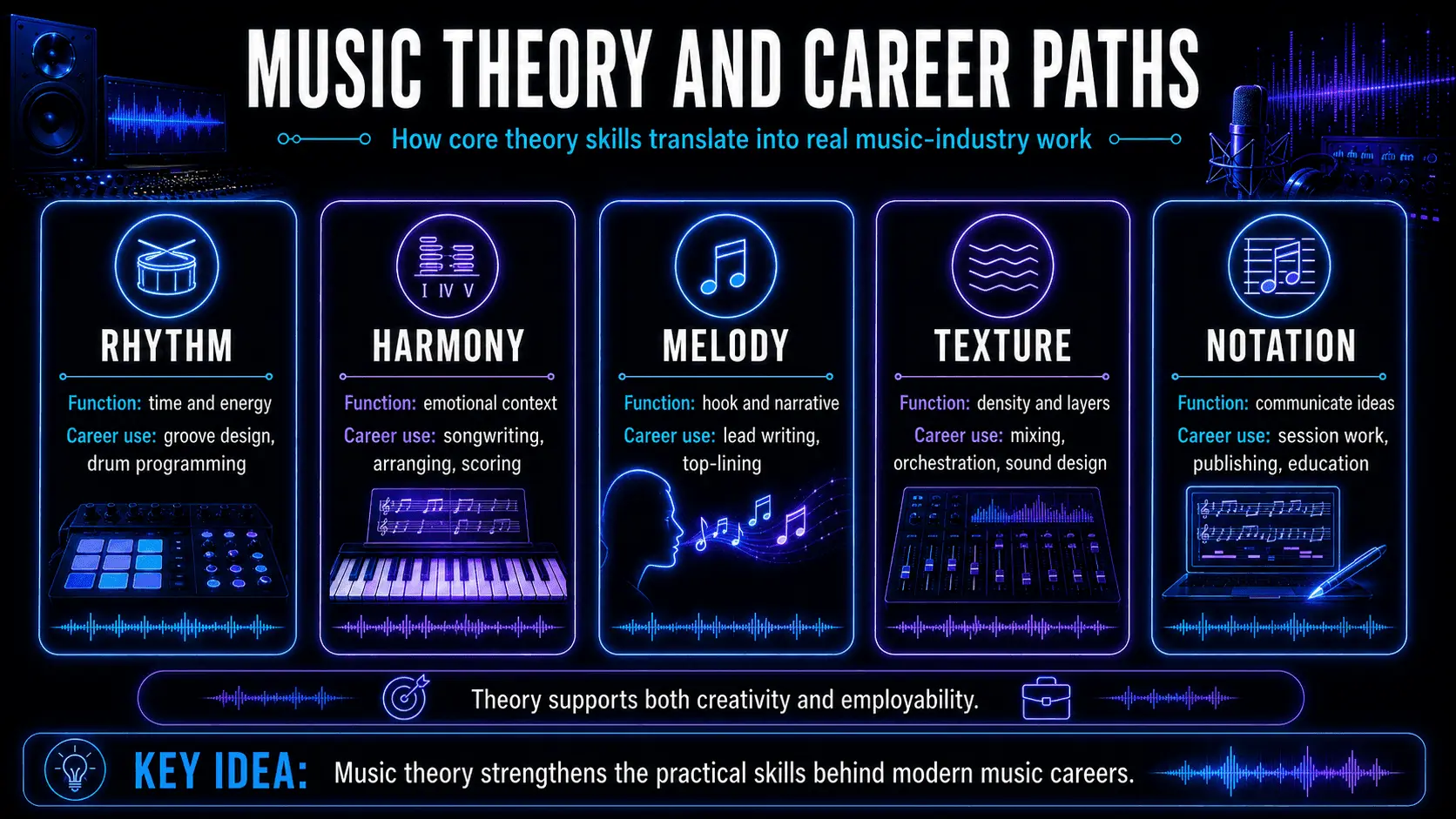
Why is Music Theory Important for Your Career?
Understanding music theory is not merely an academic exercise. It can improve musical versatility, accelerate communication during collaborations, and help creators make more deliberate decisions about melody, harmony, rhythm, and arrangement.
Music Theory and Performance
For performers, theory allows for faster memorization and better improvisation. When you understand the chord progression, you can predict where the music is going, allowing you to perform with more confidence and expression.
Music Theory in Education and Teaching
If you plan to teach, music theory is your primary tool. It allows you to explain the why behind the how, giving your students the foundation they need to grow.
Music Theory and Diverse Genres
Whether you are producing hip-hop, scoring for film, or writing folk songs, theory is the common denominator. It allows a jazz pianist to collaborate with an EDM producer because they share the same fundamental vocabulary of scales, keys, and rhythm.
Music Theory in the Digital Age
The rise of DAWs and AI has not made theory obsolete; it has made it more accessible. While AI can generate a chord progression, a producer with a background in theory is needed to curate, refine, and inject human expression into the output.
Using synthesizers and virtual instruments effectively requires an understanding of waveforms, harmonics, articulation, and dynamics. These concepts help producers select sounds more intentionally and shape performances that support the melody, harmony, and emotional direction of a track.
Challenges and Misconceptions
One common misconception is that theory stifles creativity. In reality, theory provides a map. You can follow the map, or you can choose to go off-road, but you need the map to know where the road was in the first place. Another challenge is the perceived complexity. However, by breaking it down into music theory basics, anyone can start learning music theory at their own pace.
Make Music with Music Theory: Practical Steps
- Start with the Piano: The keyboard is the best visual representation of music theory.
- Analyze Your Favorite Songs: Identify the melody, the chords, and the rhythm.
- Apply Theory in Your DAW: Use the piano roll, scale background, Chord Track, and editable MIDI clips in ACE Studio to experiment with scales, chord progressions, melodies, and instrumental arrangements.
- Practice Ear Training: Learn to identify intervals and chords by ear.
Feature Sheet: Comparing Theory Components
| Component | Primary Function | Career Application |
|---|---|---|
| Rhythm | Establishes Time and Energy | Drum Programming, Conducting, Groove Design |
| Harmony | Provides Emotional Context | Songwriting, Arranging, Film Scoring |
| Melody | Creates the Hook/Narrative | Lead Writing, Jingle Creation, Top-Lining |
| Texture | Manages Density and Layers | Mixing, Orchestration, Sound Design |
| Notation | Communicates Musical Ideas | Session Playing, Publishing, Education |
The Future of Music Theory and Industry Prospects
As we look toward the future, music theory will continue to merge with technology. Knowledge of counterpoint will assist in programming sophisticated AI-driven arrangements. Understanding timbre will be essential as spatial audio and immersive soundscapes become the industry standard.
For those learning music theory basics, the journey is about more than just notes on a page. It is about gaining the ability to speak the language of the soul with precision and power. Whether you are a bedroom producer or an aspiring film composer, music theory is the key to unlocking your full potential in the music business.
Start creating music today by applying these core concepts. The transition from a casual listener to a professional creator begins with a single chord, a steady heartbeat, and the desire to understand the beautiful logic behind the sound.
Frequently Asked Questions
Is music theory essential for modern electronic music producers?
While some producers create successful tracks by relying solely on their ears, a lack of theoretical knowledge often leads to creative plateaus. Understanding music theory basics allows a producer to move beyond trial and error. Instead of clicking aimlessly in a MIDI editor to find a melody, theory provides the framework to understand why a certain chord progression works. It also facilitates faster communication during collaborations and ensures that elements like vocal harmonies and sub-bass are in the correct key, preventing muddy or dissonant mixes.
How long does it take to master the core concepts of music theory?
The journey of learning music theory is ongoing, but the fundamental foundation can be established within a few months of consistent study. Grasping rhythm, notes, and basic scales usually takes a few weeks. More advanced topics, such as counterpoint or complex modal interchange, require years of analysis and application. However, the goal is not to reach a final destination but to continuously expand the toolkit available for musical expression.
Can I learn music theory without learning to read traditional sheet music?
Yes. Many modern musicians learn theory through the visual interface of a piano roll. In ACE Studio, MIDI notes appear as editable blocks that show pitch, duration, timing, and their relationship to scales and chords. Traditional notation remains valuable, but the fundamental logic of intervals, harmony, melody, and rhythm can also be learned through MIDI-based workflows.
What is the difference between a scale and a key?
A scale is an ordered sequence of notes—specifically, a collection of pitches arranged by ascending or descending frequency. A key is the broader functional system that uses those notes. For example, the C Major scale is the specific set of notes (C, D, E, F, G, A, B). The Key of C Major is the musical environment where C is the central point of rest (the tonic), and the other notes of the scale are used to create tension and resolution.
Why is rhythm considered the heartbeat of a track?
Rhythm provides the physical pulse that listeners connect with on a visceral level. It is the temporal framework that dictates when notes occur and for how long they sustain. Just as a physical heartbeat maintains the life of an organism, rhythm maintains the momentum and energy of a composition. Without a defined rhythmic structure, melody and harmony would lack the necessary context to move the listener through time.